
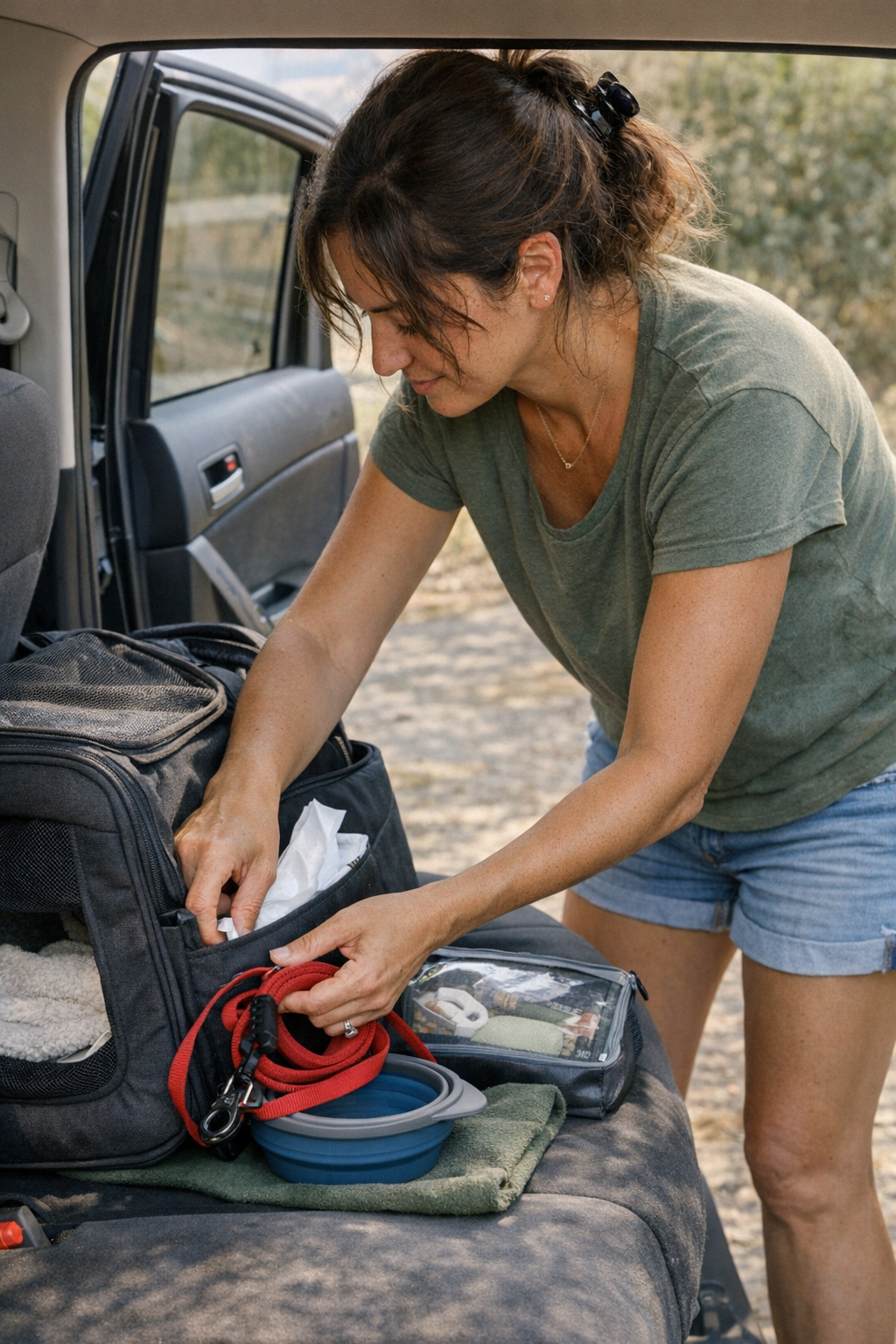
A pet-travel setup that looks perfect at departure can unravel within a single stop. The carrier’s zipped, the leash is ready, wipes and bowls are packed—yet after the first quick errand or rest break, the same neat system becomes a source of slow, repeated interruptions. Each time you stop: you reach for wipes but find them buried; the leash pulls free with a tangle; comfort gear meant to soothe your pet now blocks the bowl you suddenly need. These aren’t catastrophic failures, but enough tiny delays stack up, quietly wearing out both your patience and your pet’s. What started as organized prep turns into a cycle of awkward reshuffling, especially when your trip isn’t just point A to B but a string of pauses, entries, and fast restarts. PawGoTravel’s world stands directly in this gap—where carried “order” collides with seat-side, repeat-movement friction.
The Surprising Gap Between “Looks Ready” and “Works Quickly”
Your gear might look “set”: a carrier waits by the door, water bowls are stacked, wipes tucked in, leash carefully clipped. Pause after pause, however, the reality breaks through. By stop two or three, you’re shuffling for the leash but end up gripping a blanket, or you flip open a pocket to hunt for wipes you thought would be easy to grab. Bowls slide under a comfort toy, or a clip hooks onto something else mid-movement. The problem isn’t laziness—it’s the difference between organizing for show and structuring for fast, repeated access. Real use always exposes the mismatch.
The Invisible Cost of Repeated Tiny Delays
Every time you’re forced to hesitate—door open, pet waiting, hands hunting—another layer of friction gets added to your trip. These aren’t just one-off annoyances. They multiply across stops, gradually making the travel feel burdensome, even if you can’t point to any single disaster. That “ready” feeling drains away. By the third or fourth stop, delays and small tangles interrupt not just the flow but also your focus on your pet’s comfort and your own rhythm.
How Travel Patterns Expose Setup Weak Points
These setup failures show up most obviously in repeated-use conditions—errand runs, multi-leg car rides, or those hotel check-ins after hours on the road. The worst friction isn’t dramatic; it’s that scene where you open the carrier, reach for wipes, and discover they’re wedged behind a folded blanket. Or your pet’s water bowl—meant for a fast drink—now requires pulling out half the gear just to reach it. The cleanup, the bowl access, the leash grab: all become slower and more frustrating with each repetition. There’s always one item out of sequence, one pocket buried, one section blocking another, so every re-entry to the car (or pause at a rest area) needs a quick, tedious reshuffle.
Micro-Scenes That Stack Up
- Hunting for wipes through layered pouches while your dog pulls at the harness.
- Untangling a leash from a bowl handle at every single exit.
- Digging past a comfort blanket you used “just once” but now blocks half your gear.
- Your pet is ready to move, but you’re left fiddling with the travel setup yet again.
Individually, these are minor. On a whole trip, they stitch together into a pattern of drag and delay—quiet but persistent reminders that looking organized isn’t enough.
Why “Organized” Isn’t the Same as “Accessible”
Most pet owners believe tidiness equals efficiency: everything stacked with intention, all pockets filled. The actual limit appears the moment things are no longer as packed—but actively used. After stop one, the wipes get pressed to the bottom, the leash ends up threaded through the water bowl handle, and the bottle you placed just “right” now needs extra steps to retrieve. With every new stop, the structure falls more out of sync with your movement pattern. The issue isn’t forgetting gear, but a setup that forces extra steps each time you reach, reset, or try to keep your pet calm while digging for the right item.
Repeated-Use Scenarios That Challenge the Setup
- First stop: wipes, leash, and bowl present just as packed—invisible friction begins.
- Second stop: wipes drift below a comfort layer, leash slips behind another section, bowl buried deeper than planned.
- Third stop: visually, everything’s still “together,” but grabbing a single item is noticeably slower, and the irritation increases. You adjust—sort of—but the pauses accumulate.
By the last leg, the original neatness is an illusion. The real weak link isn’t what you brought, it’s how your setup fights your actual stop-and-go routine. Each slow pocket or blocked item is a quiet penalty, paid in repeated movement and focus.
Real-World Adjustments: Small Changes, Big Relief
The most powerful upgrade isn’t more pet travel gear—it’s persistent, friction-free access in real motion. Experienced travelers spot the real trigger point: assign every high-use item its own always-accessible spot, with no exceptions for “symmetry” or initial aesthetics.
- Wipes get an uncovered outer pocket—never shared, always reachable as soon as you open the carrier or reach in from a car seat.
- Leash lives on a clip that remains exposed and untangled, allowing you to grab and go with one hand while managing your pet with the other.
- Bowl sits in a compartment that’s never under a comfort toy or your own gear, even if the setup looks less streamlined from the outside.
One owner’s routine—moving wipes from beneath two layers to a plain outer pocket—shaved every stop’s delay from fifteen seconds to five. Not a huge change once, but a total transformation after several stops, turning unpredictable hunting into almost automatic movement. The difference shows every time you re-enter the car or pause at a stop: the trip keeps moving, instead of resetting your patience from scratch.
Recognizing the Hidden Signs of Setup Friction
Notice yourself digging, sliding, or unclipping the same things again and again? That’s not a harmless quirk. It’s structural constraint creating repeat interruption. If your gear looks clean but always requires unclipping a pouch or bypassing the same folded blanket for wipes, the setup is adding predictable slowdown. The true sign isn’t a dramatic snag—it’s the repeated shuffle and the quiet dread of knowing you’ll need to pause (again) for the same fix.
Practical Steps for Smoother Pet Travel Movement
To adjust for real repeated use, focus on:
- One-item-per-pocket, visible layout: No stacked or double-layered spaces for essentials like wipes, leash, or bowl. Every grab should be possible with one move.
- Single-hand, standing access: Can you get the core items with the carrier on your car seat or while parked, without unzipping half the bag? If not, that’s your friction point.
- Test after movement, not just at home: Check your setup’s weakest pocket or section after two or three routine stops. Wherever you slow down or hesitate—that’s exactly the place worth redesigning.
The best travel layout stays out of your way. The right structure isn’t what looks pristine at the start, but what lets you restart movement after each stop with zero mental or physical drag. Over weeks of errands or a full road trip, these micro-adjustments add real calm and consistency—without the constant “fix” that most setups demand.
Lasting Improvements Come from Everyday Use
The real shift happens when you stop arranging just for departure and start mapping your gear to your travel rhythm—pausing, reaching, restarting, repeating—across real conditions. The perfect setup isn’t about filling every pocket or getting a showroom look; it’s about anticipating where friction creeps up and neutralizing it before it stacks into your routine. Each trip is smoother not because you packed more, but because your carrier or bag now fits the way you and your pet actually move—leaving you with fewer slowdowns, cleaner re-entries, and a travel experience that doesn’t need constant, fussy correction.
For practical, ready-to-adjust pet travel gear that fits repeated use—rather than just the start of the trip—visit PawGoTravel.