
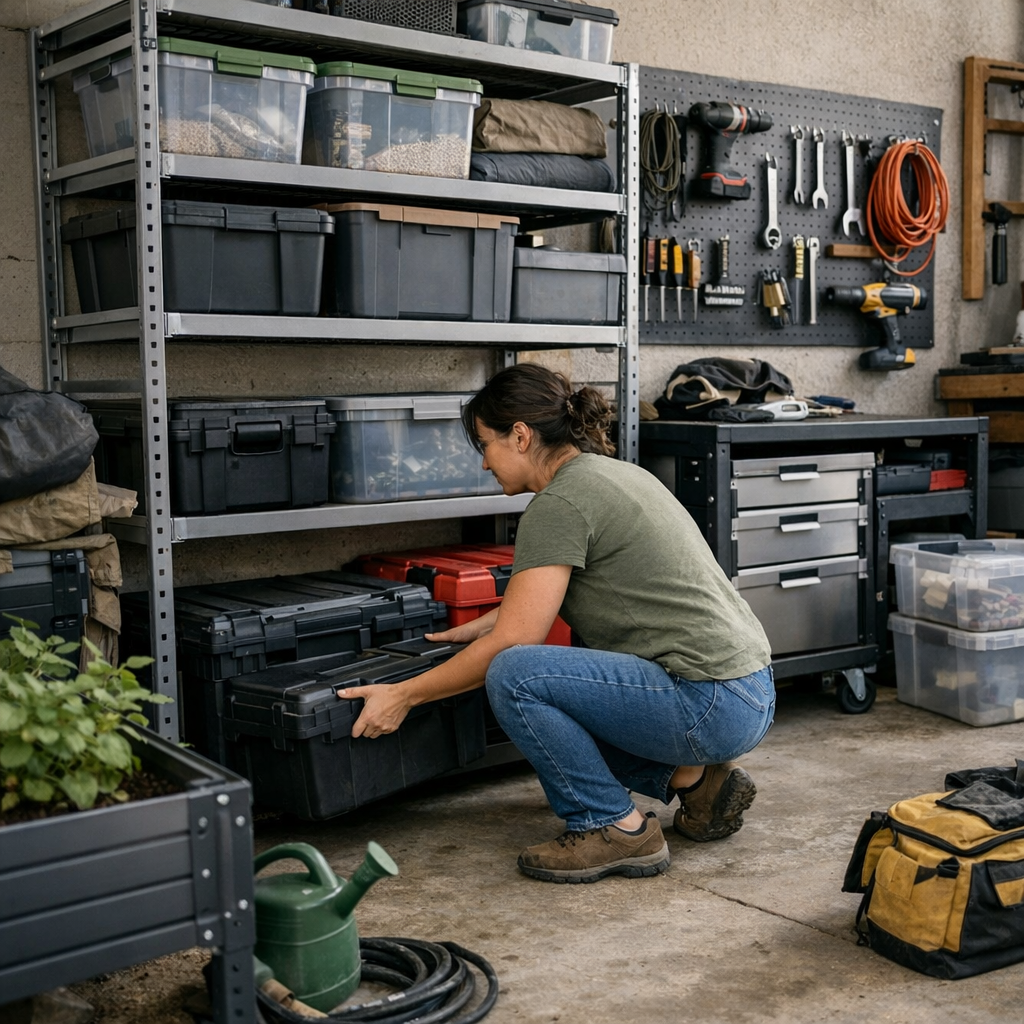
Every garage or workshop user knows the moment: You walk in, already picturing the tool or bin you need, only to freeze in your tracks. On the surface, the shelving looks organized—a place for everything and everything in its place. But as soon as you go to haul down a heavy box or reach for a container you actually use, the problems show themselves: a muscle-straining reach overhead, a cart wedged into your walk path, or an overloaded spot you have to reshuffle just to get to what you want. Items pile up “just for now” because putting them away is a hassle, and before long, order gives way to slowdowns and shortcut stashes. The setup that seemed smart is now quietly getting in your way.
Heavy Items Up High: The Hidden Drag on Everyday Flow
On day one, most storage looks perfect. Floor-to-ceiling shelves, modular wall panels, racks that make the most of every square foot. But then, the daily routine settles in. The biggest, toughest storage bins—bags of sand or seed, bulky power tools, overflow tubs of hardware—get nudged upward to make way for small, often-used gear in the “prime real estate.” It’s not intentional; it just happens, shelf by shelf, as you live with the setup.
Before you know it, every big lift means:
- A clumsy, careful reach or a stretch that leaves your shoulders and wrists aching
- Piling awkward bins on already stuffed upper shelves, risking a dangerous wobble or spill
- Shifting carts out of the way just to get to one edge of a unit—then having to move them again to reset
- Workbenches and corners filling with “temporary” overflow that lingers for days
When Inefficiency Becomes the Routine
These small delays—the slow retrieval, the avoidance of putting things back, the sidesteps and stacks—stop feeling temporary. They become how you use your garage. What once looked organized now feels like it’s working against you. You catch yourself stacking bins on the floor to avoid the awkward reach, or leaving a heavy toolbox mid-walkway because its “home” is now too much trouble to access.
When an ‘Organized’ Setup Starts Interrupting Your Projects
It doesn’t take long for these layout issues to pile up. Picture a garage with tight vertical storage or a workshop wall fitted with smart-looking shelves. Everything has its slot—until it becomes clear the system is backward. You’re crouching to snag a lightweight tarp but have to hoist a dense case above your head, or notice the cart meant to roll away never gets put back because the aisle keeps narrowing. Every trip for a tool becomes a shuffle-and-shift routine: slide a bin off a stack, twist around a bulkhead, nudge the cart, just to get your hands on a daily-use item.
The Cycle of Clutter and Reshuffling
This is how corners become dumping grounds: a few rushed returns, a bin set aside “just until later,” and a growing pile-up as heavy items end up anywhere there’s a gap. The floor space gets tighter. Resets slow down. You find yourself doing a dance—one box off, two boxes on—just to close up for the day. That well-planned shelf system now invites crowding, not clarity, and blocks the quick movement that fueled the original layout idea.
Breaking the Cycle: Anchoring Heavy Storage Where It Belongs
The real breakthrough? Give every heavy, high-demand bin and toolbox a prime spot between knee and waist height. Shift the lightweight, rarely used gear up and out of the way, but keep bulk and weight firmly in your natural reach zone. Suddenly, what took three steps or an awkward lift is just a straightforward drop or pick-up. There’s less hesitating, less balancing, and no question of where things go after use.
The Immediate Upgrade: How Realignment Feels in Practice
This isn’t theory—it’s a dramatic shift in daily function:
- Heavy bins now return to a shelf you can actually reach, without overthinking the grip or bracing for a twist
- No more stacking overflow at the very spots you need to keep clear—like the ends of your workbenches, or right where you park a cart
- Mobile gear slides into place, instead of being stuck out or blocked by bins that should never have left the “easy zone” in the first place
Once the big stuff lives down low, the resets speed up. You stop making “temporary” piles by the door or halfway across the garage. No bin looms overhead, waiting to tip. Each shelf’s job becomes obvious—and you stop treating the room as a puzzle to solve every single day.
The Look and Feel of a Zone That Actually Works
No, you won’t win showroom points for design minimalism. That’s not the goal. A functional garage or shop with correctly placed heavy storage lets you:
- Move end to end without detours, even when every zone is in use
- Finish fast—return big items to their place in seconds, not minutes
- Keep odd-shaped gear and overflow out of the way, with high and corner shelves holding only what’s truly light or seasonal
- Walk in tomorrow ready to start—not steeling yourself to restack yesterday’s “good enough” returns
Visual order matters, but what really keeps you coming back is function. That’s the difference you feel: a quick, instinctive drop onto the right-height shelf versus a tired, reluctant stack “anywhere it fits.” Work becomes smoother because the setup finally matches how you actually move, not just how the storage units look on a diagram.
Tip: Protect the Prime Real Estate for Heavy, Daily-Use Items
Every time you redo or expand, lock in this one habit: keep the zone from knee to waist open and reserved for your heaviest, most-used gear. Put light, awkward, or “occasional” stuff up high or deep in corners. Check that carts, bins, and top-offs can be returned in one step, not four, so the whole area works every time you use it—without a round of Tetris just to get started or finish up.
The Real Payoff: From Packed to Purpose-Built
Over weeks and projects, the benefits stand out: no more blocked aisles, no more slow starts, and no frustration at the end-of-day reset. The setup doesn’t just hold more—it frees you to keep using the space, season after season, without the low-grade battle against your own storage choices.
So if you’re planning a modular update, a tracked wall, or a rolling bay, aim for access. The best feeling isn’t a storage area that just looks “full and finished,” but one you can actually use again and again—right in the middle of your real life.
Find practical storage solutions built for repeated real use at StackNest.