
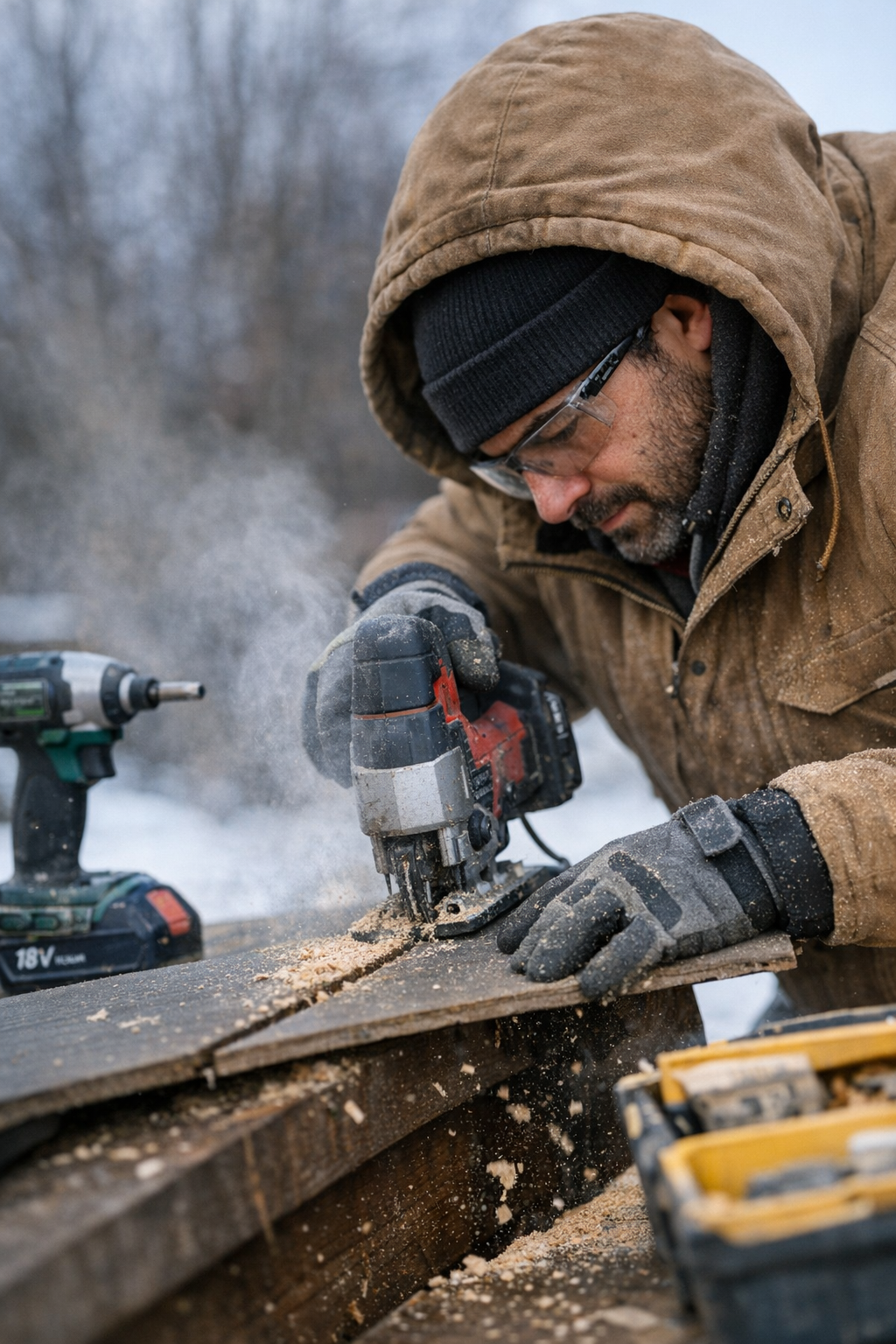
Winter doesn’t just cool the air—it tests your tools, your grip, and your patience from the first cut. Step outside with your impact driver or jigsaw while frost still lingers on the boards, and the job feels different almost immediately. The machine’s usual rhythm is thrown off: a gritty vibration in the handle, edges that start to feather and chip, maybe an engine note that drops into complaint halfway through a plank. Every task—whether you’re ripping fiberboard under a bare bulb or driving anchors into cold vinyl—puts your setup on notice. In this weather, small mistakes in tool or accessory choice aren’t hidden; they get amplified every hour you work.
Where Winter Problems Begin: The Cut That Shifts
Say it’s 7am. Tools charged, fresh blades slotted in, you dig into the day’s first stack of siding or sheet stock. The initial passes are crisp—lines hold clean, effort is predictable. But by board three or four, the lag creeps in. Battery output slips as the cold eats at lithium chemistry. A blade that felt sharp now drags slightly, leaving stringers behind. The sawdust turns sticky, riding the teeth longer. You find yourself leaning harder into the work, correcting as you go, burning up energy just to keep cuts straight.
Miss these early warnings—slowed drive, ragged kerf edges, a muted pitch from your power tool—and you’re suddenly facing sanding chores, fudge lines, or seams that don’t close without a fight. The drag on your wrists and elbows sneaks up, long before your bucket of bits runs empty.
Why Power Tools Fade Faster in the Cold
Chill doesn’t just numb your hands. Inside your impact driver, cold temperatures bog down battery performance and thicken lubricants. Your jigsaw blade flexes less on each pass, amplifying friction where the teeth should be clearing chips. That drag isn’t imagined: a metal blade that glides in July can smoke or bind before lunch in January, especially in poplar, MDF, or pressure-treated lumber.
Sometimes the clues are immediate: the blade scorches during a simple crosscut, or the driver stalls halfway through a fastener. Other times, it’s cumulative—more force needed for every plunge, until your control slips just enough to scar the workpiece or lose your intended line.
The False Confidence of the First Few Cuts
Don’t trust a tool just because it opens strong. Warm batteries fade quicker, and steel dulls faster when each cut is a battle against cold. The first five passes can be smooth, but by the time you’re halfway down a plank or repeating a sequence, the noise changes—a harshness, a buzz that builds in your palm. This is when cleanup doubles and your margins shrink. Savvy tradespeople don’t wait for a total stall; they watch for the moment control softens, and make the pivot before the tool falls behind the material.
Cold Jobsite Reality: What Really Happens
Picture a February morning siding install. You’re cutting out 200mm window reveals—a tight plunge, repeated ten dozen times. At first, the saw tracks true, each pass almost routine. By board six, though, the tool’s shoes skip, jigsaw dust gathers in clumps, and suddenly that battery warning feels much closer. The blade, once snappy, hesitates at the start of each pierce. Your cutlines blur, squares go crooked. Are you tired? Maybe. But more often, it’s the combination of a chilled blade losing bite and a depleted battery stumbling under strain that throws your control off course.
This is where practical routines beat brute force. Swapping to blades made with extra cold flex holds speed and shape longer. Taking 20 seconds every couple boards to brush out the kerf keeps things moving, and a deliberate slowdown—say, cutting at 120mm/minute instead of rushing—prevents particles from packing. The payoff is clear: fewer chewed-up edges, less tool bounce, less end-of-day hand fatigue.
Reading the Small Stuff: Signals Before Trouble
Catastrophic failures—broken tips, jammed drivers—are rare. What really undermines your session are the stealthy cues: your grip grows tense by board ten, the cutline wobbles mid-plunge, extra dust hangs up and scorches as the blade passes. Each is a nudge: the tool is struggling, its accessories losing pace. Experienced crews tune into these details early, shifting course before the job turns into a slog of corrections.
Picking Tools That Don’t Quit (and Habits That Matter)
Shop shelves can make every blade and bit look equal. They aren’t. Two identical-looking jigsaw blades can have wildly different stamina by noon; one meant for warm shops, the other reinforced for cold, abrasive cuts. When you hit denser stock, the wrong blade burns hot, leaves fuzzy lines, and makes you fight with every inch. A blade meant for the chill keeps its flex and bite, holding straighter and cutting cleaner through cycles of dive, back, and repeat.
Same for drivers—bits that handle fine indoors can start to slip, chew, or cam out in frozen fasteners. Cold-adapted accessories keep predictable performance, especially with repeated battery swaps and heavy use. The difference, across a project, is a handful of easy finish panels instead of another hour spent reworking corners.
Quick Routine Shift: Cleaner Cuts, Less Strain
Keep a stiff nylon brush in your pocket. Give every kerf a swipe out after two or three cuts—especially when chip-out or dust buildup gets obvious. Combined with a slight slowdown in your feed rate, this keeps jaws from clogging and blades from overheating, which means less smoke, less vibration, and steadier control until the day’s done.
Spotting the Early Drop: How to Catch Power Fade
Your driver won’t beep out a warning, but you’ll feel it:
- A newfound coarseness as the blade stutters across a cut
- Unexpected vibration in materials that were smooth an hour ago
- Sawdust piling along cutlines instead of clearing clean
- The tool’s tone deepening under pressure, especially in thicker or colder stock
Catch these signs early and adjust: swap in a winter-rated blade, clear your kerf between passes, keep your cut pace steady and responsive. Don’t chase yesterday’s tempo—match your rhythm to what the work and tool tell you right now.
Staying Ahead of Winter Wear
Cold weather exposes every weakness—in your routine, your gear, and your patience. Ignore the small adjustments, and you’ll be repairing chipped corners, reaching for batteries faster, or rubbing sore wrists before shift’s end. Pay attention early: change out blades before they stumble, clean your path, drop your run speed a notch. The reward is visible—fewer splintered edges, cleaner seams, and less fatigue crossing the finish line. In a winter jobsite, the difference is clear not in the first pass, but in how much energy and time you save when it’s time to pack up.
Visit Gumboll for tools, accessories, and cold-ready jobsite gear.