
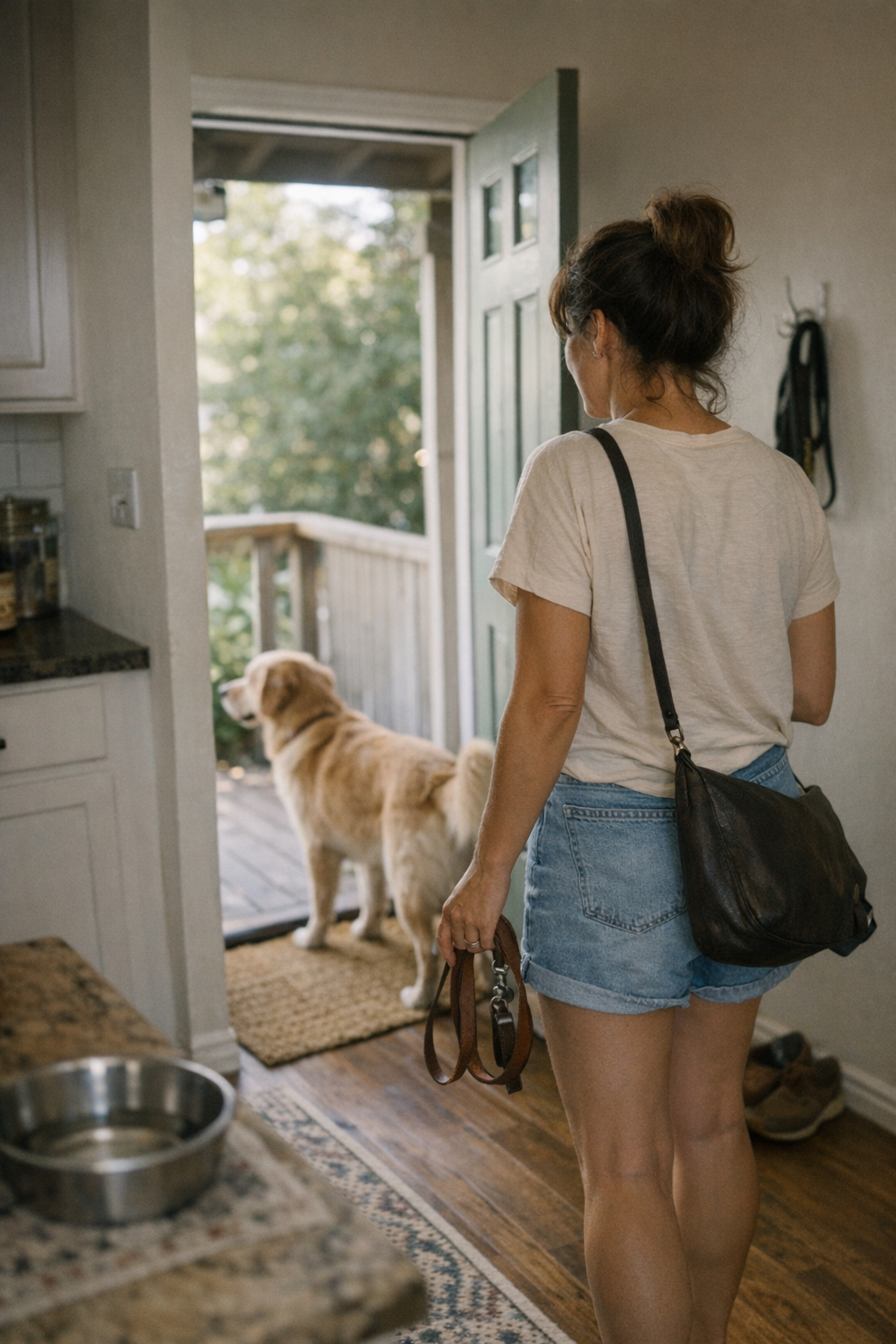
Every morning, there’s a snag you never planned for: after breakfast, your dog stands by the kitchen mat, hesitating. You grab the leash, but the dog just circles the bowl, unsure, delaying the move toward the door. One pause doesn’t matter—until it does, every day. Suddenly, the simple feeding-to-walk routine gets stuck here: one dog waiting for a cue that never comes, one owner stepping and re-stepping over the mat, the walk always bumping into the next obligation. The whole setup looks tidy, but actually moving from eating to outside keeps falling apart in practice. You keep reorganizing bowls and mats, but each morning, you both get delayed by the same awkward transition that just won’t smooth out—proof that one overlooked detail can break the whole dog-life flow DogPile was built to improve.
The Quiet Slowdown: How a Small Pause Turns Into an Everyday Snag
At first, that extra loop by the bowl feels like nothing—a blip you blame on stray kibble, a sleepy dog, or your own rushed timing. But day after day, the “post-meal limbo” digs in. Instead of gliding from food to front door, you both get stuck: the dog lingers, you reach for a leash left just out of reach, and your clean handoff becomes a standoff. It’s a pattern now. The rhythm falters, you’re eating your own breakfast with one eye on your dog, and both of you are a few minutes late getting outside, your morning schedule already under pressure from a friction point that doesn’t belong there.
It doesn’t announce itself with chaos. It seeps in with small, repeated drag: the dog delays, then doubles back, you keep grabbing for the leash behind a pile of boots, and what should be a two-second reset now eats up the buffer you thought you had. The longer it lasts, the less “organized” your kitchen corner feels—no matter how clean it looks, the flow keeps breaking down right in the middle of your morning routine.
Why Do Dogs Pause? The Subtle Impact of an Unclear Transition
It’s easy to blame the dog’s mood, age, or quirks, but most post-feeding stalls happen because the setup hides the next move instead of pointing to it. When the bowl sits out of line with the exit, or the mat blocks the clearest route, the cleanest-looking feeding zone sends a scrambled signal. Your dog circles, you both glance around, and nobody’s sure where to go. All it takes is a bowl too far from the door, a mat that becomes a sticky waiting spot, or a leash hook that always requires stepping around something—these are the invisible tripwires that slow a routine without ever making a real mess.
An Example From the Everyday Grind
Think about Tuesday: meal done, dog is ready, you’re aiming for “quick exit.” Except the bowl is still in the kitchen’s far corner, mat in the footpath, and the leash is wedged behind boots. You squeeze by, fumble for the leash, and lose momentum. By the time you finally open the door, you’ve added three extra steps and lost trust that this routine will ever be frictionless. Tidy storage doesn’t remove the block if it’s not in the path you actually use. That repeated reach or detour starts small, but the cost is real: breakfast gets colder, shoes get scuffed, and both human and dog feel the morning jam up before it even really starts.
It Looks Tidy, But It’s Not Working: When Organization Isn’t Enough
You can declutter, fold mats, and color-coordinate your leash rack, but if the flow from food area to door keeps stalling, all you’ve built is a display instead of a fix. In real homes, you keep hearing: “I put everything away, but I still step over the mat to get the leash,” or “The bowl has a spot, but the dog stalls, staring at me and the wall.” What you see as “organized” is masking the fact that the bowl, mat, and leash aren’t working together to move you forward—they’re slowing you down, one silent pause at a time.
Setup Friction: Where the Routine Actually Trips
This is not about clutter—it’s about the minor, repeated hurdles: a leash that requires an awkward reach with a full mug in hand, wipes tucked away from the actual walk path, a mat that blocks the fastest exit, or a bowl left in the spot that turns your dog’s finish into another circle. This kind of friction doesn’t scream for a dramatic fix—and that’s why it keeps coming back each morning. The weak point isn’t how the setup looks; it’s how it fails under repeated, real-use conditions.
Making a Micro-Adjustment: Shifting the Bowl, Resetting the Flow
One overlooked nudge usually does more than a weekend overhaul. Shifting the food bowl and mat six inches closer to the hallway made a bigger difference than any “reset” ever promised. Suddenly, the dog’s focus lines up with the exit, not with the empty bowl. That end-of-meal circle disappears, and with one move—eat, walk—you cut out the hesitation. The mat stops acting like a speed bump, and the routine regains flow. It saves less than a minute, but it also saves your patience. The kitchen end of the feeding zone isn’t designed to look perfect—it’s set up to clear the path. That’s the signal of the DogPile world: routines made easier not by more stuff, but by better arrangement for how you really move.
How This Small Change Pays Off—And What It Doesn’t Solve
No, your dog won’t sprint out the door every time. One tweak doesn’t erase all hesitation, but it does change the pattern: now, feeding cues walk time, not another round of doubt. The leash is still yours to grab, but you both know what comes next. The improvement doesn’t show up in style photos, but you’ll feel it the next morning you’re running late—flow matters most when you have the least time. If small adjustments feel invisible, check your mood after a week: less repeating, more moving, fewer delays layered into your day.
Other Spots Where Setup Quietly Slows You Down
The feeding-to-walk choke point is only one weak link. Most routines hide traffic jams in plain sight:
- Leash Storage: A hook or bin that’s technically “organized” but never easy to grab if your dog bounces or your hands are busy. A leash caught in the boot cluster turns quick access into slow untangling, every single morning.
- Cleanup Supplies: Wipes that are “there somewhere,” but placed so you’re drying paws by the wrong entry or doubling back into the kitchen with a wet dog, realizing only too late that grab-and-go wasn’t built in.
- Toy Overflow: Play zones slowly migrate into your walking lane. Now, two toys are underfoot on the way to the door—forcing you to sidestep or scoop as part of every exit, not just after a play session.
- Rest Corners: The softest bed always ends up right where you need to cross. The dog loves it; you step over it four times a day, breaking stride after every outing. A cozy corner can create its own bottleneck if it crowds the main route you actually use.
The setups aren’t broken—they just choreograph extra steps that sap time and calm out of your day. That’s the quiet difference between “looks organized” and “works smoothly”—and you only notice after enough slowdowns pile up.
Resetting the Feed-to-Walk Routine: Practical Tips
1. Trace the Dog’s Movement, Not Just the Room Layout
Watch your dog from bowl to exit—where does the extra loop start? Are you forced to step across their path, or reach across their waiting spot? These seconds matter. The actual path tells you more than any storage plan or tidy line ever will.
2. Move (Don’t Redesign) One Item at a Time
You don’t need a full makeover. Slide the bowl toward the door, move the leash bin where you naturally reach as you pass. Eight inches in placement can erase hesitation that no new organizer will solve. Stick to micro-moves so you can see which one changes the pattern—skip the urge to rearrange everything at once.
3. Signal the Next Move: Use a Clearer Cue
Uncertainty is a delay multiplier. A short phrase, gesture, or even a visual “go” cue (like nudging the bowl away or pointing at the door) links the finish of one task and the start of the next. You’re training the flow, not the dog.
4. Observe How the New Setup Holds Up Over Time
The only test is repeat performance. If a change only works for one day, it’s not fixed yet. Watch for the old pattern to sneak back: if you’re still seeing the same delay after a week, something else is out of line. The true signal is less stopping and less second-guessing—for both of you.