
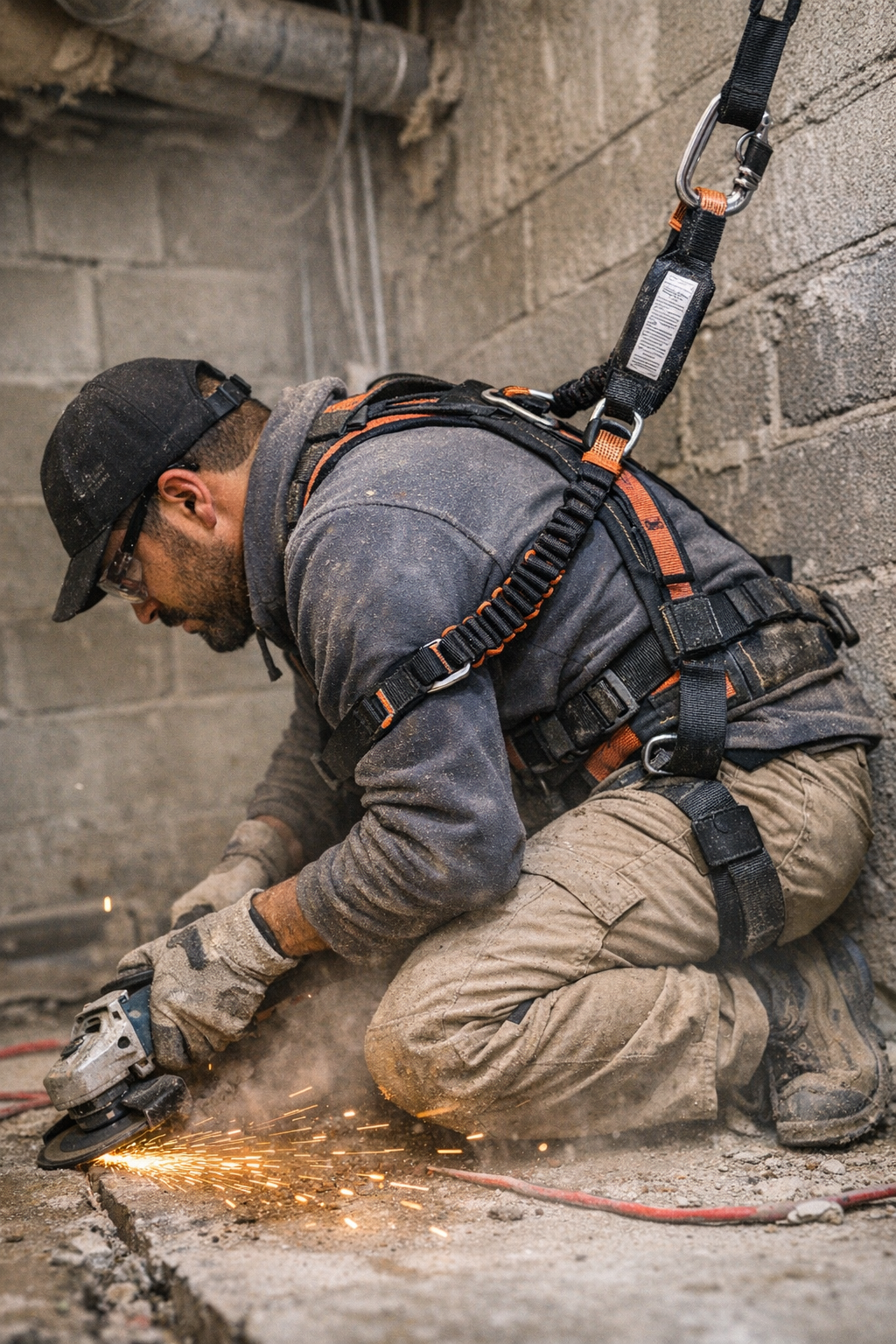
The shortcut on the jobsite is painfully familiar: You’re gearing up for a messy round of indoor grinding, maybe tight drilling overhead, maybe a long haul of sanding awkward seams. Gear selection turns into an afterthought—grab whatever harness and lanyard are closest. “Any PPE is better than nothing,” you mumble. But the first real cut exposes that lazy logic fast: steel meets hidden rebar, the bit bucks, or the wheel bites and jerks. Now, every tool kickback rattles through your body. Safety gear that felt routine becomes friction: tension in your shoulders, a jolt to your back, lost precision, a cutline wandering off target while gloves fill up with grit. Instead of fighting the material, you’re fighting your own equipment, and the job gets slower, sloppier, and more exhausting with every pass.
How the Wrong Harness Turns Minor Misses Into Major Rework
You know the cycle: The first cut or fastener feels right enough. But as you move down the run—grinding edge, nailing anchor, swapping to a new battery—the little mismatches in your harness start to add up. Stiff, static harnesses don’t cushion tool vibration or re-center after a binding cut. Every shock travels through unforgiving webbing straight into your hips and shoulders. It’s not just discomfort; your grinder drifts sideways, your drill skips the mark, and even sanding edges starts to require more force and micro-adjustments. By day’s end, “good enough” gear means extra sanding, patching, and sometimes retracing your entire cut—lost time you’ll never bill for.
The Difference: Dynamic Harnesses for Active Tool Use
Harnesses all look roughly the same—heavy straps, big buckles, no-nonsense rings. But a grinder-ready harness actually works with your body’s movement. Dynamic designs allow enough flex at the hips and shoulders to absorb quick shocks, pivot naturally, and keep you balanced instead of tipping you off-line with every unexpected rebound. Look for abrasion-resistant materials built to withstand repeat tool motion, not just idle “fall arrest” claims. It’s these small design differences—flex zones, shoulder articulation—that add up hour after hour when your arms are stretched above your head or you’re reaching for that last awkward fastener.
Lanyard Choice: The Unseen Saboteur
Most harness complaints come mid-task: When a drill snags or a grinder stalls, a cheap, static lanyard becomes the silent problem. Shock-absorbing lanyards rated at 1.2 kN or better make bites and skips manageable—not a full-body wrench that throws you off your line. The difference is subtle: Instead of feeling every minor bind twice, once in the tool, once in your core, shock absorption smooths out the job, giving you control to correct and keep the pace steady. Over a long shift, those hard checks on static webbing sap your stamina—and precision—far more than any one big slip.
Real Spaces, Real Strain: Grinding Where It Counts
Picture the job that won’t let you stand upright: crawlspace, furnace closet, elbow jammed against cold pipe, sander howling in your ear. It’s not just a one-off—it’s a regular Tuesday. Every new pass means adapting posture, ducking wires, and your cut path changes as soon as your stance does. When your harness rebounds every tool kickback straight into your spine, your hand slips, lines meander, and the finish starts looking amateur midway through. The right gear—shock-damping harness, dynamic lanyard—lets you regain steadiness when you shift position, not punish you for moving at all. With a static setup, fatigue and tool drift compound fast: after six or seven passes, you’re looking at real cleanup work, not just a quick brush-off at the end.
When Fatigue Takes Over: The Hidden Cost
It’s rarely just a single mistake that trashes your finish. Usually, it’s the cumulative effect of a dozen small jolts: a lanyard tug every time the saw binds, fresh resistance halfway through a long drill, awkward torque with each battery change. Dust and sweat make you clumsy, but it’s the unseen friction in your PPE that erodes your edge, both physically and in the cut. Each time the harness drags you off-center, your focus narrows—and the more you push, the messier the result. Dynamic gear doesn’t promise perfection—it just keeps those tiny mistakes from snowballing into hours of late rework.
The Real Impact: What Changes When You Choose Right
Switching to a dynamic-force harness and a quality, 1.8-meter shock-absorbing lanyard (rated to absorb at least 1.2 kN) delivers changes you can count by the clock and by the square foot:
- Cleaner, more consistent tool control on long, repetitive cuts—even when material density shifts or you’re forced into awkward reaches.
- Noticeable drop in shoulder and hip fatigue, so you’re not dragging yourself through the last hour or switching hands just to manage the ache.
- Tighter edges and fewer off-line gouges, keeping touch-up sanding and patchwork to a minimum instead of stacking up at the end of each job.
- Freedom to pivot mid-task: no more wrestling your body around equipment just to get a better angle. The gear moves with you, not against you.
It’s less about buying “the best” and more about spending sixty seconds at set-up: adjust every strap for active fit, focus slack in your workspace, buy lanyard and harness as a team rated for repeat, real-world tool abuse. Ignore “one-size” PPE or generic fall arrest claims. The best spec: Look for dynamic load language and mentions of repetitive tool use.
Red Flags: How to Know Your Gear’s Slowing You Down
You don’t need to wait for a nasty mistake to realize your kit’s holding you back. Real-world warning signs speak up across a single shift:
- Your grinder or sander drifts more often as the hours tick by—or you keep adjusting grip mid-cut just to stay on line.
- Strange aches at the end of routine days, body tension you’d expect after falling, not after normal work.
- Unfinished edges demand double the cleanup—when your PPE fights you, so does the finish.
- Any moment you catch yourself wrestling with the harness, not the tool, you know it isn’t working for you.
Good PPE fades into the background—you barely think about it as you move. If it’s on your mind for the wrong reasons, that’s a sign the frustration probably isn’t your fault.
Easy Fix: Prep Right, Work Clean
Get ahead of tool rebound and fatigue by tuning your PPE before the first cut—not after the first slip. Before starting, give yourself one minute: check for unrestricted movement in hips and shoulders, verify visible absorption specs, and adjust straps so you’re not flailing for range mid-job. If your lanyard or harness is “fall-only,” leave it for static work—using it on active, repetitive tool runs is a shortcut to frustration and wasted time. The small prep on the front end is the trade-off for controlled, predictable work by the end of the day.
Even when the jobsite won’t pause for personal comfort, paying attention to your kit upfront earns you cleaner results, fewer aches, and less time fixing yesterday’s mess.
Find more practical safety gear and grinder-ready PPE at Gumboll.