
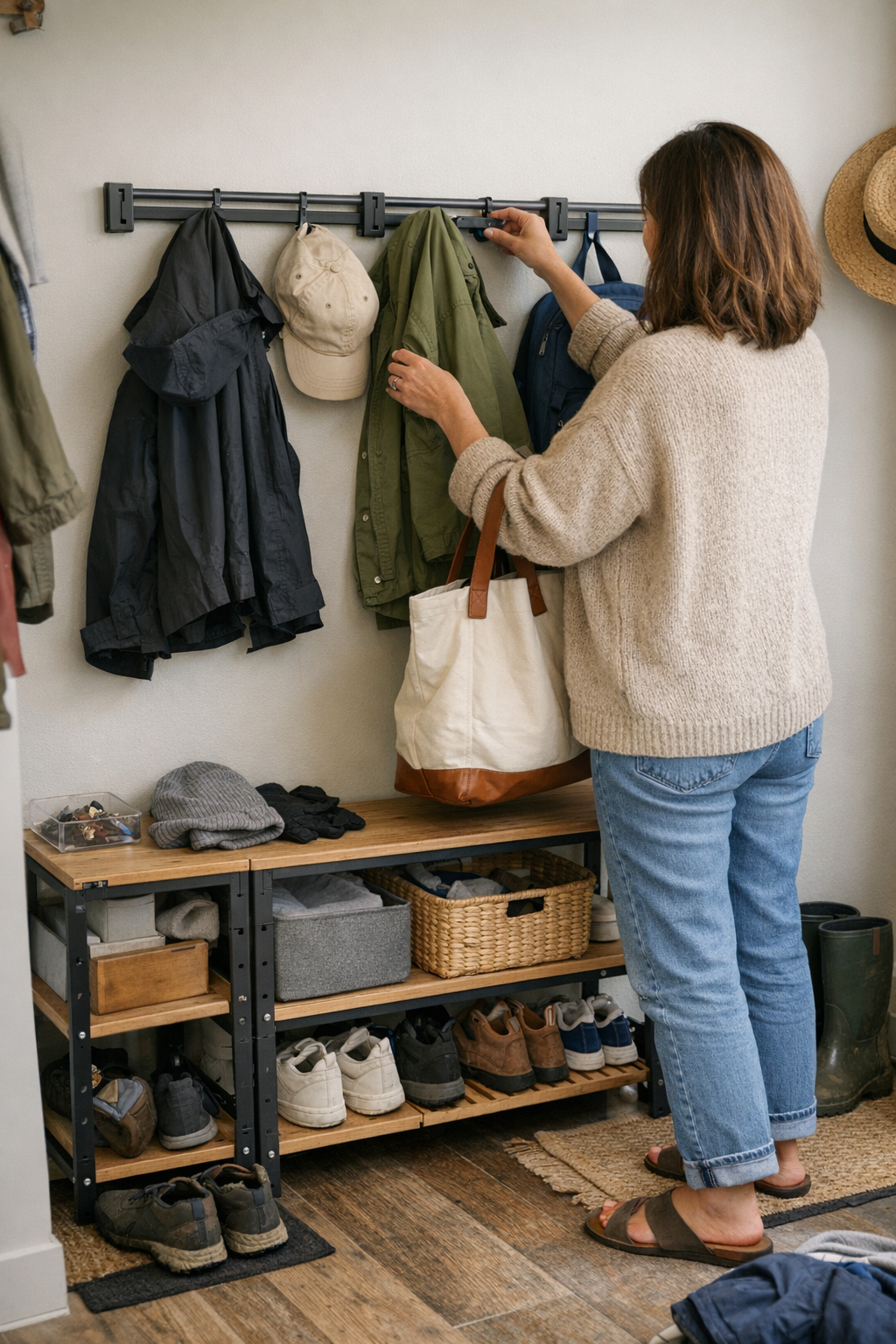
Fixed wall hooks look like a cure for entryway chaos—until your daily routine hits back. The spotless row starts strong, but the setup buckles as soon as life throws extra bags, bigger coats, or surprise downpours into your path. Hooks fill, edges pile up, and the neat threshold turns quickly into a crowded reset zone no one is eager to cross. If every exit or entry becomes a shuffle through hats, shoes, and sliding backpacks, it’s not just you. The friction isn’t from messiness; it’s from rigid solutions that fail when routines flex or real weather hits. What solved clutter yesterday only spotlights bottlenecks today.
The Problem Hiding in Plain Sight: Rigid Hooks and Changing Routines
The illusion of order often lasts just a week. Install a crisp row of hooks above a slim bench: the hallway looks complete, with a tidy shoe line underneath. But then—one guest’s jacket lands, wet bags join after school, or an umbrella that never fully dries claims space. Shoes break left and right, drifting from their assigned spots. Bags droop off the hooks, sometimes nudged straight onto the floor. Within days, the edges blur: what was once a clear path gets blocked by layers of overflow and half-parked gear. It’s not heavy clutter, exactly—it’s a steady creep that turns reset into routine labor.
The tension builds fast: each pass through the entry means shifting the same pile from bench to hook, from floor to bench, playing a slow-motion game of musical chairs. The original “place for everything” plan reduces to compromise—one big bulky item, and the rest have nowhere left to land. Hooks close together can’t fit thick coats and backpacks side-by-side. Suddenly, the storage that looked logical feels stuck on the wrong side of the door, or scattered in a way that slows you at the threshold every time you leave or return.
Overflow in Action: When “Good Enough” Isn’t Enough
Families, changing weather, and even one busy week expose these cracks quickly. What starts as “good enough” turns into real daily friction:
- The bench and floor absorb overflow. The bench edge becomes stranded with hats, bags, stray gloves. Shoes are forced out beyond their zone as upper hooks clog. Soon the shoe line is a pile creeping into the walkway.
- “Temporary” drops turn permanent. A workbag dropped “for now” lives on the bench for days because no hooks are open. Over time, these half-intended placements signal that the entry is now a holding zone—not a working threshold.
- Threshold pressure, blocked flow. With hooks crowded, walking in with full hands means fumbling: nothing hangs neatly, something always falls, and resets take longer. Clutter rebounds fast—there’s no quick return-to-order.
Why Static Setups Fall Short as Life Changes
Static hook lines assume next week will look like last week—and break down when loads get unpredictable. Single-person homes with perfect schedules may get away with it, but adding kids, guests, or just a wet winter exposes the limits immediately. The problem isn’t poor discipline—it’s lack of flex.
- Item types collide. Switching from light spring wear to bulky winter gear doubles up hooks, while sports bags crowd out coats. Useful wall space gets jammed or left empty—never the right balance for your day.
- Every reset is an argument with the layout. Adults swap corners, kids abandon shoes mid-aisle, and guests layer items wherever there’s a gap. Negotiation replaces flow. Clutter rebounds even after cleanups.
- Visual resets, weak function. The entry can look fixed after a deep tidy—but can’t hold up to repeat use. By midweek, the old cycle restarts.
What Happens When the Setup Improves
Swapping a rigid hook row for a modular, moveable setup changes more than looks—it changes what resets feel like. With adjustable rails, every season or schedule shift is a minute’s job: slide a hook, open a gap, or add a placement zone on the fly. The bench stays empty for sitting or unloading, shoe rows stay contained, and there’s always a spot available for whichever large or awkward item needs it that week.
One lived-in change: sliding a single hook two inches away from a crowded cluster stopped coats from piling up and shoe overflow from creeping beneath. Instead of layering gear until everything merged into one strategy-proof lump, the entry path stayed open—even when bags or coats multiplied. That two-inch flex cut stop-and-shuffle time to almost zero at the door. The difference isn’t visual polish; it’s day-long access and less ambient stress.
Recognizing When Your Entryway Is Too Rigid
If you keep moving the same jacket, retrieving shoes from the walkway, or propping bags upright on the bench just to get through, the story is clear: your setup can’t flex with actual use. Persistent clutter isn’t just untidiness—it’s your system showing it can’t keep pace. Bench surfaces turning to permanent drop zones, delays and blockages each time you pass through—these are system failures, not personal lapses.
Adaptable storage is about reset speed and flow: how quickly you can make the space work for an offbeat item, how reliably everyone finds a spot without constant negotiation, how little time goes to wrestling with layout. The more adjustable your setup, the less friction for every user, every season, every threshold rerun.
Small Shifts Make a Big Difference
Change rarely looks dramatic, but it feels immediate. Modular entryway setups invite quick pivots: shift hooks lower for young kids, open space for extra boots or visiting friends, tighten up for routine weeks. The main line never lags behind real life—shoes know where to go; coats don’t block the bench; umbrellas stop becoming hazards to dodge.
Small advice, big payoff: Adding a hook or two at kid-height turns “clean up your stuff” from a battle to a simple cycle. No more high hooks as off-limits territory—return flow improves, and the bench stops absorbing everything with a handle or strap.
From Visual Control to Real Daily Use
The best entryway isn’t the one staged for move-in photos. It’s the one that survives five family exits on a wet morning, gear swaps for sports nights, and still leaves the path to the next room clear. If you’re constantly re-parking shoes, picking up fallen jackets, or making detours for dropped umbrellas, your system isn’t adapting—invisible clutter management is becoming your new routine. Setup isn’t just about how things look, but how efficiently the threshold can reset, reroute, and stay useable under actual pressure.
Betweenry’s reconfigurable, transition-focused storage turns that high-traffic struggle into a system you barely have to think about—no more musical chairs with hooks, no more shoe avalanches, no more lost minutes to yet another reset. The point isn’t to achieve a perfect look, but to remove daily friction where it slows you most.
See more practical, adaptable entryway storage at Betweenry.