
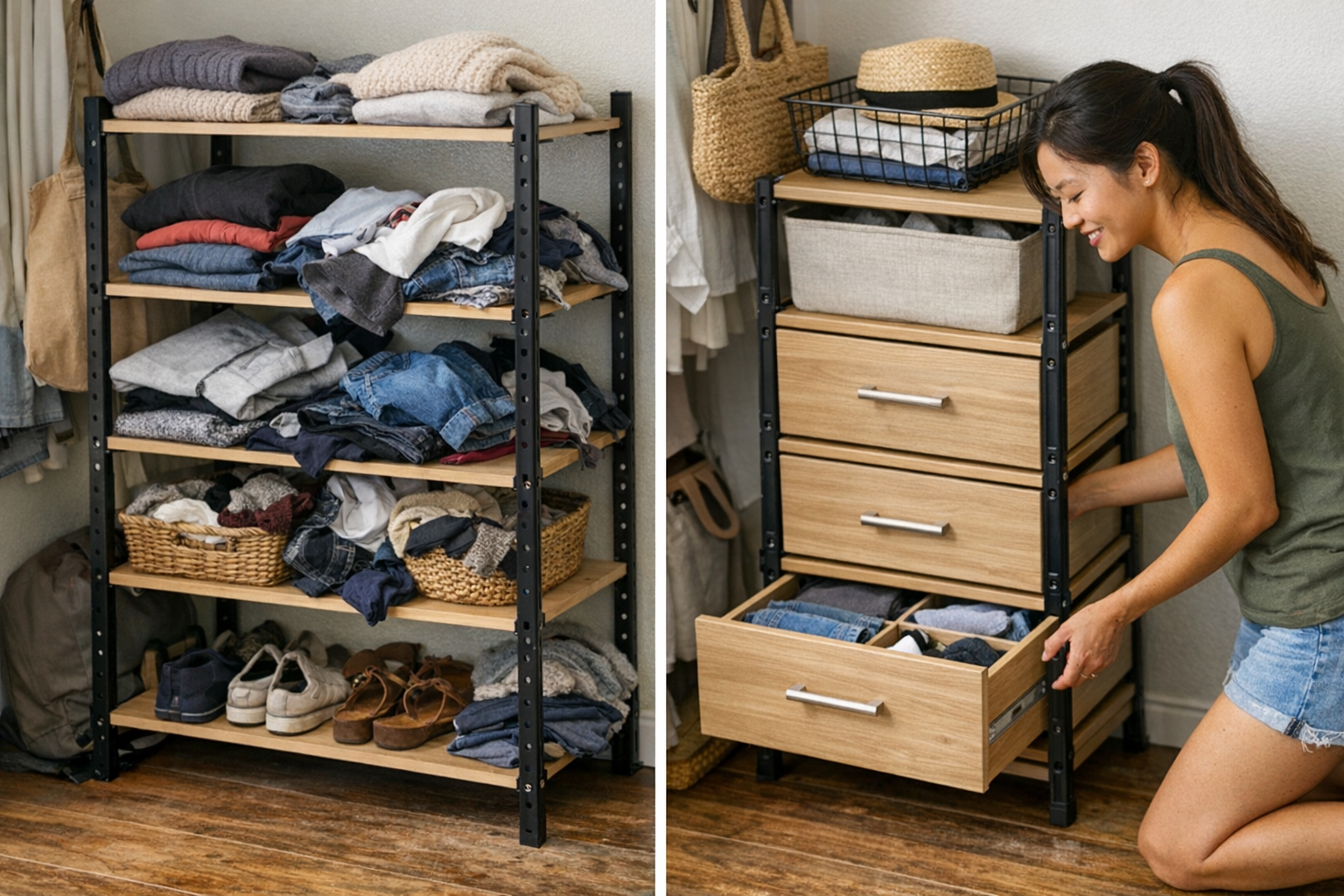
The difference between a closet that just looks organized and one that actually works gets painfully obvious after a few weeks of real, messy life. You start with orderly stacks and labeled bins, but day after day, it gets harder to find what you need, put things back where they belong, or face the closet at all. That quiet, everyday struggle usually comes down to one choice: drawers or shelves. It sounds trivial—until every rushed morning and tired evening depends on how easily you can grab, stow, and reset your space.
The Subtle Chaos of Shelf Living
Open shelves are seductive when they’re empty. You imagine clean stacks of shirts, everything visible, zero effort to grab what you need. But the first time you reach for a T-shirt under last night’s gym shorts, the pile above slips, suddenly nothing fits right, and socks tumble to the floor. What started neat turns soft around the edges—by midweek, jeans are half-folded on top of sweaters, and a belt has vanished behind piles you stopped reshaping days ago.
Every reach on an open shelf risks unravelling order. The more you hurry—or the more people dip into the same closet—the faster categories blur. Socks merge with tees. That stack of shorts you kept so nice on Sunday now leans, threatening to collapse every time you brush by. And anything you don’t use daily? It somehow drifts further out of sight, pressed to the back, forgotten until next season’s cleanup.
When Overflow Isn’t About More Stuff
The first real trouble isn’t running out of space—it’s running out of clarity. Half a shelf can look overstuffed after just a few imperfect grabs. Once one category slips into another, you waste time untangling shirt from shirt, or restacking after a single wrong move. This isn’t a slow road to chaos; a couple of rushed mornings, a partner’s hurried change, and your “easy-access” shelf is now a minor daily headache.
If you’re coordinating laundry, flipping clothes for a new season, or sharing the closet with kids, the disorder spreads faster. One off-pattern day and suddenly the whole system feels harder to fix than just shutting the door and ignoring it.
Drawers: Hidden Order, Faster Function
Drop a drawer into the mix, and everything changes. Suddenly, grabbing a tee or pair of socks takes a quick pull—not a careful restack. That semi-messy pile? It’s out of sight, out of mind, letting you reset only when you choose, not every single day. Drawers absorb life’s imperfection; the exterior stays neat, no matter how jumbled the inside might get after a wild week.
Drawers mute the mess. The outside stays serene, even as the categories inside inevitably swirl together. Your closet feels under control—even on a weeklong laundry delay.
The One-Minute Reset
Think of the pre-drawer routine: To find a shirt at the bottom, you’d lift three stacks, knock over socks, and probably refold the top layer just so you can close the door without shame. With drawers, you slide out, grab or return, and slide shut—the mess never travels out into view. You get back precious minutes, and the closet looks freshly arranged long after the folded piles inside have taken a beating.
The longer you live with drawers, the more you realize you’re less anxious about “finding time” for a reset. Imperfect isn’t visible—so you don’t feel the pressure to reorganize with every little slip. That energy returns only when you actually want to do a full tidy, not at the sight of sliding stacks every morning.
When Open Shelves Still Earn Their Keep
Shelves aren’t always the villain. For capsule wardrobes, shoes on display, or entryway jackets you grab daily, open access works. Just limit the number of categories—shelves handle five pairs of shoes, not two dozen, and those tidy rows of baskets only work if you keep sorting to a minimum.
But the moment you add more—scarves with hats, gym clothes with sweaters—the shelf can’t keep up. You either spend precious time every week reshuffling, or the shelf blurs into a landscape where categories die and clutter wins. With drawers, you can let your categories multiply. The chaos stays hidden, and you’re free from that nagging tally: “I have to do something about this tonight.”
Fewer Messes, Smarter Fixes
The real advantage isn’t picking sides—it’s combining the right features for your habits. If you find yourself constantly rescuing lost socks or separating tangled belts, add drawer-dividers to create micro-zones. These invisible fences let one drawer handle five things without a weekly avalanche. For shelves, shallow bins or baskets help, but only up to a point—too many categories, and even the best bin loses purpose as items migrate with each hasty morning.
If your shelves always get crowded at the front while the back sits empty, or if every category seems to wander by midweek, a single deep drawer with internal dividers often outperforms a row of shallow bins. The secret is breaking up chaos before it happens, not after.
Are You Stuck with the Wrong Setup?
How do you know if your closet is working? Simple: if restoring order takes longer than thirty seconds, or if staring at the shelves fills you with dread, something in the setup is doing you a disservice. The best systems—drawers, well-placed dividers, limited open shelving—don’t just look good for guests. They quietly eliminate clawing for the socks behind your sweaters, keep rush-hour reshuffles to a minimum, and let you get in and out without that familiar sigh.
For practical, hard-won ideas on closets and every other home storage challenge, visit ClosetWorks.