
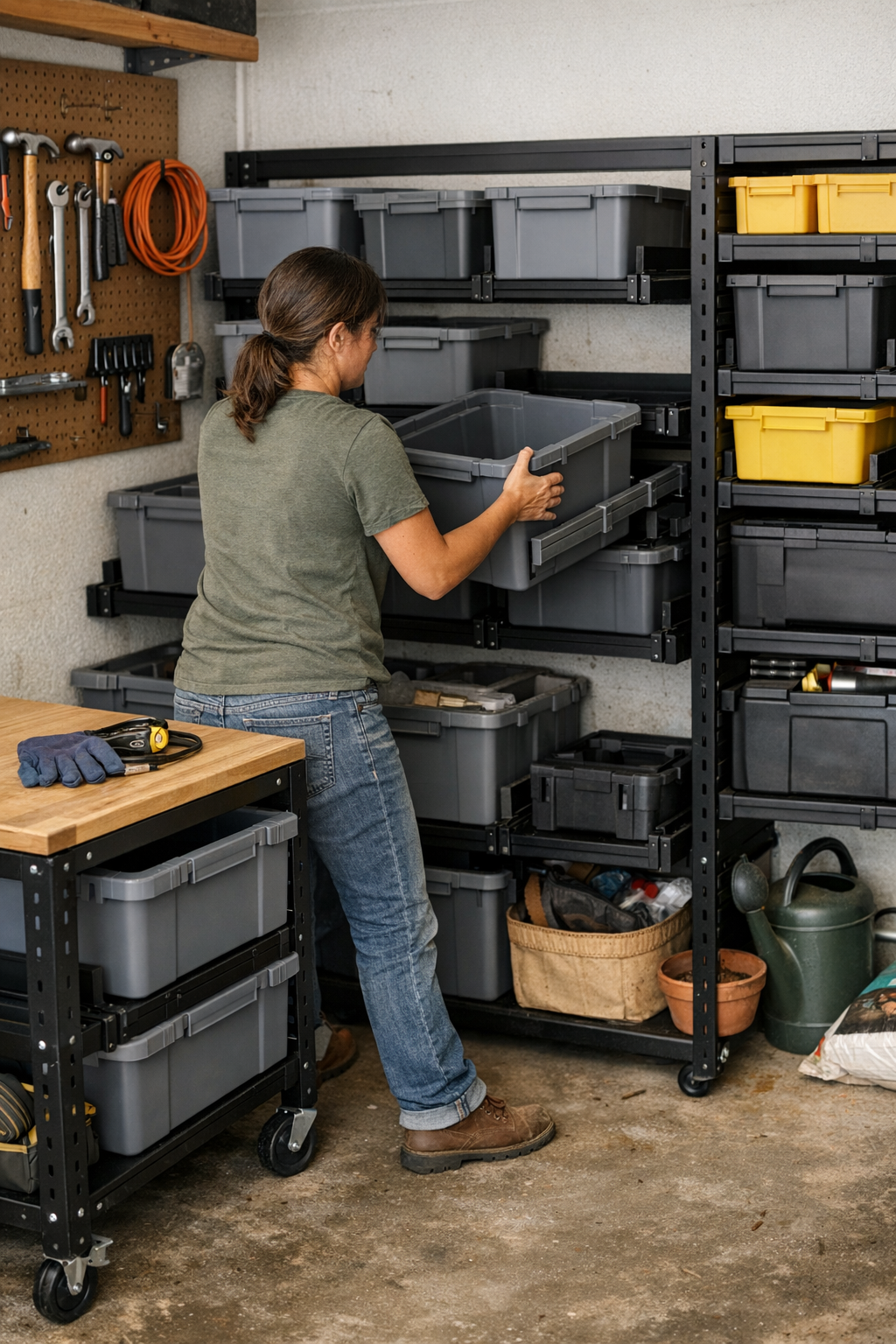
The rush of pride after overhauling your garage or workshop is real. For an hour, maybe even a weekend, every shelf lines up, bins sit flush, and the floor feels wide open. It looks perfect. But the honeymoon fades the moment you actually get to work: dragging the hose in, returning a heavy drill, steering the rolling cart with one hand while keeping an eye on a batch of fasteners in the other. This is when the true shape of your layout reveals itself—not when everything’s pristine, but when things need to slide back into place, fast, usually with only half your attention left. Suddenly, the question isn’t how tidy the setup looks—it’s whether it can handle the churn of real use without turning into chaos all over again.
The Hidden Weak Spots That Creep Up on Busy Weekends
At first, even a flawed system hides its faults. But in action, little hiccups repeat—bins that never seem to seat right the first try, carts that always seem to block just enough aisle to make every passing trip a squeeze. Where storage fights the return, the whole space starts to resist your routine. Movement turns clumsy. You’re nudging bins, shifting carts diagonally, or detouring around the one cabinet edge always jutting out past the work zone.
This slow slide into disorder doesn’t explode in one big mess; it happens in increments. A wayward bin lingers out of its spot “just for now.” The end of one row quietly becomes an overflow pile—gloves, odds, and the shovel you’re too rushed to squeeze back between other gear. Dead corners fill with what doesn’t fit elsewhere. Eventually, every new task means first reshuffling the last task’s leftovers.
Docking: The Physical Difference Between “Tidy” and “Effortless”
When every storage piece docks instantly and reliably, you stop thinking about storage entirely. The best setups let you return a hammer, a set of gardening shears, or an armful of odds and ends with a one-handed slide or a blind push in passing. There’s no fiddling, no extra turns, no checking if things lined up. Your whole flow stays intact, even when your hands aren’t empty or your mind’s on the next step.
Everyday Setbacks You Don’t Notice Until They Add Up
Picture this: Mobile bins stacked on plain shelves. On paper, there’s a place for everything. But try unloading after an afternoon outside—your hands are dirty, you’re juggling a few tools, and one bin refuses to dock. It’s crooked, maybe backwards, and needs a second fumble to sit right. The cart you rolled out earlier? It never returns flush to the wall, leaving an annoying wedge of lost floor space right where you want to walk. Pretty soon, routines stall: you sidestep, nudge, and on the third trip your patience wears thin. The setup can store things, sure, but it forces workarounds at every turn.
How Minor Friction Becomes Major Disorder
These minor struggles might seem harmless, but they snowball. Over time, tools start to gather in piles—closer to the workbench or on the nearest surface, because getting them “home” feels like another task. You keep shifting one rolling cabinet back and forth, just to clear enough room to open a drawer or access what’s behind. Overflow becomes routine; zones meant for flow turn into dumping grounds. Every movement through the space involves squeezing past something not quite where it belongs.
A truly resilient setup shrugs off sloppy returns and quick drop-offs. If you can’t rediscover order without slowing down or using both hands, the system will always settle back into clutter. Clear aisles get pinched as carts drift, bins sit askew, and your carefully mapped-out zones blur into catch-alls. That sense of control you chased with the reorganization begins to unravel in slow motion.
Real-World Example: When Optimization Backfires
Imagine a single-car garage, squeezed for space but maxed out with two lines of modular bins and a rolling tool chest. On paper, every inch works. By the end of week one, reality intrudes. Bin rails call for a two-handed dance to dock each return. The tool chest, always meant to tuck aside, starts to wedge out on an angle after every use, blocking access to a corner shelf. A shovel, forced into a gap, jams the rest of the lineup, so it gets abandoned in the only free corner. Within days, every pathway demands another awkward step, every retrieval triggers a reshuffle, and routine maintenance—sweeping the floor, clearing a spot to work—takes twice as long. The garage isn’t full; it’s just functionally blocked.
Why Physical Guides Outperform Good Intentions
What keeps order isn’t discipline, but design. Physical guides—rails, channels, bumpers, or defined stops—quietly enforce alignment no matter how rushed or careless the return. You slide a bin and it locks into place; roll a cart until it clicks against a bumper and suddenly the aisle’s clear again. Footpaths don’t shrink. Wall zones stay usable. Every return is a single, mindless motion, not another puzzle to solve at the end of the task.
Without these guides, even the sharpest visual layout unravels with regular use. Bins drift off center, carts wedge at odd angles, wall space fills with random leftovers until you’re digging to find what’s next. But add a few effective rails or channel stops, and you can reset the whole area with a handful of casual returns. The difference isn’t in how it looks but in how it performs—especially when working fast or under distraction.
Fast Upgrades: Docking That Fixes Routine Clutter
Restoring flow doesn’t require a total rebuild. Retrofit add-ons—like adhesive rail strips, magnetic guides, low-profile channel kits, or bolt-on stoppers—can turn any shelving or rack system from decorative to dependable. Many commercial storage units and rolling cabinets have options for add-on docking hardware. Even a simple tactile end-stop on a shelf keeps bins in check and stops the slow sideways drift. The impact is real: no more re-centering after every use, and no more micro-adjustments just to keep the zone clear. A 10-minute tweak can give back hours of hassle across the month.
Spot the Choke Points—Then Solve Them for Good
If you’re repeating the same shuffle every week—a cart half-blocking the walkway, bins always askew, and overflow zones always growing—a missing docking solution might be why your space feels harder to keep tidy than it should. Instead of fighting to maintain order, smart layouts work with your habits. A system built to absorb hasty returns stays orderly regardless of the pace of life, freeing you to actually use your garage or workshop, not just clean it.
Day after day, that’s the upgrade that matters most: clear movement, fast resets, and storage zones that actually stay clear. With the right guides in place, order becomes automatic—never a project, just what happens next.
Explore modular storage systems and docking solutions designed for real, repeatable routines at StackNest.