
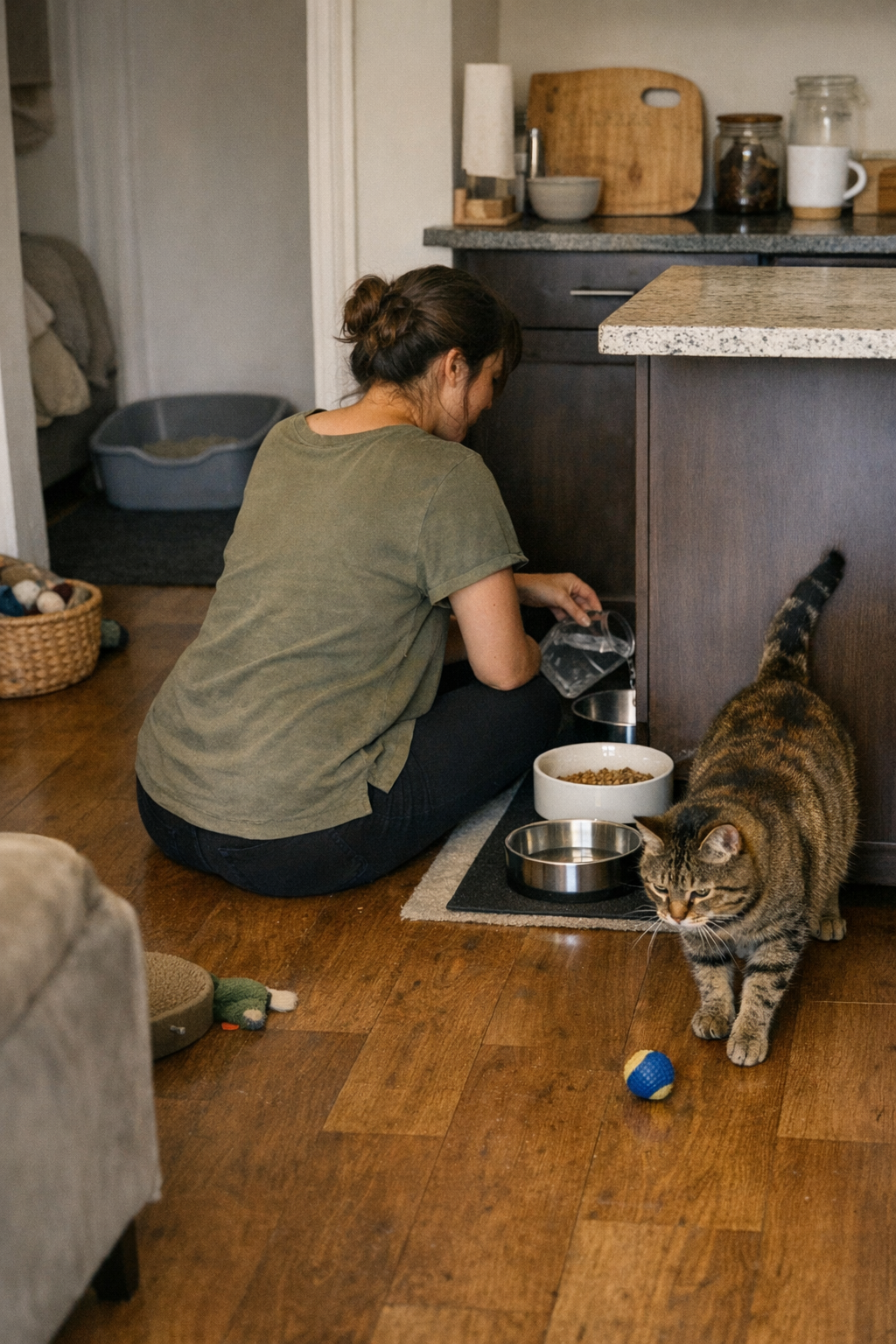
Every “neat” indoor-cat setup hides a silent tradeoff: your kitchen looks calm, litter stays out of sight, and toys are stacked in a bin. But by Wednesday, you’re swiping familiar water drops off the floor, stooping for the same stray toy under a chair, and wiping the edge of the mat where grit thickens—again. You don’t need a worse mess to notice the problem; you need fewer repeat interruptions. If you dread the next routine reset even when everything’s put away, your cat’s corner isn’t failing by sight—it’s failing by friction. The real StillWhisker difference isn’t just looks, but the way the smallest misalignments in food, water, or litter setups turn into recurring chores, never visible in day-one photos.
Why “Tidy” Cat Spaces Still Create Work
It’s easy to treat “order” as the end goal: set out the bowls, sweep the corner, close the toy bin. But the real test is whether your daily patterns are smoother—or just hiding the same old obstacles. Most “organized” cat setups conceal friction by trapping maintenance in predictable weak zones: that bowl nook that always needs extra wiping, toys that never stay put, a mat edge that still leaks grit. If you keep doubling back—resetting, wiping, shuffling—you’re not outpacing the mess. You’re stuck in routine correction engineered into your setup from the start.
Snapshots Hide Accumulating Friction
Freshly cleaned, any cat area feels under control: bowls polished, toys out of sight, mats squared. But by midweek, water lines the floor past the tray, mat edges curl, and litter dust goes further. The gap becomes obvious: a space made for show stalls after two days of real use. Smooth initial order hides the fact that daily friction always returns right at the same pain points.
Where Cat Zones Quietly Break Down
The breakdown isn’t dramatic—it’s wearingly familiar:
- Food bowls positioned so every refill leaves a drip zone just past the mat, or forces you to slide a nearby appliance to pour without bumping things.
- Litter boxes with mats that stop short, so every exit traces the same faint grit into your hallway—a daily sweep you already resent.
- Toy bins that never stop the migration: balls reappear under the couch, crinkle mice block the closet, forcing mini rescues when you’re just passing by with laundry.
These aren’t cosmetic problems; they’re the pinch that lags every routine. Even if the area stays “neat,” the actual order breaks down in the exact same places, day after day.
What Makes a Setup “Feel Right” For a Cat—And For You?
The right setup isn’t just cleaner on day one—it’s less disruptive by day five. A space that absorbs repeated-use friction fades into the background. But a setup that simply “looks tidy” amplifies the cycle of minor corrections: you end up spending more time mopping, reaching, chasing escaped toys, or untangling mats than before.
Real-World Stress Points: Reaching, Refilling, and Resetting
These stress points stack up, each in their own way:
Blocked by Bowls or Baskets
Bowls stashed “out of the way” often end up right where you need to walk. You lean awkwardly over a bin to refill water, or slide the setup back and forth just to prevent streaks and splashes—compounding the friction. Your routine may seem easier, but the same off-angle reach or small swipe slows you down at every mealtime.
Litter Trails That Loiter Where You Least Expect
Litter mats only help if they match how your cat actually steps out. Misaligned mats mean dusty footprints land right where your socks land, leading to another unplanned sweep. Traces reappear just past the edge—never quite contained, always needing cleanup in exactly the wrong place.
Toys That Keep Escaping (and Interrupting)
A full bin means nothing if toys always make their way under furniture or into shared traffic zones. The true cost isn’t just a missing toy—it’s another reach, another shift, another break in whatever you were doing simply because setups leave escape routes wide open. “Quick tidy” becomes a loop you expect, proof your system doesn’t really hold the line between play and the rest of the house.
When Comfort Creates New Snags
Soft beds, plush mats, or inviting rest corners solve comfort but multiply upkeep. A fluffy blanket collects fur, bunches up, and blocks a vent just when you need to sweep. Solving for coziness regularly makes resets messier—what welcomes your cat quietly clutters your workflow. The cost may not show immediately, but over a week’s patterns, it slows every quick pass-down to a more frustrating reset.
The Cycle of “Last Minute” Cleanups
Some setups guarantee minor but constant extra steps:
- Supplies just out of reach: Wipes or bags “stored close” are still an extra few seconds away, making every cleanup feel like an interruption.
- Cat gear drifting into human space: A station shuffled out of sight spreads further as bowls walk toward open walkways, putting you and your cat in direct traffic, just to minimize visible mess.
- Comfort items that tangle the flow: A sound-dampening mat that won’t stay put means each reset brings a fresh round of smoothing and shifting—small, but cumulative.
Scene Update: Small Shifts, Big Change
Instead of hoping to “keep up” with friction, you can realign your setup to stop it from snowballing. Try shifting food and water to the side of the kitchen island—out of heavy traffic but reachable without contorting or moving other items. Upgrade to a hard-edge food mat just wider than both bowls, and runoff instantly becomes one contained swipe, not a creeping floor stain. You might only gain a couple inches of coverage, but that margin cuts your daily wiping in half. Less bending, less hunting for missed crumbs, more time between actual cleanups.
Repositioning your litter area for a flush mat/doorway alignment chokes off the main scatter path: instead of daily hallway sweeps, spot-cleaning becomes rare, not routine. Small interventions—lining up mat edges, moving return bins closer to action—mean fewer daily breaks for rescue or reset. When routines stop exposing the same weak points, your mind recognizes it: maintenance pressures fade, and you do less “checking” because the setup holds longer under real use, not just by appearance.
Barriers, Bins, and Reclaiming Calm
Sometimes all it takes is a low-edge bin or a soft wedge plugged into toy escape pathways. Block off the classic under-couch gap and toys stop doubling as daily trip hazards. Or, shift toys to an edge zone—still visible, now out of foot traffic—and “return and reset” shrinks to a single sweep, not an endless scavenger hunt. Every small fix adds real margin to your routine instead of just new clutter to supervise.
The Key: Less Correction, Not Just Less Clutter
The goal isn’t just tidy surfaces—it’s a rhythm where you stop seeing the same spots yelling for attention. Only then does the line between “cat zone” and the rest of your living space truly hold. Strong setups defeat hidden friction, not just visible mess. The real success isn’t in a photo-ready corner, but in days you don’t even remember checking beneath the table or chasing after another forgotten mess.
Find more ways to quiet the repeat problems of shared indoor-cat life at StillWhisker.