
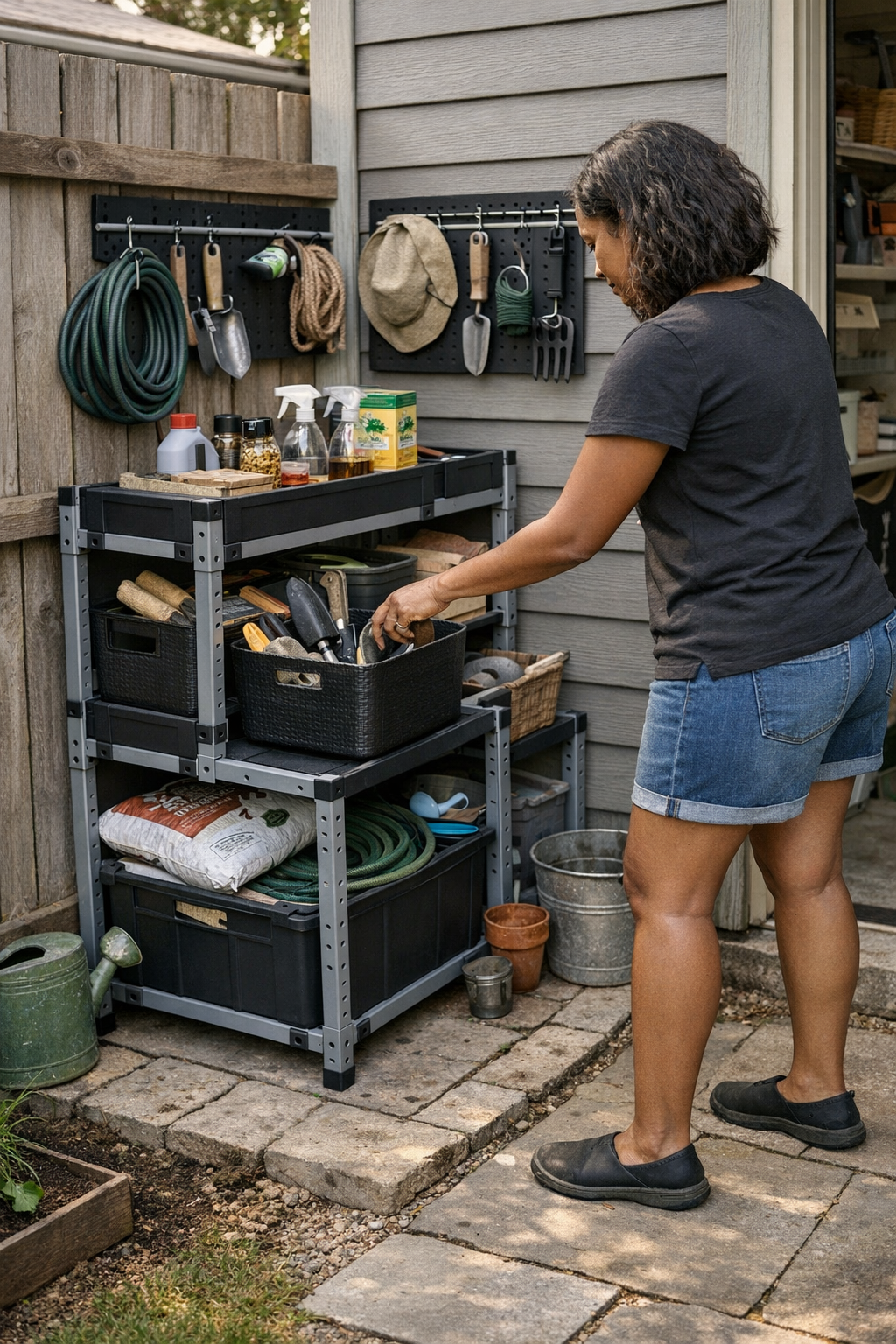
Tidy never lasts long in a real outdoor zone. If you’ve ever reset a backyard corner, side-yard strip, or garage threshold, you know the drill: after a big clean, the area feels open, almost finished—until normal life returns. Hand tools and gloves start drifting, pruners migrate toward the closest bench, and within days, “just for now” piles stick to any flat surface near your movement path. The space tricks you; the center stays clear, but mailbox routes, gate entrances, and utility paths pick up overflow, snagging shoes and stalling the next job. You beat back the clutter, walk inside, and the cycle is already starting again.
Why Clutter Builds Up Where You Walk, Not Where You Store
Most outdoor storage plans focus on adding containers: more bins, new racks, more wall hooks. But the frustration never comes just from a lack of “space.” The everyday headache is return flow. After a muddy stretch of weeding, or when hurrying out with both hands full, the odds of extra steps to a closed bin drop to zero. Tools land wherever you stop moving—too often, right at the base of steps or in the middle of a transit path. Routine choices, not a shortage of cubbies, shape the terrain: practical mess, not a deficit of shelving.
Think of any narrow side-yard. The shelf holds what it promised to hold, the main bin is accessible—but by day four, gloves and shears cluster at the utility bench, and now you’re tiptoeing around a trowel left exactly where you dropped it to answer the phone. Temporary “parking” zones solidify into semi-permanent drop spots. Corners get heavier. By trash day, the path for bins shrinks into an obstacle course, and somehow it’s back to square one.
When Setup Looks Good But Fails in Motion
Symmetric wall systems and modular units photograph well and look organized after a weekend reset. But during actual weeks—rainy seasons, batch gardening, repairing the fence—organization unravels. Open bins fill up. Closed cupboards are left shut “until later.” Everything is tidy except the top of the bench, or that open space just inside the gate. Patterns emerge: the right storage exists, but real use gets rerouted. Gear piles up exactly at the edge of movement, not inside the planned zones. It’s the difference between designed order and the drag of everyday workarounds.
Here’s a scene: After evening cleanup, you toss pruners and cracked gloves on the bench instead of walking them three extra steps to the right cubby. You’ll come back—just not tonight. By morning, that bench blocks the path for recycling bins or sets up the next family member to shift your pile “just for now.” Each shortcut adds to the reset list. Multiply that friction over a week, and the energy cost grows bigger than expected. Neat plans, interrupted by normal movement.
How Deep Storage Backfires in Daily Life
When storage is designed for maximum volume, not for minimal friction, clutter doesn’t disappear; it finds new places to stall you. Closed cabinets outer-edge the workspace, but after long projects or wet weather, the idea of unlocking and relocking doors is just too much. High-turnover gear—gloves, snips, bags of ice melt—shifts to wherever you can drop it fastest. You spot the sign: a growing patch of gear where the return home is a hassle. Closed storage wins on design, but in real life, surface mess has found a back door in.
The Real Test: Making Returns Frictionless
The question is simple: Does your setup make returning things easier than abandoning them? Consider one shift: an open catch box posted less than an arm’s reach from the main shed exit. Suddenly, dropping off dirty trowels means zero detour. Over a week, what would’ve become a stepped-on puddle of gear at the doorstep now collects safely in one spot. Not sorted, not hidden—just corralled, visible, and ready for later. The nightly “corridor sweep” becomes a 30-second dump; nothing clogs the footpath or trip spot by morning. Clean lines survive even after project days where nobody wants another chore at dusk.
This isn’t about changing habits—nobody learns a new routine when tired or rushing. It’s about re-routing the same moves so resets happen almost accidentally. When the open drop zone is easier than any other flat surface, friction drops, and overflow stops blocking the rhythm. The difference by week’s end feels tangible: less shifting piles, less stepping over gear, less surprise clutter cutting off access to bins or utility corners.
Weak Return Flow in Real Scenes
- Zone creep: Pruners left at the patio edge, then nudged by the door—now they’re a trip point, not a stored tool.
- Double handling: Gloves dumped on the bench have to be moved again when it’s time to use the workspace or bring out the mower.
- Permanent “temporary” spots: The same stairs or low wall keeps filling up, no matter what the plan says (“I’ll deal with it later” wins every time return is a hassle).
- Wall units running at half-strength: Grid of hooks looks complete but gets skipped—instead, piles grow at hostage corners of the path, proving setup but not service.
Turning Fast Return Into a Habit—Within Reach
The breakthrough is never just “more storage.” It’s a visible, accessible landing spot for daily-use chaos—mounted or placed roughly at that last moment before you set something down anywhere else. Every sideline strip, garage threshold, or narrow patio can house a catch tray or open crate within a step or two of the exit or entry point. Even small spaces get the benefit. Litter on the surface is cut before it grows into an avalanche. The daily loop tightens: use, drop, batch-sort later, path stays open.
The payoff isn’t a photo-perfect scene. It’s a walkable path at dusk. No more late resets or reshuffling every time you want to take the bins out. Drop spots tuned to real movement keep zone lines clear; modular storage you can adjust means reset jobs scale down, not up. The outdoor setup starts supporting the way you move, instead of interrupting it.
Quick Reset Tip
Keep your catch spot only as large as one day’s gear. Batch-sort before you head inside for the night. Creep never outruns routine if you use daily volume as the limit.
When Organization Survives Actual Use
Real outdoor order doesn’t live in staged photos. It’s what happens after a week of weather, surprise repairs, or an evening with three jobs half finished. Walkways aren’t blocked. Corners don’t fill with gear limbo. You don’t lose a Saturday just rescuing the edge zones from slow-motion pileups. The area still looks used—muddy tools, dropped gloves, proof of real life—but the mess isn’t in charge. That’s the real win: an outdoor setup that keeps supporting the movements you actually repeat, no matter how many resets you’ve powered through before.
See what real-world storage designed for real outdoor zones feels like at the TidyYard store.