
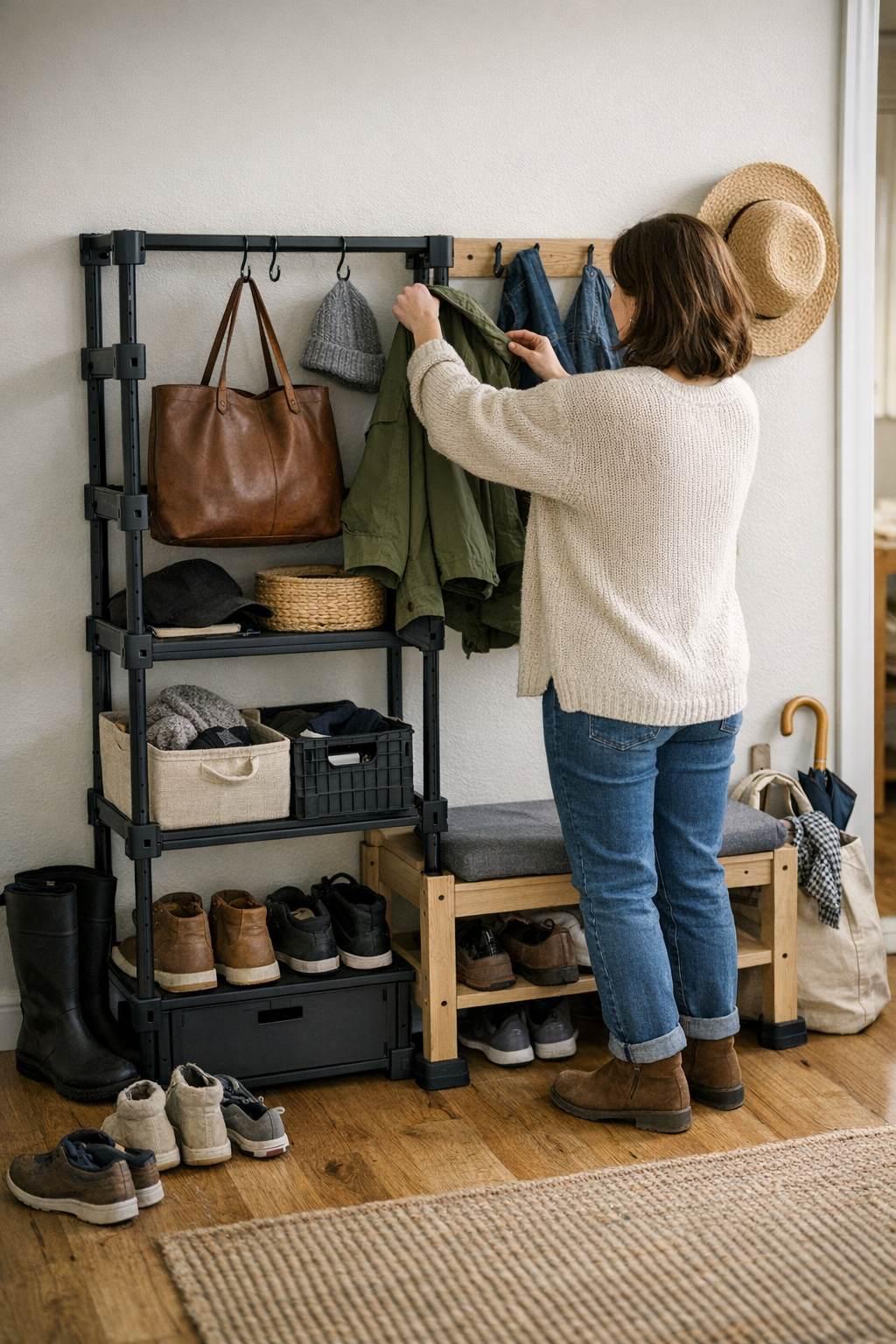
The entryway is where order lasts exactly until the first real-life return. One bag slung down, and that clean path you set up is already fractured. Shoes, lined up with hope, start splaying sideways by Wednesday. A bench that looked disciplined at move-in drifts two inches every time someone swings a bag past. Not one big mess—just the steady breakdown that happens when storage solutions meet actual daily use. Entryways don’t fail all at once; clutter spreads from the first week, reset after reset failing to hold the line against backpacks, damp jackets, and everyone rushing through the same narrow zone.
Permanent Mounts vs. Renter-Friendly Storage: The Immediate Divide
If your security deposit is on your mind, the line is clear: Wall-mounted storage anchored with screws doesn’t care about rental agreements—it stays put, even after winter boots crash through or bags stack up at rush hour. Renters, stuck with rules, go for adhesive hooks, tension rods, and benches that won’t mark the wall. Day one: it looks just fine—a “no-drill” setup holding its pose. But by the second week, the signals start: a crooked hook, a sliding bench you have to toe back, shoe bins edging into the walkway. Lease-friendly storage buys you safety from landlords, but lets daily habits erode your setup one wobble at a time.
Where Small Shifts Become Big Everyday Hassles
This isn’t a dramatic collapse. It’s the quiet grind: the rack isn’t where you left it, shoes spill into the path, bags droop lower every day, and the threshold shrinks. Each re-entry nudges storage out of line—by Thursday, what started as an organized “zone” is now a spread of bins and shoes chewing up your walking space. Kids double the drift; a bench for sitting becomes overflow; what was a clear path now forces you into sidesteps and shuffles just to get past. The setup that looked good for a photo never matches the mess of Tuesday night returns.
Scenes from the Threshold: Ordinary Use, Reluctant Storage
The friction is quiet but relentless. Shoes quit following their row. Drop a gym bag, come back from groceries, and the bench has prowled closer to the walkway. Hooks set at perfect angles tilt half-down as adhesives soften. What should be a straight divide between “gear” and “walkway” blurs out. Every time you set down one item, you’re nudging three others back into formation: a bench, a bin, the spread of shoes drifting for the door. Catastrophe never comes, but the space asks you to reset it again every single evening.
Renter’s Dilemma: Protect the Wall, Pay with Constant Rework
Most leases mean no permanent holes—so renters avoid drills and screws, but the cost hits on the return. Temporary storage starts drifting under real loads: hang up a coat, toss a backpack, and the adhesive rack shifts just enough to throw off the line. The result is a clutter-prone zone that needs correcting after every arrival. Benches back too close to the door, shoe racks drift off-center, hooks hang but don’t absorb any rough use. The “temporary fix” becomes a permanent inconvenience—safe for the walls, but always one step from disarray.
How Screw Fixes Change Daily Pressure
Screw-mounted setups stand their ground—literally. Racks hung with anchors stay straight, hooks don’t sag, and a bench stays lined up no matter how fast kids barrel through or how heavy the gear gets. It’s not about brute strength—it’s the way permanent fixes soak up routine impact, stopping the slow creep that sabotages renter setups. Rows stay aligned, and “reset” means a 30-second tidy, not a reshuffling marathon. In practice, a screw-fixed rack above a bench can hold shape for months, handling dozens of weekday returns without a single adjustment.
The Real-Time Cost of Renter Alternatives
Put that against the real-world renter setup: a sliding bench, adhesive hooks that unpeel in humidity, bins that drift until the door barely opens. Drop zone order dissolves fast—ten quick returns and you’re dodging the bench edge, the bag caddy has leaned off-square, and shoes now live in the center track. The “flexible” setup you picked to protect the lease demands a nightly correction just to restore any sense of order. Every trip inside is another round of minor, necessary repairs.
Containment Strategies: Making Renter Setups Work (or Work Enough)
If you can’t bolt anything down, you have to buy time, not permanence. Heavy rubber pads under benches, non-slip mats, or wedging storage into corner nooks can slow the migration. Even tension rods or discreet brackets can fence in movement for several days. These improvisations aren’t flawless, but they can hold the drift to a couple inches, buying enough stability that a single reset lasts a week, not a day. It’s about blunt resistance, not beauty—keeping the bench from walking and bins from sliding until you get a full week of clear passage before the next shove back into line.
Small Fixes, Noticeable Gains
The clue is always in the minor failures: one shoe nosing for the hallway, a bench now living half in the walking zone, hooks that twist under a new bag’s weight. Spot these signs early and blunt the movement with physical fixes—extra friction, modest repositioning—before your entry dissolves into regular chaos. Don’t wait for total collapse: temporary setups only survive repeated use if you actively reinforce them. Stop one drift and you might avoid a dozen resets.
What Actually Works for Real Entryways?
No universal answer exists. If permanent anchoring is on the table, routine friction nearly disappears—wall mounts and screw-fixed benches shrug off daily impact. In “no-drill” homes, look for storage with wide bases, low centers of gravity, and natural corner leverage. Plan to add friction—rubber, weight, resistance. If you find yourself moving storage pieces three times a week, your setup is losing the entryway battle, one small drift at a time.
Entryway Storage Is About Pressure, Not Just Volume
Don’t count hooks; count resets. The best setup isn’t defined by how much it can hold, but by how well it holds up to repeated cycles of drop, store, grab, and go. Permanent fixes erase drift. Renter-friendly options bend—sometimes literally—under daily pressure, and the flexibility that saves your wall becomes a slow-motion undoing for order. Still, with some simple physical tweaks and attention to early warning signs, you can get most of the stability you need—long enough for the entryway to feel use-ready rather than just photo-ready. But every renter has lived this truth: only a system that actually holds its ground gives you a threshold that isn’t always on the verge of collapse.
Find storage solutions built for real entry and exit at Betweenry.