
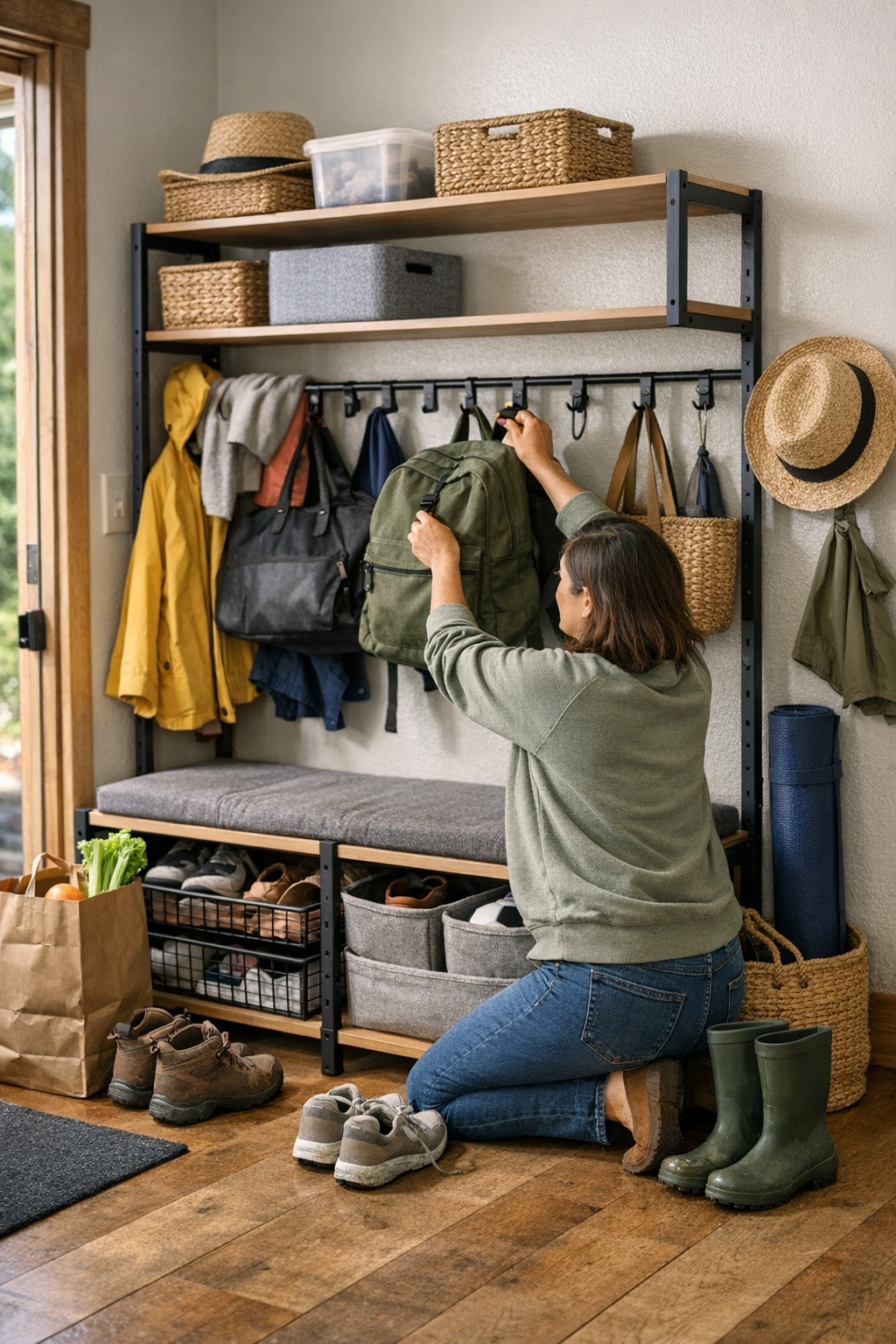
If your entryway storage system needs tools every time life shifts, you’re not getting true order—you’re just buying delay. The cost shows up in the exact moment you realize: to fit winter boots, or squeeze in one more bulging backpack, you’d need a screwdriver. Suddenly, “organized” means “can’t adapt.” That perfect calm when the floor is visible and every shoe is in place? It breaks the second your routine outpaces your setup. Shoes spread, bags overflow, and now any change to your entryway is a project, not a quick fix. Even basic resets get stuck behind the friction of tools and time you don’t have.
How Fixed Storage Becomes Friction in Everyday Rush
At first, it’s easy to mistake rigidity for reliability. Day one: the bench fits everything, hooks all have a job, and the shoe rack lines up just right. But after the first week—after a rainy school pick-up or a grocery run with muddy sneakers and an overloaded tote—problems emerge. Cubbies no longer match what’s actually being dropped. You start forcing bags into barely-fitting spaces, twisting shoes at odd angles, or just tossing things onto the nearest open ledge. The hassle of finding hardware for a five-minute need guarantees it’ll be put off.
And then the flow breaks. The pathway from front door to hallway shrinks as extra shoes pile up and benches turn into catch-all shelves. The entryway might look passable if you squint, but moving through it means dodging dropped bags and overflow, feeling the entry squeeze tighter with every “later” fix that never comes.
When Adaptation Requires a Project, Small Tasks Stall
Fixed storage resists you the moment your routine changes. Hardware-fastened panels or bolted-in racks mean every little storage tweak needs a tool—and time you only have on weekends, if ever. When the weather changes, or your kids’ gear balloons mid-season, the system turns each small adjustment into a drawn-out chore. Nobody fetches a wrench just to shift a divider, so umbrellas start living on the floor, new shoes wedge in wherever there’s a spot, and coats pile up in places meant for other things. The grand promise of “a place for everything” collapses into workarounds and edge clutter.
The longer these mini-projects are delayed, the worse the drift. The entry space begins to serve furniture, not routine; resets are skipped, and temporary placements—like boots blocking the walking lane—become permanent obstacles. What was supposed to organize now traps you in last month’s pattern, no matter how your week shifts.
Scenes From a Threshold Under Pressure
- A school bag that once slid neatly in its cubby now bulges over the edge, landing sideways, blocking everyone passing through.
- Shoe rows that outgrow their rack by Thursday, spreading down the wall and narrowing the space you use to unload groceries or let in guests.
- Benches doubling as bag zones: not usable for sitting, just another surface overrun by overflow.
- Raincoats and boots searching for spots—but fixed shelving leaves no give, so they end up draped or stacked where they don’t belong.
- Piling up temporary items—returns, library books, gym gear—because moving anything “official” requires hardware, so the loose stuff just builds, sticking around longer than planned.
These are not rare days—they’re standard whenever entryways face real, changing demand. And every workaround signals a system that looks orderly but acts rigid, turning tiny changes into gridlock.
Why Visual Order Isn’t Always Functional Order
Rowed cubbies, anchored hooks, and benches with fixed dividers sell the look of instant order. But their discipline fades as soon as real traffic hits—like a visiting friend’s extra coat, or a flurry of wet shoes from a rainstorm. If your setup can’t let you quickly adjust for a weekend’s gear or a one-time surge, it quietly loses ground with each mismatch. What once looked precise now feels inflexible—good for a photo, not for a lived-in week.
Functional order is tested by surprise—not how tidy it seems, but how quickly it can bend, flex, and adapt without becoming work. A fixed system holds you in yesterday’s routine, adding weight to every change that doesn’t fit its first draft.
The Difference: Adjustment Without Delay
There’s a practical power in setups you can adjust instantly. Tool-free storage makes friction invisible—no projects, no putting things off.
- Sliding bins under benches—shiftable in seconds, they absorb boots after a storm or slim down for summer sandals.
- Instantly movable hook rails—let you change which coats or backpacks are most accessible, in one motion, not a weekend job.
- Freestanding baskets or shiftable racks—placed where pressure is heaviest, they flex to catch overflow right when you need it, then pull back again.
Switching in my own space from fixed, hardware-locked slots to open bins and tool-free hooks turned the “reset” from a project into a reflex. No more dreading the chore of unscrewing a panel. The bench stayed clear, not swamped with spillover. The bottleneck at the door opened—because every tweak could happen on demand, without breaking stride.
If Every Reset Feels Like a Chore, the Setup Is Out of Step
If you’re forced to wedge shoes, stack bags in corners, or sidestep a sudden block on the way in, your storage has fallen behind your actual routine. When “I’ll fix it later” becomes the norm and not the exception, movement jams up. Tasks like reopening the walkway, stowing a spontaneous delivery, or reclaiming the seat you meant to use become heavier each time the setup stays rigid. The fallout shows quickly: slower mornings, extra clutter, and more frustration as small barriers add up. The cost isn’t just mess—it’s wasted time and lost calm at your main threshold.
The advantage of tool-free or modular setups is that sturdiness comes from use, not bolts. As long as you pay attention to capacity, these storage pieces flex without tipping or breaking—letting you reset on your terms, not around a hardware schedule.
Building Entryway Resilience: Small Shifts That Matter
Resilient entryway storage isn’t about how sharp it looks on install day, but how easily it updates under stress. Does your system let you clear a space for muddy boots, stash overflow gear, or give an unexpected delivery its own bin before the old routine resumes? When the answer is yes, resets become habit, not headache. “Wild item” baskets or at-the-ready hooks create fallback zones for those urgent, unplanned drop-offs. The moment that fallback fills, it’s a built-in prompt to reset—no tools, no hunt for hardware, just a few seconds and you’re back to clear lanes and uncluttered benches.
Threshold Order That Lasts: Make Adjustments Easy, Not a Project
In high-traffic entryways and transition spaces, change isn’t the exception—it’s the rule. Storage that lets you adapt with a nudge or a quick move will recover after a rush, not just dazzle on quiet days. Put off the system reset, and you guarantee clutter creeps from the edges. Make resets as easy as reaching and moving, and order lasts past the first round of shoes and bags.
The real test of threshold storage isn’t what it hides—it’s how fast it recovers. Systems that can’t bend create bottlenecks; those you can shift by hand keep the path open, the bench usable, and your routine light no matter what walks in next.