
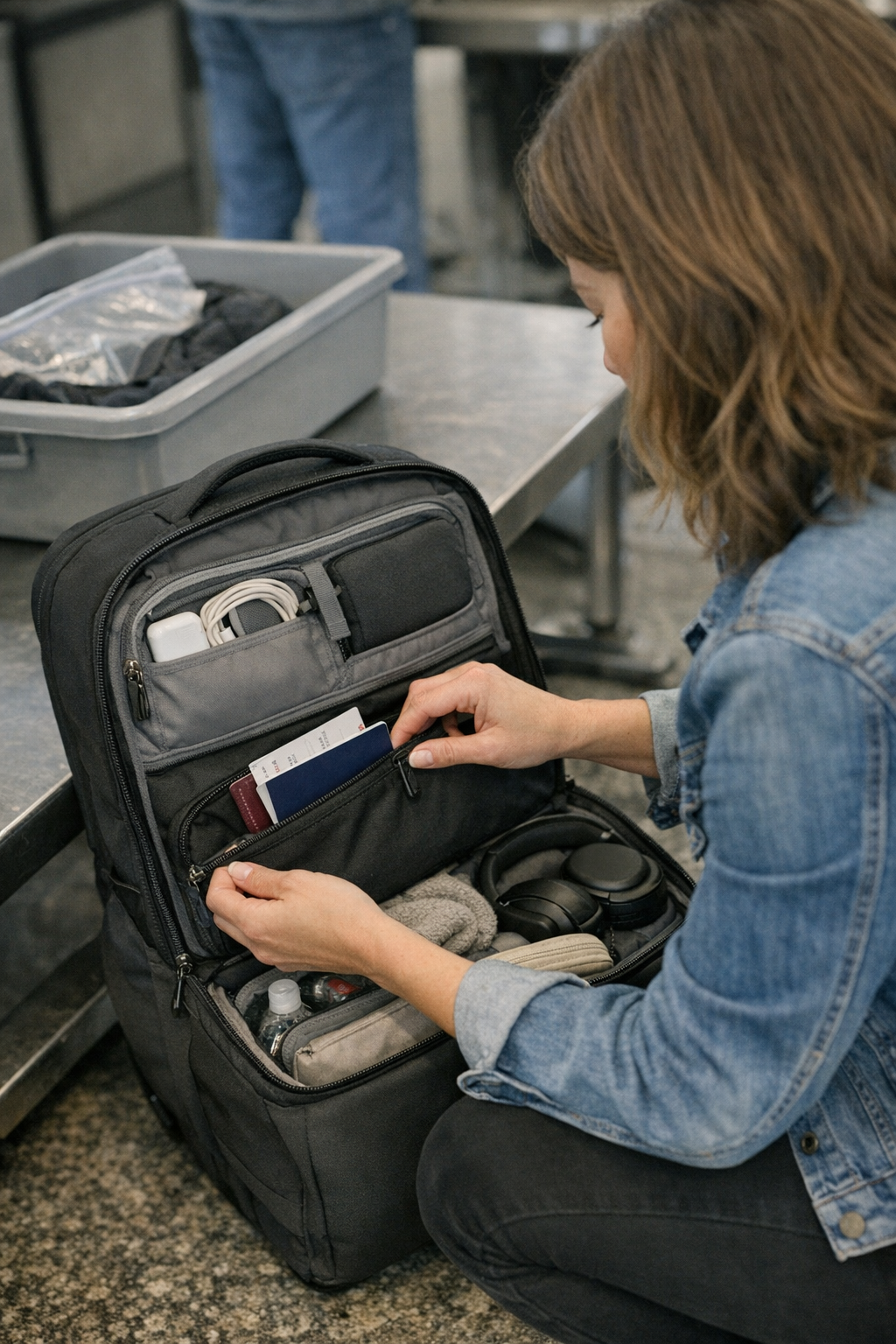
There’s a gap between how your carry-on looks at home and how it actually works the second you’re forced to dig for a passport in a crowded security line. What looked organized—color-coded pouches, tight stacks, empty outer pockets—turns fumbly fast when a document vanishes under a tangle of chargers, or an ID check interrupts your “perfect” packing logic. Travel exposes packing choices that seemed smart until you watch yourself open, search, and repack the same bag—over and over—while others move past you.
When “Neat” Doesn’t Mean Efficient: The Dilemma of the Organized-But-Slow Bag
It’s easy to believe that a lined-up, tidy carry-on guarantees a smooth airport experience. But the first time you’re up against a moving security tray, that layout cracks: a passport ends up beneath headphones, an emergency pen slides under toiletries, and pockets that looked empty overflow into confusion. Even with a neat “system,” you catch yourself unzipping, retracing, or shuffling, just to dig out what should have been instantly reachable.
These moments aren’t big disasters, but they slice into your travel rhythm. Each pause to fish out a gate document, or each unnecessary search for a charger, eats into your speed. That invisible friction builds—soft at first, then quietly relentless.
Travel Movement Reveals the Weak Spots: Common Repeated Friction Points
Security lines punish poor access in seconds. Maybe you started out organized, but now your boarding pass is under two pouches. As security trays move, you’re juggling layers, pulling what you need from the bottom, then awkwardly rebuilding on the fly. One misplaced cable pouch can force you to repack right in front of strangers—shuffling your way back to “order” while the line presses on.
Then, at the gate, your bag is half-open, revealing a puzzle of stacked cases. A boarding pass check means unzipping what made sense at home…but blocks you now. Even one wrongly buried item slows the whole line, turning your setup into a source of stress instead of speed.
It’s not just about raw speed—travel flow breaks down when the bag forces you to reach, dig, and reset while space and time shrink around you. Enough small interruptions, and even an “organized” bag starts dragging you back.
Stacking and Overlapping: When Order Becomes Obstacle
The classic mistake? Stacking: chargers on top of wallets, cables beside documents, everything layered for visual neatness. At home, this compresses well. But at the airport, the stacking logic fails. The moment two essentials are in the same zone, you’re force-pulling one out, only to awkwardly repack in mid-conversation or in cramped conditions.
Repetition exposes the flaw. The third time you go for ID, it now means: unzip, sift, extract, zip, and immediately realize you’ve missed the next item. Even a slim, orderly setup backfires when every retrieval blocks the next movement. The more items you stack, the more you disrupt your own trip.
The bag stays tidy in theory, but the real test is how much overlap you have to undo on each reach. Perfection at home becomes friction during use.
Small Delays Add Up: The Cumulative Drag of a Flawed Setup
One misplaced boarding document won’t ruin your day. But the time cost isn’t obvious until you add up each small hassle: sliding out a pouch for headphones, digging past snacks to reach cables, shifting comfort items to retrieve travel paperwork. Each repeated micro-delay silently accumulates, breaking your flow with every segment, every checkpoint, every gate.
That drag isn’t dramatic—but when your trip includes a layover, or your final connection is tight, you feel the weight grow. Even if you pull it together at the next gate, by trip’s end there’s a sense of lost rhythm—and you’re weighed down by invisible extra steps that started small but multiplied with every round.
Repacking After Each Use: An Invisible Burden
Ask frequent travelers about real pain points, and “repacking” comes up fast. It isn’t the initial setup—it’s the cycle that repeats: open, retrieve, reshuffle, restore, only for another checkpoint to force the sequence again. At a busy TSA checkpoint, a single out-of-place pouch becomes a tray-side repack while others crowd in, raising the pressure and pushing your flow further off balance.
It doesn’t end at security. No traveler wants to pull three things out just to grab a snack or earbuds in a cramped aisle seat. Yet an overloaded main compartment or mismanaged outer pocket means exactly that—rummaging, re-stacking, and starting the whole retrieval cycle all over, no matter how organized you thought you were.
Building a System Around Movement, Not Just Aesthetics
The real breakthrough isn’t a visually flawless bag, but a system built around access in the real world: pressure, time crunch, and awkward space. That means separating what you need in motion from what can stay out of the way. Assign a “never buried, always-reachable” spot for your boarding pass. Give tech and cables their own separate pouch, not cohabiting with travel docs. Comfort gear—eye masks, balms, small snacks—live in their own section, routed for one-handed grabs instead of hidden beneath other gear.
After running the same bag through three TSA checks, it’s obvious: only setups where every high-use item has its own ready spot keep your trip flowing. It’s not about how nice it looks packed—it’s about reaching what you need, in the moment, without breaking stride.
Prioritize Access Over Visual Slimness
Travelers often don’t want to “bulk up” their slim, neat carry-on by moving essentials to outer pouches. But the tiny cost of a less sleek shape pays off—no more digging for zipped-away key items while the line waits. A slightly fuller exterior is nothing compared to the hassle of invisible essentials blocked by perfect order. Faster reach means less stress, fewer zipper passes, and less visible anxiety, whether you’re squeezing into an aisle seat, shifting for overhead bin access, or standing mid-cabin with others waiting behind you.
Practical Adjustments for Real Repeat Use
Group only what travels together in use, not just in theme. If you genuinely grab your passport and charger at the same time every trip, fine—keep them paired. Otherwise, separate urgent-retrieval gear from comfort items, so nothing unnecessary blocks your next move. Even one less double-reach or stop-and-repack leaves you less scattered, more clear-headed, and moving through transitions instead of stumbling through them.
Setting Up for the Real Travel Rhythm
The right carry-on setup isn’t about “packing well”—it’s about building for actual travel rhythm: security trays, back-to-back boarding checks, in-flight moments when you need something now. Stacked, overlapped layouts look beautiful but cost more every time you move. Instead, create obvious zones for documents, tech, and comfort. Try a home test: pack your usual way, then run live quick-access drills. See what causes hesitation, where hands retrace, where order falls apart. Adjust until every frequent-use item is accessible without a puzzle, even on your third pass through security.
The real value of your carry-on system isn’t how stress-free it seems at the start, but how much lighter and smoother it feels with every repeated use—as you loop back through the rhythms of travel again.
CarryOnSupply — practical tools for smoother carry-on travel