
Why the First Pet Greeting Shapes Every Step That Follows
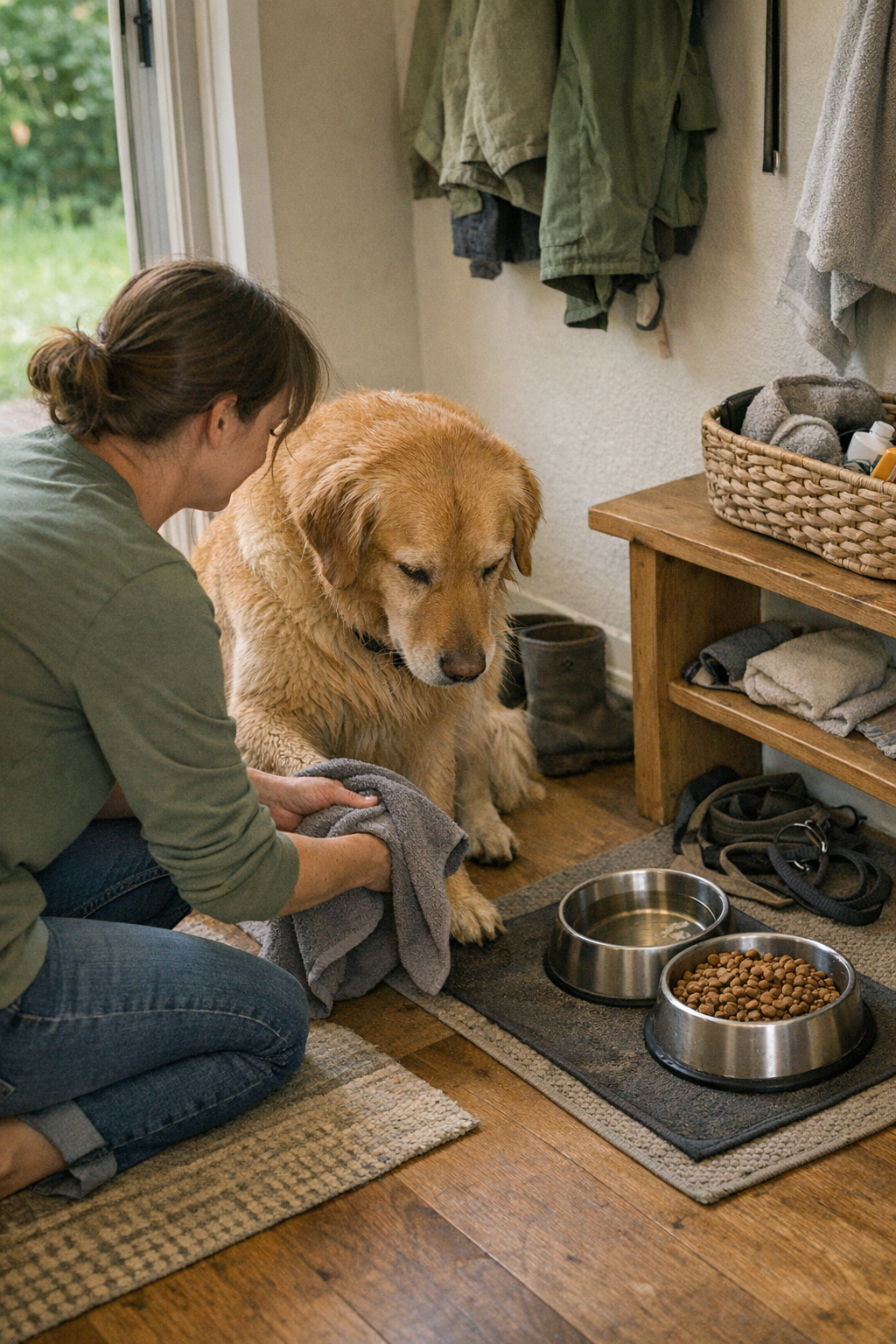
That chaotic first moment home—dog claws on the floor, cat brushing your leg, eager faces crowding the door—does more than welcome you. It exposes every weak point in your routine. Bowls nudged sideways, water tipped onto tile, the towel for muddy paws already missing. Even five extra seconds at the door can throw off the order: feeding starts late, water bowls don’t get changed, or you’re shuffling bags just to reach the supplies that should be at hand. Over a week, these split-second delays pile up, making everyday care feel slower and harder, and turning what should be a quick reset into another fractured task. A pet supply setup that looks neat on Day 1 often breaks down exactly here: at the threshold.
The Stacking Effect of Small Delays
The fallout of a drawn-out greeting never hits all at once. It’s the slow grind of repeated missteps—feeding skipped by fifteen minutes, fresh water put off, paws forgotten until dirt streaks the floor. Every delay pushes the next routine out of rhythm. Owners juggling remote work or family schedules can spot the pattern: one missed cue at the door, and the rest of the day’s care never quite catches up, resetting only after several days of low-grade friction.
Scene: Reaching for Supplies, Finding Friction
Step in with groceries, sidestep a jumping dog or zigzagging cat, and try for the water bowl—only to bump into last night’s chew toy. The towel for dirty paws is at the far end of the hallway, not the door. The grooming brush that’s meant for quick grab-and-go has migrated into another room. A simple refill or wipe-down becomes a scavenger hunt. The supply exists, but the energy to reach it is pushed aside by clutter and misplaced tools left in the wake of one overexcited welcome. Instead of a two-minute reset, you’re stuck doubling back, then wondering why cleanup always feels one step behind.
How Order Gets Lost in the Daily Rush
Initial setups often pass the eye test—bowls together, wipes restocked, leashes on a hook. But come day three or four, regular greetings turn hectic and order unravels: water splashes beneath the bowls, containers slide out of place, and supplies drift further from their target spot. By the time you finish one simple feeding, you’ve already lost track of half the essentials, or are doubling back for treats and towels. What looks organized ends up working against you, with the area tidy, but the flow jammed by items being just out of reach or reset at the wrong time.
Why a Repeatable Signal Matters
Cutting off excitement with a harsh “no” doesn’t work. A visible, repeatable cue—a hand to the bowl, a pause at a mat, a distinct word—lets you and your pet shift from chaos to care. After just a few days, the pattern sets: entrances get shorter, supply hunts shrink, and care resets fall into place. Suddenly, it’s not about hurrying affection along, but about letting one small action become the anchor for everything that follows—feeding, water refills, post-walk wipe-downs. The door’s threshold becomes a switch, not a stumbling block.
Real-Life Repeats: Where the Routine Slips
Inconsistent setups give themselves away quickly. Water lingers in bowls past its best moment. Paws don’t get wiped during the rush to get dinner started. Brushes block quick access to food storage, or mats slide aside and never get fixed. Even after reorganizing, the same friction creeps back: towels too far to reach, treat jars misplaced, cleaning supplies hidden behind a stack of bags. Surface order returns, but the actual function—the ability to reset quickly after feeding or a walk—lags behind, dragged down by friction points you can’t ignore.
Practical Adjustments for a Calmer Flow
The adjustment isn’t complicated: rein in the greeting, use one clear cue, and pivot directly to care basics. Touch the bowl edge, say a cue word, or pause together at a visible mat every time. The signal matters more than the mood. This isn’t about shortchanging time with your pet—it’s about keeping the first minute from derailing the rest. Fast greetings prevent the snowball: feeding routines actually run on time, water bowls get refilled before you forget, and cleaning fits the flow rather than interrupting it. Consistency calms both you and your pet, and routines begin to work instead of working against you.
The payoff is visible by day’s end: you’re not scrambling at night to catch up on resets, and your pet isn’t left waiting or confused by a pattern that changes with your energy. A well-timed, brief greeting means more time—and less mess—later.
From Tidy to Functional: Closing the Loop
Order isn’t just how supplies look lined up; it’s how easily you can grab that towel when paws hit the mat or refill a bowl without kicking aside toys. A setup that looks calm rarely stays that way unless the routine behind it works under pressure. The real fix is rarely dramatic: one cue, one reachable hook, one spot for the basic tools that never drifts from the entry zone. Most problems—spilled water, delayed feedings, forgotten wipes—fade when routines run on signals instead of scattered improvisation.
Messes and interruptions still crop up, but the cycle resets faster. The difference isn’t that the home looks perfect; it’s that every care step, from post-walk wipe-down to evening feeding, folds naturally into the flow. Over time, what started as a tangle at the door becomes a pattern that makes pet care lighter, steadier, and more sustainable—no matter how many times the toys wander off or the routine takes a hit.
For more practical solutions and tools that help your home routines stay steady, visit our shop.