
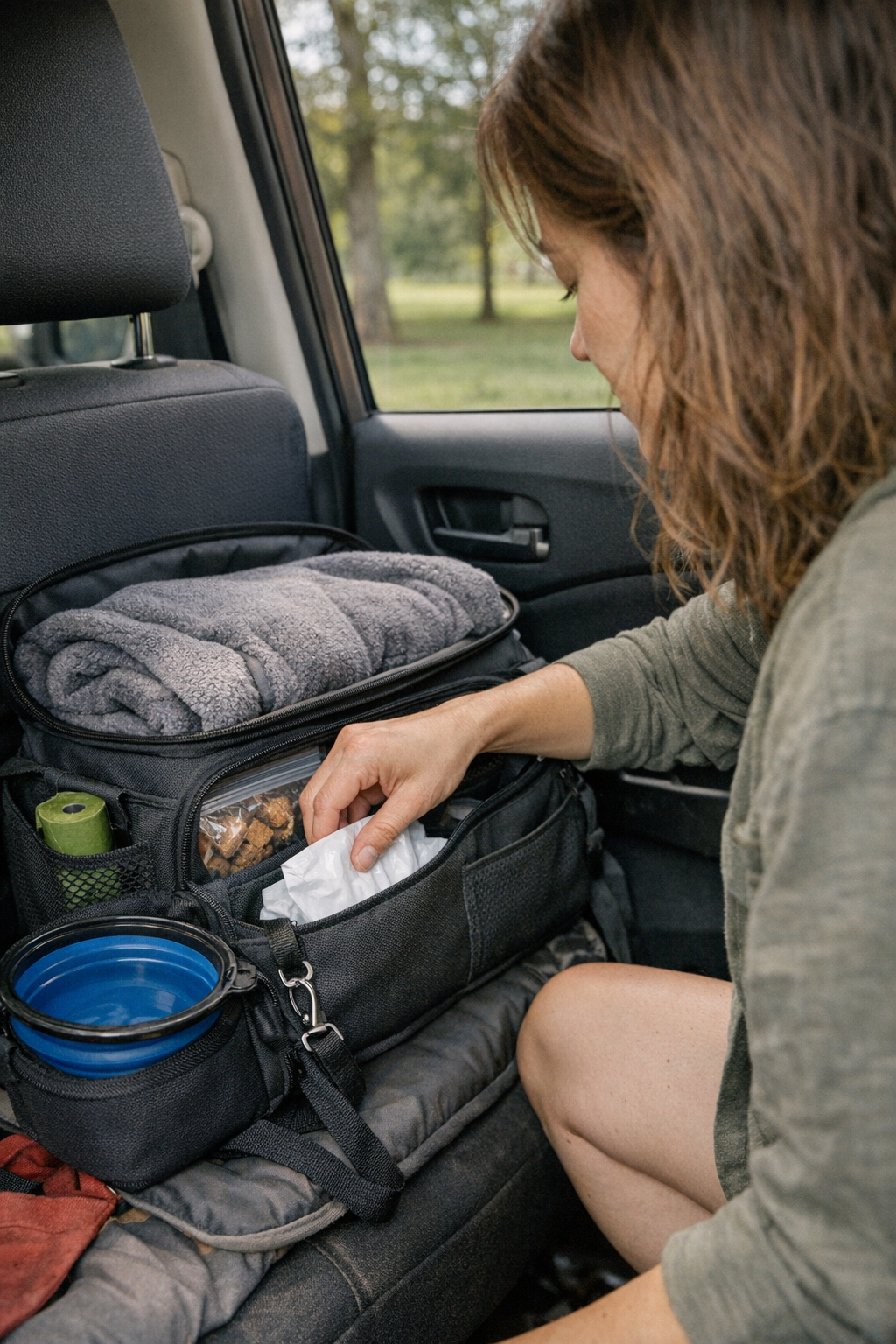
The difference between a pet-travel bag that works and one that only looks organized becomes brutally clear on your second or third stop. At the start, supplies are packed, pockets zip up, and you feel prepared. But as soon as you pull into that first parking lot and snap open the door—one hand on the leash, your knee blocking a jumpy dog—order gives way to small setbacks. The wipes you thought you’d grab in a heartbeat have vanished under a blanket. The leash, tucked “safely” just moments before, tangles with a pack of treats. Bowls for water are sideways, pressed beneath sliding pads. Each short stop doesn’t just add mess; it multiplies the little barriers you thought you’d beaten with a neat setup. If this sounds familiar, you already know looks mean little if your bag stalls you every time you try to move.
When “Well-Organized” Turns Into Work
It’s a classic trap: thinking a zipped-up, tidy bag is ready for travel when it’s really just “ready” at home. The first sign shows up on your first real retrieval—wipes mixed into the wrong layer, leash trapped in the wrong pocket, treats now in the deep zone. Suddenly, every “quick” reach becomes a hunt. Cleanup that should be easy now means juggling soft gear just to reach a single item. Each stop, the friction grows. You adjust, reorganize, shuffle again, but the flow breaks down: a supply for comfort blocks a supply for speed, and your “preparation” turns into a redo at every restart.
Repeated Stops Expose the Weak Points
The real test isn’t how your bag looks before you leave—it’s how it holds up through seat swaps and surprise stops. Weak points appear fast when you need:
- One-handed leash release with a twisting, impatient dog
- Quick bowl access for a drink after a dusty walk
- Wipes or towels for muddy paws before they hit the back seat
- Instant cleanup after a spilled treat or drool spot
During these in-between moments, gear that once felt so contained now jams your reach. Blankets or padded inserts cushion your pet, but now block your wipes. Even essentials purposely “separated” keep shifting into the path just when you need them. Organization—if it means slow access—becomes just another obstacle between you and a calm, fast reset.
How Friction Builds Across Movement
Reshuffling a pad, fixing a pocket, or digging for wipes once seems minor. By the third or fourth stop, those seconds stack up. You go to grab, pause, reshuffle, then reach—again. The most ordinary step in your travel routine demands a fresh workaround, making each stop that much slower. The strain is less in the mess and more in the repeated breaks; the flow feels stuck on repeat hurdles you didn’t see on the porch.
The Seat-Side Struggle: Ordinary Setups in Real Motion
Picture a park lot pull-up: engine off, dog alert, one hand steering, the other ready for a leash. You’ve parked for a “quick” break, but your gear works against you. To clean a muddy paw, you wedge an arm past a rolled blanket, fish under a chew toy, and pry at a side zipper. What should be a smooth two-second reach turns clumsy, your attention split between a squirming dog and a supply that’s technically “organized” but buried. These are the moments when ordinary setups forget the chaos of repeated use—trading visual tidiness for interrupted movement, costing you both speed and actual calm.
Comfort Items: Helpful Until They’re in the Way
Padded pockets, collapsible bowls, and plush blankets are meant to help—until the search for wipes or a leash means moving them every time. Soft gear that keeps a dog settled can block the very supplies you’ll always need first. After one or two stops, you start dreading the next fetch: shift a pad, dig under a blanket, waste seconds just looking for basics. Every comfort built in for the pet starts to ask for a trade—less friction for your dog, but more for you.
The margin for error tightens after a few restarts. Rush, and you drop or forget something. Go slow, and each transition drags. Either way, you’re never just moving—you’re remaking order on the fly, every time.
The Setup That Breaks Down: Overlapping Pet and Owner Items
Shared pockets seem smart until motion ruins the divide. Your leash winds around shopping bags, water bowls wedge with your own drink, wipes drift behind earbuds and snacks. That neat line between “pet stuff” and “your stuff” lasts about a block before it all runs together. By the third pit stop, every reach becomes another repacking moment—simple division undone by the real-world shake and squeeze of the road.
How to Keep Essentials in True Reach
For trips with more than one stop, nothing beats genuine edge access. Seat-side pockets, unburied shallow pouches, and top-load points turn “organization” into functional stop-and-go. The basics—leash, wipes, bowl—belong where your hand finds them first, not under layers or locked in the main compartment.
Breaking old habits means giving up the visual prize: don’t bury quick-use items in deep stacks, don’t let the leash settle under comfort pads, and don’t accept primary storage as good enough for repeated grabs. Every return or pause, if you still have to move soft gear to get a wipe or clip a leash, you’re resetting that friction all over again.
One shallow side pocket, easy to reach while balancing a leash or steering a dog, will outperform any well-packed inner bag. The difference shows quickly: single-handed grab, no reshuffling, and, at last, genuine pause instead of a clumsy restart.
Fifteen Seconds Might Not Sound Like Much—Until Every Stop Counts
After a few trips like this, watching those lost seconds disappear, the trade is clear. Each stop is shorter. There’s no “forgotten” supply buried where it can’t be reached under pressure. By the third or fourth cycle, you stop muttering and start moving—picking up the pace because your essentials actually stay where they should. Those quiet fifteen seconds at every stop add up, not just for speed, but for finally getting a break that feels like a break.
A Better Setup Makes Every Restart Smoother
No setup stays perfect after three or four seat-side pivots. Something will shift, and there will always be a bit of re-ordering. But after real use, your test is simple: does your bag slowly collapse into chaos, or does it keep essentials right where you expect them, again and again? Smooth pet-travel isn’t a myth—it’s a matter of where gear lands after repeated use, how fast you reset, and whether you finally stop thinking about the supply puzzle and just move.
Shop practical pet-travel organizers, quick-access carriers, and road-ready comfort gear at PawGoTravel.