
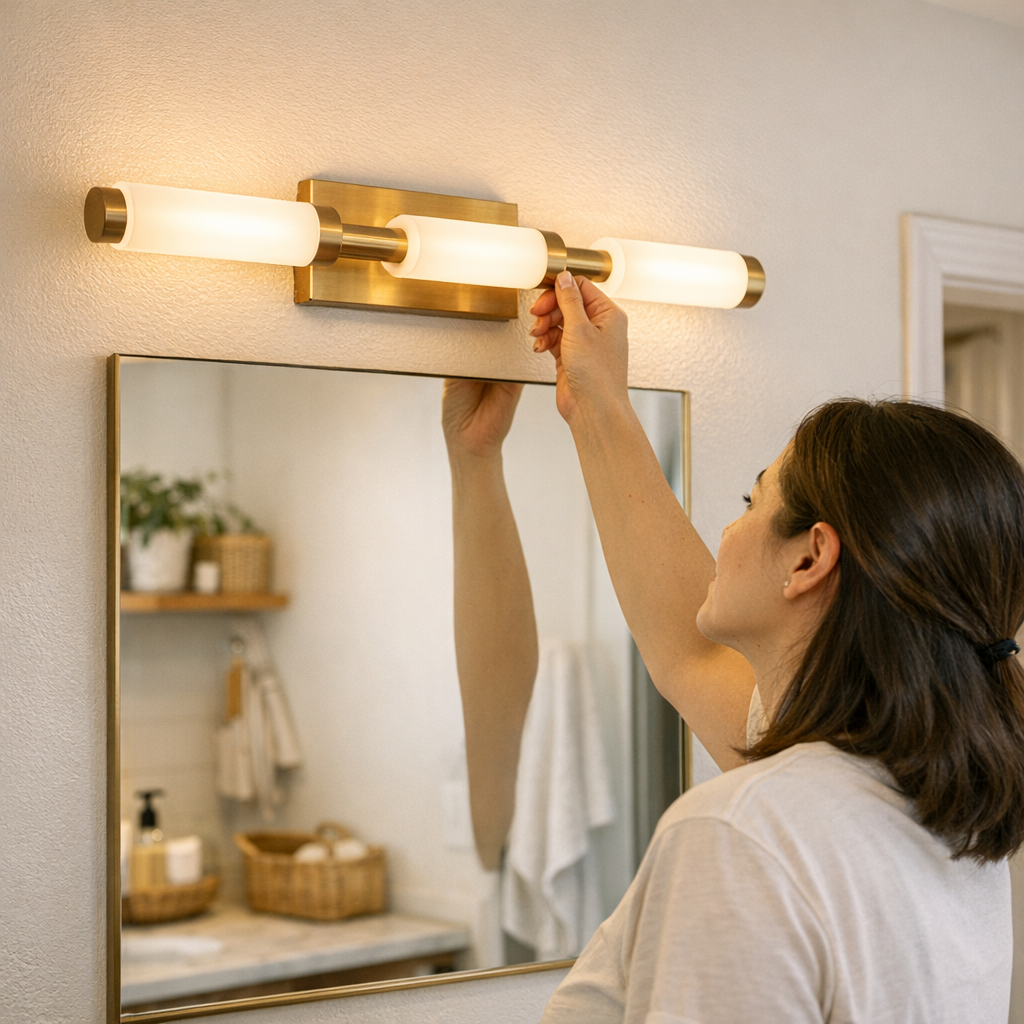
The first flicker from a hallway light—or the unexpected wobble of a bathroom sconce—signals more than a minor distraction. It’s a warning that something in your lighting setup is starting to fail, quietly but inevitably. If you rely on a ceiling light to keep stairways visible at night or trust a wall fixture to keep your face clear in the mirror, that movement under a cleaning cloth or an unsteady glow after a week’s use isn’t just a flaw: it’s the start of a chain reaction that threatens the whole safety and clarity of the space.
Why Early Flicker and Movement Mean Trouble—Right Where It Counts
It’s tempting to write off the first twitch in a flush mount or the subtle dim zone along a corridor as just a cheap bulb. But the root cause nearly always hides behind the ceiling: a wire isn’t snug, or a connection isn’t locked in. With every vibration—each step landing in the hall, each slam of a door, or regular scrubbing against the fixture—the weakness grows. Here’s what that looks like in practice:
- Walking down a hallway and finding one edge slipping into shadow, forcing you to slow your step
- A sudden patch of dimness under a kitchen cabinet, making it harder to spot where the counter ends
- A vanity light that won’t stay even, making half your mirror misleading during the morning rush
- The sharp surprise of a fixture going out with a simple brush or tap
These aren’t cosmetic hiccups—they turn movement, grooming, or chores into sources of hesitation and irritation. Letting these signals go unchecked turns minor hassle into risky unpredictability.
The Tug-Test: The Overlooked Step That Holds Lighting Together
Seconds before you close up a fixture—whether it’s a new flush-mount in a narrow hallway or a semi-flush above a stair turn—a basic check makes the difference: grab each electrical wire and give it a gentle tug. If it pulls free or shifts, it’s not ready. Retighten, retest, then finish the install. This “tug-test” is the invisible insurance that stops a fixture from slowly working itself loose, especially where shaking, vibration, or repeated handling are part of daily life.
Why Looking Isn’t Enough—The Gap Between Perception and Reality
A wiring job can look solid, but daily routines are a different test than a static visual check. Over time, it’s the hidden, repeated stress—appliance vibration in laundry corners, steam in the bathroom, the thud of shoes on a hallway floor—that exposes weak points. Unless each wire grip is secured with a tug, even a “tight” install is at risk for slow, unpredictable failure.
Real Scenes: Where Tug-Test Misses Translate into Visible Annoyance
The Hallway: Imperceptible Instability That Turns into Hesitation
In a typical corridor with a flush mount or low-profile ceiling light, the fixture looks perfect on day one. But small, repeated tremors from footsteps start to loosen what wasn’t checked fully. Over time, the far end of the hall fades earlier at dusk, or patches near doorways flicker, breaking the sense of safety during nighttime crossings. One weak connection can make a familiar, straightforward space suddenly unreliable—especially at the stair turn, where hesitation is most dangerous.
A semi-flush landing light may appear steady after install, but a telltale flicker returns each evening as the family climbs the stairs. It’s not a burnt bulb; it’s a connection ready to fail in the spot that matters most. Fixing the real issue isn’t about replacing the fixture—it’s reopening, tug-testing every wire, and listening for that small slip that tells you what really needed attention.
Bathrooms and Mirrors: When Lighting Compromises Hide in Plain Sight
Bathroom sconces or vanity lights can seem fine—until you lean toward the mirror and notice one side throws unexpected shadow, making simple routines harder. Repeated cleaning, a bump in the morning rush, or steam from showers gradually nudge a wire out of its connection. The problem isn’t always immediate: often, the first sign is an uneven glow that throws off precision tasks—shaving, makeup, even just checking your face. Only a tug-test after each cleaning or adjustment reveals which connection is quietly eroding the fixture’s reliability.
Laundry Rooms: Small Movement, Big Consequences
Laundry and utility lighting are often forgotten once mounted—yet these are some of the toughest zones for hidden weakness. Appliances rumble, the floor shakes, moisture circulates. It’s common for a linear ceiling panel to look flawless, but then flicker or dim the moment the dryer hits full spin or a shelf is shifted. The inconvenience isn’t only in the light fading: it’s in the moment you fumble, trying to spot a dark sock or fold laundry under unreliable illumination. A quick wire tug with every serious cleaning or appliance shift spots trouble early, instead of discovering it during a surge of activity with hands full.
The Real Cost of Skipping the Tug-Test
When a fixture’s wiring is left unchecked—relying on appearances rather than active testing—the drop-off comes gradually. The hallway that once felt safe starts concealing its boundaries; the bathroom fixture sags after each deep clean, leaving routines off balance. Slow shadow creep or unexpected outages don’t just weaken a room’s usefulness—they shift it from a support to a new source of stress, with each repeated annoyance multiplying the urge to avoid or replace the light entirely.
High-Use Zones: How Small Failures Get Exposed Fast
Busy household areas—entryways, stairs, bathroom vanities, laundry nooks—reveal wiring weaknesses first. Repeated vibration, humidity, or even basic cleaning exposes a connection that wasn’t fully tested. Rather than a dramatic failure, it’s steady inconvenience: the light you now have to work around, not with. A fixture meant to support nightly chores or safe movement instead becomes the reason you hesitate or make do in the dark.
Making the Tug-Test Second Nature: Lasting Reliability Without Guesswork
For anyone installing or maintaining lighting—whether as a homeowner tackling a new fixture or a pro moving through a punch list—the tug-test isn’t optional add-on, but the most practical safeguard. Its impact is straightforward: solid lighting performance across countless routines, from a midnight hallway trip to a bathroom mirror check on a steamy morning, or sorting through a shadow-free laundry counter mid-cycle.
Lasting performance doesn’t depend on the fanciest fixture or the most expensive bulb—it’s about the confidence that every wire connection will hold steady, even after months of real-world use and strain.
When the Tug-Test Can Change Everything: Key Signals
Pay attention to these red flags, especially if they return after superficial fixes:
- Persistent flicker no bulb swap can solve
- Fixtures that start to sag or twist after repeated use
- Light that dims or shifts position at the slightest touch
- Shadow or uneven illumination that disrupts daily routines, especially near mirrors, counters, or paths
These aren’t just flukes—they consistently point to a connection that’s become vulnerable. The simple act of tug-testing wires after any install or adjustment uncovers these weak spots, restoring reliability you can trust instead of hope for.
The Small Habit That Changes Everything About Lighting Reliability
Dependable lighting supports safe movement, clear vision, and less hesitation everywhere from hallways to stairwells to work counters. The difference between a background fixture and a daily frustration isn’t dramatic failure, but the quiet decline that follows unchecked, poorly secured wiring. The tug-test is the low-effort, high-impact step that keeps light working for you—not unexpectedly against you.
Find more practical indoor lighting fixtures, ideas, and solutions at LightHelper.