
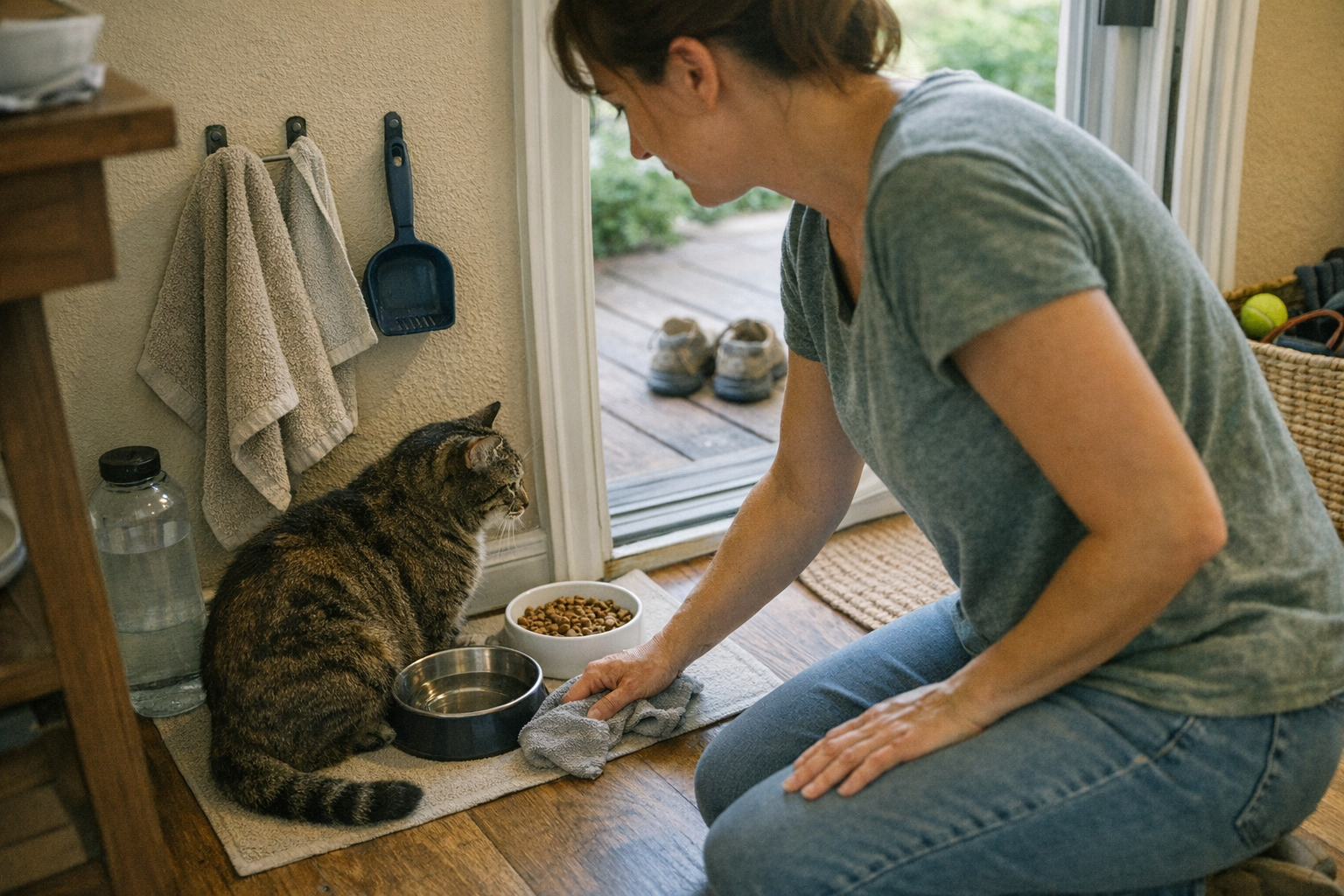
A calm cat doesn’t cancel out a clumsy setup. At first, you think a peaceful pet makes daily care simple—your cat sits quietly while you scoop kibble, swap the water, or wipe the mat. But by day three, you’re sliding a bowl to clear space, pausing to hunt for a towel that’s not nearby, or realizing the cleaning cloth is always in another room. It’s easy to miss the friction until the clutter reappears: debris collects around the bowls, a stubborn ring forms under the water dish, and “quick” cleanup gets stretched into a series of minor errands. What feels manageable one time quietly turns messy and slow the more you repeat it. This is the daily trap CalmPetSupply’s setups are built to avoid—removing the routine drag where most home care still gets stuck.
When Stillness Creates Its Own Problems
A calm cat doesn’t dodge the mop or bolt at the sight of the brush, but stillness alone doesn’t streamline routine care. The hidden hassle is in what’s missing within arm’s reach—your scoop, the right towel, basic wipes. Over a few cycles, gaps pile up: wiping spills with napkins because your actual cloth is down the hall, empty-handed walks to the cabinet for a brush you assumed was beside the mat. The cat barely blinks, but your “routine” becomes a loop of micro-detours and improvised fixes masquerading as calm.
Everyday Friction in Real Time
Consider what really happens: you go to lift the food bowl, only to edge past the refill bottle that’s blocking the space. You reach for a spilled bit of kibble, then realize getting a rag means leaving the spot again. The interruption is small, but it repeats—each time adding a delay or turning “one-wipe” into “come back later.” Most supplies are somewhere, just not anchored to where you stand each morning and night. The pet care space can look neat but quickly turns inefficient if each tool drifts just out of reach.
Supplies That Are Present, But Not at Hand
Stashing all pet-care gear in one spot feels organized—until real life intervenes. Wipes pile under the sink, scoops go missing from the feeding zone, towels migrate to the bathroom, and grooming brushes end up wherever last used. In repeated use, these gaps show up as:
- Reaching for a towel, only to find the hook empty (again).
- Refilling a bowl blocked by stacked gear or stray toys halfway on the mat.
- The brush is two rooms away; fur stays until the next pass because you won’t double back.
- Late-night messes noticed during a check-in—dried now, harder to clean, easy to skip entirely.
Routines that “look” covered on paper reveal new snags each cycle.
How “Almost Ready” Becomes a Routine Slowdown
When the basics aren’t anchored to the right spot, every routine stretches out. You start with the food, walk away to grab a scoop, dodge your cat and an upturned bowl, then loop back for cleaning wipes. This isn’t a rare hassle—it’s the standard pattern once storage is just out of place. What should take a minute now absorbs time in split batches, broken up by side trips and backtracks. Soon, small cleans go undone: bits by the mat linger, spill stains get overlooked, and the care area falls out of rhythm with real use.
Small Adjustments, Permanent Relief
True relief isn’t more gear, but the right supplies anchored right where the care happens. Place a wiping cloth on a hook or a towel in a bin beside the feeding mat—this single shift turns wipe-downs from a hunt to a reflex. Water spills vanish in the moment; after-meal messes are tackled before they dry. The transformation isn’t flashy or perfect—it simply removes the loop of searching, forgetting, and belated cleaning. Within a week, debris doesn’t stack up, cleanup blends into care, and your pace stops lagging behind your intentions.
Barriers Outside the Cat Area
Routine drag sneaks beyond the feeding corner. Pet toys land on living room cushions, brushes on side tables, clean bowls air-drying on the wrong end of the house. Every quick-groom, porch transition, or night reset is slowed by blocked access or missing tools. The visual order means little when every return to the spot reveals a new item missing. Repeated fixes—reshuffling storage, moving bins again—don’t hold if one basic item is still out of place. The slowest link quietly reshapes the whole pattern.
What Works: Keep Key Items Right Where Action Happens
Move basic tools to arm’s reach at the real care station. A single hook for a quick-dry towel, a bin tucked behind the feeding mat, a scoop always in its own basket—these changes erase the detour steps. Now, wipes and refills are always next to the mess or the bowl, not an excuse to delay or forget. The space doesn’t just look neater: it starts working at your natural pace, matching the way resets and cleanups actually happen. Small friction is cut off before it breaks your flow.
Conclusion: Small Reach, Big Impact
A real-world routine hinges less on a calm pet and more on setup that actually matches care in motion. Shift just one item—move the cloth, keep the scoop right by the bowls—and you’ll feel the lag disappear. Instead of circling back or skipping steps, daily resets flatten out, clutter fades, and mornings stop stalling before they start. Calm spaces aren’t about looking peaceful; they’re about working with your repeated patterns, not against them. For a care setup that holds up on real mornings and late-night checks, get what works ready at arm’s reach.