
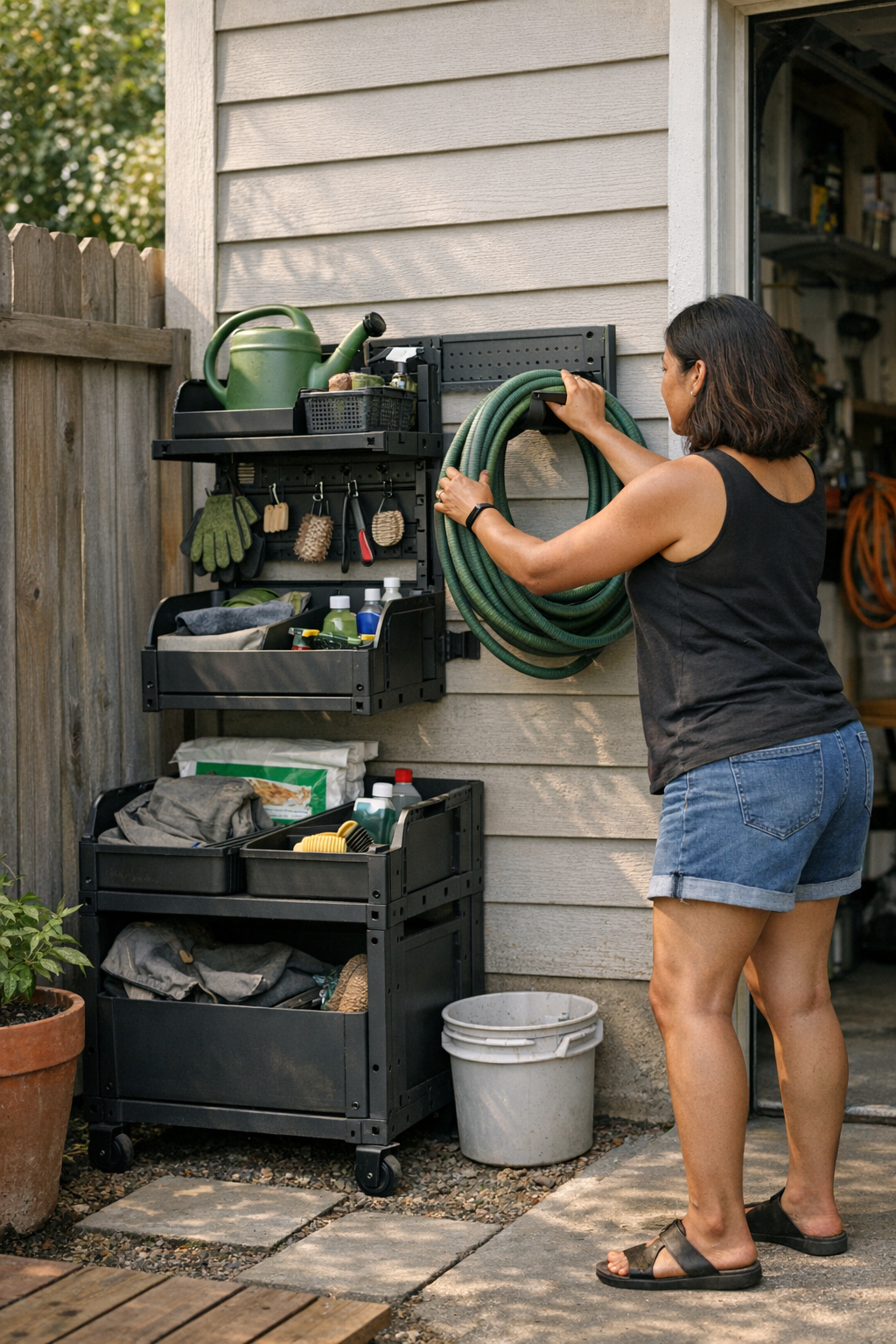
The tangled hose across the backyard path isn’t just the day’s mess—it’s proof that this “storage solution” isn’t working for the way you actually use the space. For anyone dodging loops to get through the gate, wrestling coils before watering, or watching the same hose pile reappear week after week, the issue goes beyond clutter. Every reset, every trip, every sidestep highlights a setup that interrupts your movement instead of clearing it.
Why Storage Choices Shape How the Yard Really Works
Dropping a hose into a floor bin looks like instant order—until another person grabs it, the weather leaves it muddy, or a quick return after dark leaves coils spilling halfway out. That first clean coil, the “starting fresh” feeling, rarely makes it past the first week. Bin lids go missing. Loops slide out and collect gravel. What’s supposed to be contained ends up underfoot, forcing detours or stopgap shoves with your foot just to open the gate.
This isn’t about neatness for show—it’s about whether your setup actually clears walkways and return zones. In busy, shared, or compact yard areas, every inch matters. The wrong storage ends up multiplying mess and movement blocks, trapping everyone in repeated reshuffling.
How Fast the Day-One Plan Breaks Down
Think of the first day: the brand-new hose bin neatly lines the path by the side yard. Everything fits, and it feels like you’ve finally organized that awkward stretch. Fast forward—one rushed morning, someone drops the hose in half-coiled. It rains, and the next grab leaves a muddy snarl. Within a few uses, one loop swerves into the main path. Two skipped resets later, the floor is scattered with grit and you’re spending several minutes untangling and sweeping before you can even water the plants.
Every “I’ll fix that later” builds up, one misplaced coil at a time. And the more people use the yard, the quicker the bin’s border breaks down, until what’s supposedly “put away” is just blocking the route instead.
Contrast that with a wall-mounted rack—anchored at arm’s height along the main walkway. Suddenly, the hose never sits on the ground to start with. Even a messy return gets held out of the way, and it takes only seconds, not minutes, to clear the lane again. Less stooping, less tripping, and day after day, you notice: you’re not shoving things aside just to get through.
Why Shared Spaces Multiply Setup Friction
Side yards, narrow patio edges, the tight spot between the garage and a fence—these see constant traffic from gardeners, kids, pets, and quick outdoor jobs. Each person brings different habits and timing. Floor bins and loose baskets seem like “easy” solutions, but quick drops become lingering hazards. One person leaves the hose half-spilled, and it sits there for days because nobody wants to deal with the jumble. The pathway turns into a shuffle zone, collecting leftover tools and muddy puddles around the storage “solution.”
Swap in a wall rack at shoulder height, and even imperfect returns work better. The hose clears the floor, blunting most of the mess before it starts. There’s still the occasional loose loop, but the ground beneath stays open for feet and wheels—not for the next pileup.
Placement: The Hidden Difference
Where you put the storage matters more than what you buy. Stick a rack too low, or wedge it into a corner blocked by a bin, and you’re back to shuffling gear every time. Put the rack on open wall, with a clean stretch beneath it, and suddenly the “right” return feels natural—especially when you pass by every day. Storage within easy grabbing distance pushes everyone, even the messiest user, to use it.
Try mounting a rack right beside the route you actually walk, not in a quiet corner you hope will stay organized. Over a month, you’ll notice fewer loops out of place, fewer last-minute detours, and, quietly, the routine becomes smoother. Setup structure does the work, not the user’s willpower.
How Setup Details Change Everyday Use
Setup problems don’t come from laziness—they come from layouts that slow down resets or never really fit with daily projects, watering, play, or cleanup. When your storage matches the real flow of movement, “returning the hose” goes from dreaded chore to an automatic flick of the wrist. Finished dragging it across the beds? Two seconds, and it’s off the ground—not pooled around your ankles until someone finally wrangles the mess.
Got kids or users at different heights? Double up—add a second, lower hook. Suddenly, instead of one big dump zone, there’s a spot for everyone. That’s usually all it takes to keep the main path clear, without one group’s shortcuts blocking everyone else.
Is Floor Storage Ever Worth It?
Sometimes, yes—if the hose sits far from any main walkway, or is only touched by one person. Maybe the back edge of a detached garage, way out of everyone’s way. But bring in shared use, or any traffic through that corner, and the bin becomes a magnet for spills, drops, and slow-building clutter. The promise of “contained” quickly slips into the reality of “in the way”—and if you ever have to pull the bin aside just to pass, it’s a sign the footprint isn’t right for your yard’s actual rhythm.
This Isn’t About Looking Tidy—It’s About Moving Freely
The organized “after” photo is only the beginning. True test: is the setup still working after rain, a busy week, or two people in a hurry? The best hose storage keeps pathways and return zones open, even when resets get sloppy or the routine gets chaotic. It’s not about perfect returns—it’s about letting everyday use happen without building up invisible obstacles or extra steps. The end result? Fewer blockages, less reshuffling, and a yard that fits how you actually live, not just how it looked on day one.