
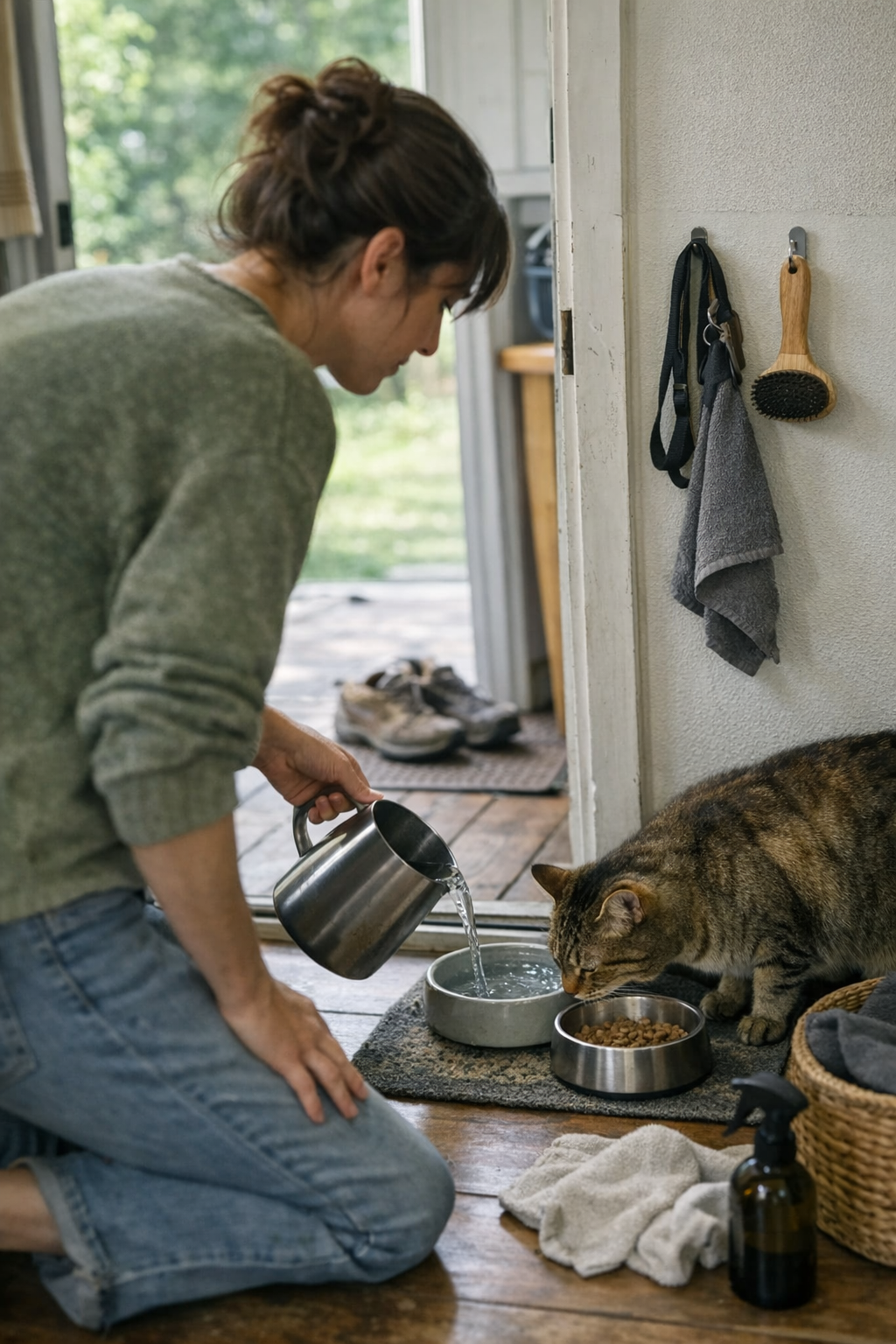
In daily pet care, even the smallest interruption—a bag tossed on the counter, dishes left from breakfast, or a guest moving supplies—can turn a smooth routine into a series of small delays. You might plan to refill the water bowl, only to find it shoved behind shoes or tucked beside clutter. The bowl isn’t empty because you forgot; it’s inaccessible because everyday life keeps blocking access or burying basics. This is the real difference CalmPetSupply fixes—a setup that isn’t just neat at 9am, but still holds up after guests, late dinners, or another round of socks and shoes at the door.
How Small Disruptions Complicate Daily Pet Care
The first sign? Your dog standing beside a bowl that never gets refilled on time, or your cat staring at the space where the brush should be. These moments pile up without drama—a food dish quietly edged out of reach by stacked plates, a grooming tool kicked under the mail pile, a water bowl splashed as someone shifts things around. You return to refill or clean but find the item you need knocked aside, hidden, or borrowed. Each of these missed beats grows into a routine drag you recognize only after you’ve knelt to mop up the same puddle twice in a day or wasted minutes hunting for the leash.
It’s never the spectacular mess that drags routines down. Small delays—water refilling slowed because a backpack blocks the bowl, a towel used but not returned, grooming supplies shuffled away by someone heading out the door—are enough to burn real time every day. Each pause and search compounds into a care routine that is just awkward enough to interrupt your flow.
Real-World Stalls: When a “Good Enough” Setup Breaks Down
A tidy setup doesn’t always mean an easy routine. At a glance, your kitchen—or entryway—looks under control. Then dinner ends, and the treat bin is in the way of someone’s coffee mug, or the cleanup towel is left drying somewhere out of reach. Suddenly, feeding resets take two steps instead of one. Grooming becomes a delay because the brush is mixed in with keys and wallets. Late-night check-ins stretch out as you walk the house to find what should have been at hand.
You see the pattern most on busy days: Try to quickly reset the area, but a glass or purse is tangled with the pet station, forcing you to move more than you planned. A towel meant to dry wet paws is now missing because it doubled as a kitchen wipe, leaving you unprepared after a muddy walk. These are not rare slip-ups, but repeated frictions of a setup that seems fine until it’s actually used alongside normal life. Every time you kneel to clean for the third time in an afternoon, or lose another minute scanning shelves for the brush, you feel the slow seep of time wasted.
Hidden Repeats: Identifying and Fixing the Weak Point
Even a well-organized home has a spot where use breaks down. Maybe you can refill the bowl in the morning, but by evening it’s shoved behind yesterday’s mail or blocked by shopping bags. Maybe the treat pouch, a nightly signal for bedtime, is easy to spot until guests arrive—or someone does a hasty tidy and “organizes” it out of reach. Or maybe you always have the leash…except at the precise moment a quick after-dinner walk would save the evening.
Simply tidying or “decluttering” isn’t enough. If your wipes, leashes, and brushes are hidden inside crowded drawers, every routine now takes an extra minute—sometimes two. Counters may look clearer, but now you’re pulling apart a storage bin just to manage one normal cleanup. A setup that looks organized but demands extra effort is one you’ll end up resenting by Friday.
Simple Adjustments: Protecting Essentials from Routine Disruptions
The quickest fix is to find the weak link and protect it from daily shuffle. For example, mount a basic hook on the wall beside (not in) the guest path, so dog brushes never go missing under bills or bags. Keep cleanup wipes on a non-shared rack away from counter clutter, and make sure bowls are placed out of foot traffic but within easy reach—preferably on mats that stop them from sliding when bumped. If one thing keeps vanishing, create a separate spot that’s obvious to you but awkward for anyone else to borrow.
None of these changes have to be perfect, and that’s the point—they solve for friction, not decoration. A slightly more visible towel or brush may jar with a designer kitchen, but you’ll stop doubling back or re-cleaning because someone re-purposed the pet gear for something else. What matters most: the setup that works even when normal activity resumes, not the one that only works during quiet hours.
From Repeated Resets to Smoother Daily Flow
Imagine dinner ends and you can reset the food and water bowls, wipe down surfaces, and brush out loose fur—in a single round trip, no hunting or extra steps. Less time is lost finding or retrieving tools, and pets don’t end up waiting or anxious while you retrace your steps. By the end of the week, the difference is visible: fewer repeated wipe-downs, faster resets, and less tension during busy transitions. Night routines shrink down because every supply stays anchored right where you need it. Loud days, late guests, or busy weekends no longer tip your system into chaos—they just become part of a routine that survives real use.
Reliable setup isn’t about how calm or orderly it looks at the start of the day. The routines that actually hold up are those designed to keep small essentials ready, visible, and protected—so daily care remains smooth even when the rest of the house gets busier or less predictable.
Key Takeaway: Find, Adjust, and Anchor Trouble Spots
The make-or-break of a pet care routine comes from noticing which step keeps getting derailed and shifting that tool or supply to a spot where it can’t quietly disappear. It’s not about a flawless magazine spread, but about breaking the repeat cycle—so you don’t face the same interruption day after day. Just protecting one key supply or moving feeding and cleanup tools out of traffic can turn your resets into a quick, repeatable habit, no matter how crowded the day gets or how many hands are in the mix.
For practical, repeat-use tools that fit this approach, visit CalmPetSupply.