
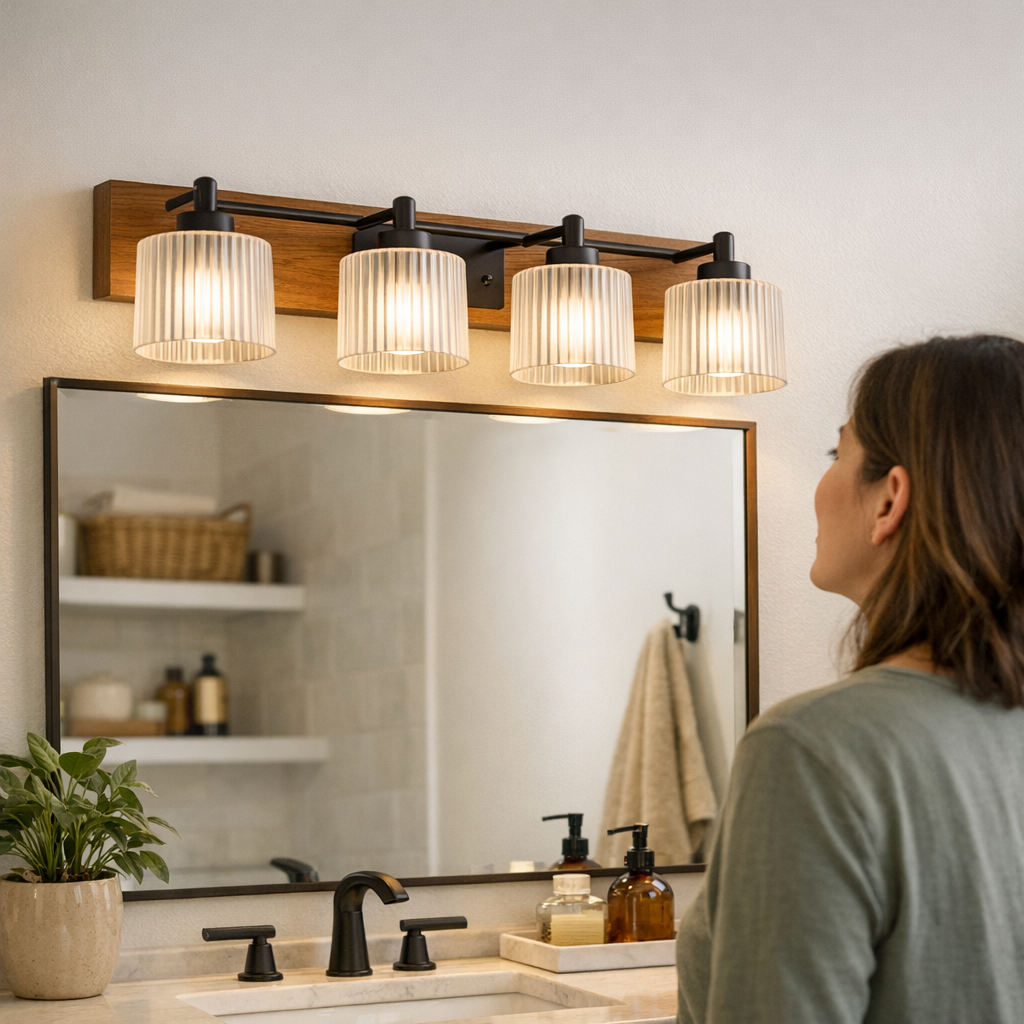
Flip on your brand-new ceiling light and you expect clarity— but in practice, even a “bright” fixture can sabotage the room. Movement stalls at the third stair, where a stretched shadow makes every late-night trip uncertain. The bathroom mirror catches glare on one side and dullness on the other, so you lean and adjust, but never find even light. That clean finish you saw at installation turns out to be unsteady: shadows grip hallway corners, work counters lose their edge in pools of gloom, and the simple routine of passing through becomes just a little more awkward, every single day. In high-traffic rooms and practical zones, these small lighting failures are not cosmetic. They keep getting in the way.
How Small Fixture Misalignments Create Daily Lighting Problems
Lighting imbalance so often starts at installation— not because you chose the wrong fixture, but because one side lands tighter or higher than the other. Anchors pull unevenly, especially if you move in a circle, tightening screws one after another. The fixture looks flush until you actually use the space, and then:
- Stairwells leave some treads vague and risky, especially beyond the reach of daylight.
- Vanity mirrors highlight one cheek and sink the other in uneven gloom, making basic routines less reliable.
- Hallways throw light along the center but let shadows collect at the baseboards or far wall, sending you through stripes of dimness and brightness every time you cross.
- Counters you work at force you to squint at certain angles, even with all the switches on.
The cost isn’t just irritation— every misaligned fixture adds a friction point you can’t tune away in daily use. The flaws repeat, and your attention gets pulled to what still doesn’t work.
Why Cross-Pattern Tightening Makes a Real Difference
With ceiling and wall lights, what happens during those final minutes with the drill and anchor set shapes every hour you’ll spend in the room. Cross-pattern tightening—alternate diagonals, never a circle— lets the fixture settle against uneven drywall, spreads pressure, and closes subtle air gaps that let shadow lines crawl in. The difference is most dramatic on:
- Flush and semi-flush ceiling lights that must hug imperfect ceilings
- Long vanity or mirror-mounted bars where both sides matter equally
- Wall sconces with spread-out mounting points needing even pull
- Fixtures coping with warped ceilings or drywall patches
Skip this method, and you risk torquing the frame, leaving strands of shadow along seams, slight sags, or even a visible slant. Even one or two millimeters misaligned? That’s enough to make a “bright” room feel off balance or just not pleasant to move through.
Real-World Example: The Shadow on the Stairs
Imagine: a semi-flush ceiling light, perfectly centered above a stair turn. For weeks, you wonder why one riser at the edge stays murky no matter how strong the bulb. Only after returning, loosening every anchor, and retightening slowly in a criss-cross—one screw, then its diagonal twin—does the base finally flatten. That night, the shadow fades away. You walk downstairs watching your step less and trusting the space more.
How Repeated Use Reveals Subtle Lighting Flaws
The flaws only appear with use— not on the ladder, but days later in ordinary movement:
- Shaving or doing makeup becomes a guessing game, since the wrong side is always lost in dimness.
- Hallways that looked “even” at first suddenly feel crowded by patchy light at the edges, especially at dusk.
- Laundry corners you lean into just to see what you’re folding—half bright, half shadow, always a compromise.
Mistakes at the mounting plate don’t disappear. They tilt the emitting surface, slip the shadow lines out of place, and quietly drain confidence or ease from each routine. Your brain adapts, but frustration builds all the same.
The Practical Fix: Cross-Pattern Tightening in Action
Cross-pattern tightening is fast, but it’s what keeps routine frustration away:
- Set all anchors hand-tight, with plenty of play—just enough to support the weight.
- Tighten one screw, then its immediate diagonal opposite. Never keep circling in the same direction.
- Work back and forth, side to side and diagonally, drawing the fixture gently into position. Only after each is nearly flush do you finally finish the last turns.
This stepwise approach lets the fixture adjust minute by minute, finds its own level against bumps or warps, and prevents pulling the whole unit off axis. You’ll feel it: a small, final give where the plate finally meets ceiling or wall.
Check your work while the room looks “done.” Move from one end to the other, testing shadow lines, scanning for dark corners or glare along mirrors. If brightness looks even but the routines feel smoother—feet sure on stairs, hands finding edges, no face lost in half-shadow—that’s the difference that matters.
Where It Matters Most
Some fixtures are more forgiving, but anywhere you move, work, or see your reflection day after day—bathrooms, hallways, kitchens, stairs—misalignment shows fast. If walls are crooked, surfaces uneven, or the room never seems to light up right, pressure imbalances show up loudest in:
- Mirrors and vanities, where even light prevents routine confusion—no side left guessing which version of your face is the real one.
- Hallways and stairwells, where clear visibility holds confidence—no more stepping through “safe” rooms with hesitant feet.
- Work counters or cabinet runs, where practical task light beats raw appearance—a surface is either usable or it’s not.
The Everyday Payoff: Lighting That Works with You
Good lighting isn’t “invisible”—it makes the space work, skip after skip, shower after shower, crossing after crossing. Flush, semi-flush, wall, under-cabinet, and vanity lights truly perform only when the mounting is right:
- Paths are visible, not just lit
- Work areas stay useful from corner to corner
- Glare drops off, shadow lines shrink, distraction fades
- The fixture finally does its job, letting you use the room as you planned, not as you’re forced to
Real lighting reliability shows itself the next day, and the day after, when the space just works—because small installation choices rippled into every movement and task.
To see more solutions designed for everyday routines and the challenges of real rooms, visit LightHelper.