
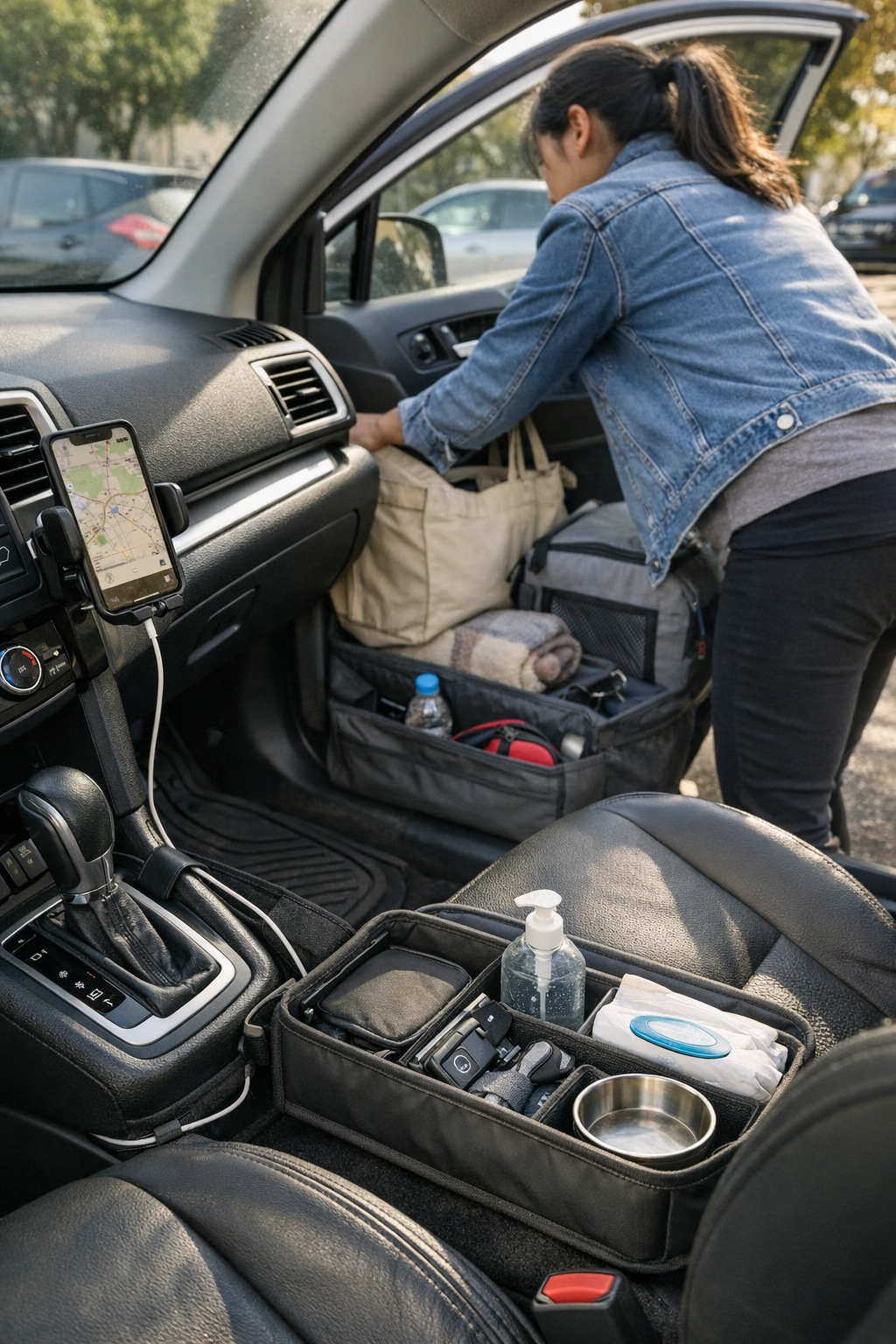
The gap between “organizing” your car and actually making it usable shows up the moment you repeat your routine. That first glance at a “clean” car is a setup: cables tucked aside, wipes in bins, everything looks in place. One trip, maybe even two, and the cracks start showing. You snag your bag on a charger cord every entry. The sanitizer bottle, supposedly handy, migrates under the passenger seat or toward your pedals after a stop. You try one more time to wedge your phone into a mount that never lines up right, so it always ends up tossed in a cupholder instead. These aren’t big breakdowns—they’re small, stubborn snags that stack up through repeated use. The car looks organized, but the problems come back each drive.
Small Snags Add Up: Everyday Access Challenges
Real-world car use isn’t tidy: it’s reach, grab, move, repeat. Coming back after an errand, you want a phone or sanitizer without hunting, but the same issues repeat. Cords dangle across your footwell or snag your hand every time you get in. The wipes you thought would stay handy are now under a shifting tote bag. Organizers claiming “less clutter” slow you down the second you grab something mid-drive. Surface order means nothing if, in a rush, you’re forced into a juggling act just to find what you use constantly.
One common scene: you pop open the door, toss in groceries, wedge the cooler, and try to reach for your phone—while the charger line manages to hook your sleeve yet again. Every move after re-entry tests whether the clean look equals real function. “Tidy” slips quickly into “annoying”—a longer reach, a block in your path, or a distracted fumble, right when you can least afford it.
Why Tidy Isn’t Always Functional
Seat pockets and bins can hide mess, but the “solved” look often masks new problems. Minimalist dividers corral stuff, until a hard brake sends loose items flying—or drifting out of reach down the side of a seat. Charger routes laid across open floor space snag your heel, block pedal movement, or get stepped on in any stop-and-go traffic. Protectors meant to solve mess can instead create a new hassle: covers that bunch, shift, or slide just far enough to annoy your feet every drive. Hidden inconvenience replaces visible clutter.
Recognize Where Friction Begins
Most trouble builds in “overlap zones”—the gaps between seat and console, the space near your feet, the spot you always reach for passes or sanitizer. If cable, bin, or organizer blocks that path, you notice: a sanitizer knock you can’t ignore, a cord you tug loose every trip, or a small item you keep having to chase. Friction rarely announces itself. It’s the low-level hassle that turns simple routines—grabbing, plugging, or loading—into small contests that repeat on loop.
Real-World Scenarios: The Pressure Test
Picture the morning routine: grocery bag in one hand, dog leash in the other, phone alert chiming as you try to get settled. The charger cable cuts right through your entry route, meaning you twist awkwardly every single time. Or you’ve loaded up from a store run but now have to move a shifting bag just to pop open the wipe container—barrier after minor barrier, none show in photos, all add up fast. Over dozens of stops and starts, what’s “solved” on paper unravels. You end up resetting trays, chasing keys under the seat, tugging shoe heels loose from a misplaced mat, or spending five extra seconds detangling cables each time—a cost you feel more with every repetition.
Once you’re using your car daily, shallow fixes get exposed fast. The console looked tidy, but every drive, chargers and odds-and-ends migrate into the footwell, or stuff still slides off hard trays. That feeling of clean fades when even small inefficiencies—untangling, chasing drifted items, awkward loading and unloading—repeat over and over.
Anchored Solutions: What Changes with Pressure-Tested Gear
Setups that truly hold up don’t just look under control—they actually remove repeated friction points:
- Anchored cable routes follow and stay against the seat base, never in the way of hands or feet and never snagging, so plugging in doesn’t mean detouring your arm around a live wire.
- A shallow, divided tray replaces a deep bin, turning every “search” grab for sanitizer, cards, or sunglasses into a one-move reach—no more slow digging or off-balance hunting.
- Seat-edge organizers or anchored footwell bins stop item drift completely, blocking the migration of stray wipes or cards under seats or into pedal territory even after a sharp stop.
The reward isn’t just less visible mess; it’s a smoother, faster, lower-effort routine. Anchored arrangements cut the friction you notice (searching, re-tucking, detangling) and the friction you feel after every drive when “clean” starts breaking down in practice.
Common Pitfalls: When Order Masks Ongoing Inconvenience
Plenty of systems hide chaos and still leave you stuck at the moment you need something. Sleek organizers swallow the items you use most, so you’re forced to dig or shift three other things just to reach them. Mats and floor covers trap dirt, only to slide under your heel or up against the pedals, giving you a new reason to fidget mid-drive. Even trunk organizers can force you to play Tetris with bins and bags—great for lifting, bad for getting that one thing in a hurry. Looks like order, but you still stall, search, or shift at every turn.
If your hand or foot stops, hesitates, or reroutes more than once a trip, the setup is failing its real job. Repeated inconvenience is the sign. In practice, a useful system signals itself by what you don’t notice—nothing blocks your reach, nothing slips out of place, nothing slows you down on your normal routine. Anything else is just organized clutter.
Building a Car Setup That Goes Beyond Looking Tidy
The setups that survive actual life are built for cycles—hands, bags, and pets landing in the same spot, repeated grabs for the most-used gear, sideways knocks from parking-lot shuffles. What matters isn’t the photo at the start, but whether every tool, charger, or wipe stays where it should after a week of errands and real parking returns.
Ask two things as you build or adjust: Does this stay put under actual pressure? and Can you grab what you need instantly, even after everything’s been loaded, jostled, or parked in the sun? Anchor what moves, define lanes for cables, give each essential an obvious home that fits real reach, not just appearances.
Because what works isn’t just tidy, but pressure-tested—staying functional after all the hurries, stops, and daily bumps that reveal what you only learn after real use.
Find practical, pressure-tested car-use solutions at DriveWellSupply.