
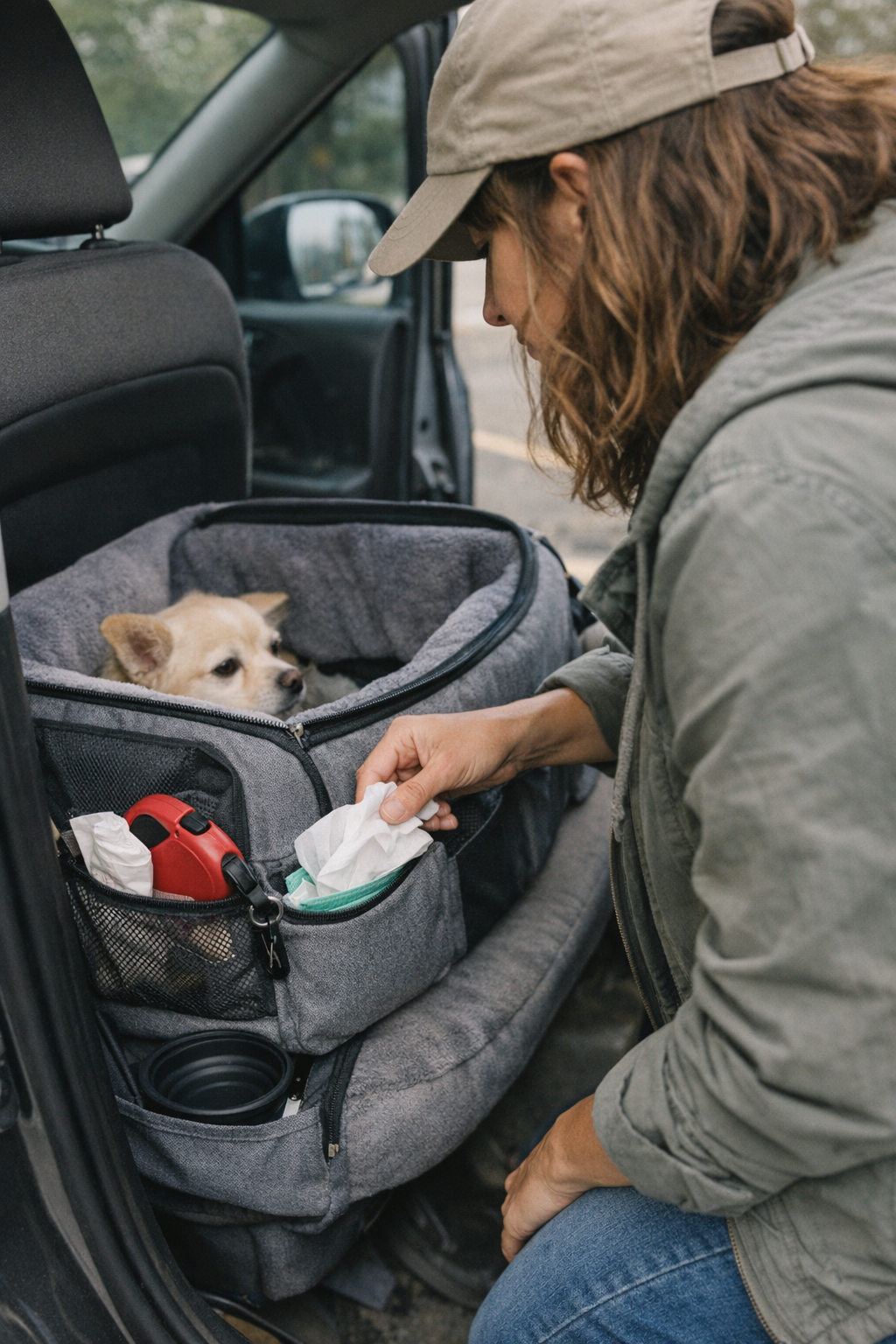
Pet carriers always look organized—until you use them for more than one stop. Zip up bedding, check the supplies, and the bag could pass for “ready for anything.” But after two quick errands, the truth hits: your leash is buried, the wipes have shifted beneath padding, and every attempt to grab one needed item turns into a quiet scramble. With each pause, the once-tidy setup turns slower and rougher to handle—even though nothing’s technically missing. Anyone routing through pet travel with more than a single trip notices the same friction: each return to the bag means another hunt, another small reset, another chance for routine movement to break the smooth start. The “prepared” carrier keeps looking neat while feeling less workable with every stop. PawGoTravel specializes in setups that address this exact kind of practical breakdown.
Why One-Stop Comfort Fails in Real Travel Routines
The soft, plush carrier feels perfect at first glance—a calm zone, an organized nest. But the illusion fades almost immediately after real use starts. The first stop? You might get away with just reaching for the leash. By stop two or three, you’re shifting bedding, unzipping compartments that feel just out of reach, and waking a confused pet just to access the treats. That “all-in-one” comfort carrier never quite recovers from a busy round of errands; what started as organization turns into an obstacle, with each essential now layered, hidden, or out of sync with how you really move. The gear looks made for peace, but in routine motion, you get an interruption every single time you need anything fast.
The Repeated Return: A Test Most Setups Fail
This isn’t just an inconvenience you brush off—it’s a repetitive hassle that only gets worse as the day goes on. Common pain points show up fast:
- Picking up the carrier again, noticing the leash clip now lost beneath a folded blanket—again.
- Wrestling a zipper stuck on bedding, just when you need smooth access.
- Grabbing for wipes, only to find them pressed into a corner, now damp from a shifting water bowl.
- The outer look is still neat, but every use after the first feels more cluttered and slower than before.
Most setups are ready for one scene—almost none stay smooth for repeated in-and-out travel.
When Pet Comfort Starts Causing Extra Friction
It makes sense to value softness and structure; no one wants a stressed-out pet. But excess plush layers and tight compartments make every routine exit harder. Park runs and banking stops morph into mini time-sinks, with bedding jostled and “quick grab” zones now just confusion. The more layers or closures the carrier adds in the name of comfort, the longer it takes to access simple essentials. Instead of easing movement, comfort layers start adding steps, squeezing pace and patience on both sides. The pet may snooze, but the owner is left hunting for one pouch that’s drifted out of line with every bump or pause.
Owner and Pet Supplies: Colliding in the Same Carrier
Another overlooked struggle: travel routines mixing pet gear with your own essentials. When leash, wipes, treats, water bowl, keys, and phone all compete for deep-compartment space, the result is friction that spills from one stop to the next.
- Wipes tangled with treats mean even a basic cleanup turns into a scavenger hunt.
- Bedding stacked on top of small items virtually guarantees at least one “where did that go?” mid-trip.
- Comfort setups that block quick access mean you’re constantly resetting the whole carrier for just a one-minute errand.
This overlap isn’t a design flaw—it’s a reality for most bag layouts that look orderly at home but fail under repetitive travel pressure. Every real stop exposes the tradeoff between looking prepared and actually functioning without extra steps.
How Setup Design Turns into Everyday Handling Trouble
The real test for any pet carrier is not its out-of-the-box look, but how it handles after hours of stop-and-go use. When structure prioritizes appearance—dense foam, deep plush, hidden pockets—real-life movement slows everything down. Bowls, leash clips, and wipes all wind up pressed aside or half-hidden, making each grab slower. The more you pack for peace of mind, the more you end up rediscovering the same stuck or shifted items, as if your organization resets after every stop. It isn’t about having enough—it’s about having essentials in the right place when you need them the third or fourth time that day.
Everyday Story: Three Stops, Three Interruptions
Picture a standard run: first trip out, the bag looks perfectly arranged. Second stop, you already find yourself waking the dog just to fish out a leash. Third stop, the treat pouch has slithered under rumpled bedding and wipes are buried against the side. These aren’t one-off annoyances—they’re the pattern. Movement is interrupted, the travel rhythm falls apart, and each restart feels longer. The difference is never “productivity”—it’s the constant drag of rearranging, searching, and soothing a newly unsettled pet.
Structure Over Looks: What Actually Helps with Movement
Switching to a structure-centered carrier—a low-profile design, side flaps, real external pockets—doesn’t advertise itself with plushness. But in real use, the effects are permanent:
- Essentials are in grab-ready outside pockets—safe from bedding shifts.
- Leash, wipes, and treats are accessible at seat level, not buried beneath or separated by layers.
- Cleanup routines no longer compete with comfort: the bag opens wide, you’re moving again in seconds, not minutes.
After the switch, exits and restarts blur together. The carrier’s structure fits the repeated-movement reality, not just the picture of “preparation” before any actual travel begins.
Quiet Improvements, Stronger Routines
The difference isn’t loud, but you feel it: bedding stays put, pet rests undisturbed, and you stop dreading the next reach for a treat or wipe. External pockets and easy openings shrink the distance between “packed neatly” and “usable mid-trip.” Once quick access and comfort are designed to coexist, you don’t notice the setup so much—until you have to borrow a basic one-stop carrier again and the old frustration snaps right back.
Don’t Let Visual Neatness Hide Real-World Weak Points
No matter how good your setup looks before leaving the house, repeated stops quickly reveal whether it really works. When every pause means slower access, shifting supplies, and overlapping needs that rub together, that’s your structure—not your packing—exposing its limits. Don’t assume visual order equals practical readiness. The difference shows up only with repeated movement: comfort isn’t about extra plush, it’s about every item being where you need it, every time. When your actual routine is a pattern of stops and restarts, your carrier needs to move with you, not slow you down.
Discover practical carrier designs and travel setups at PawGoTravel.