
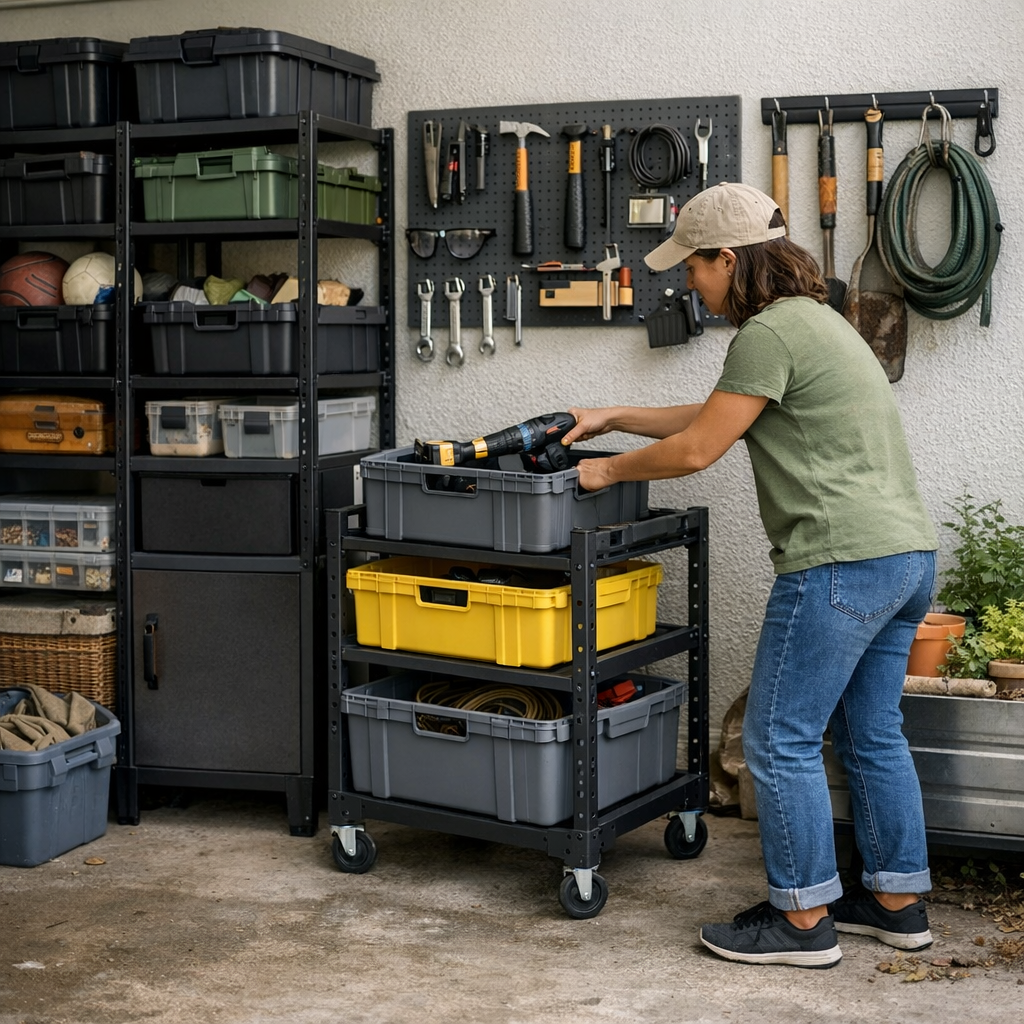
The promise of wide-open storage dies quickly in real use. That row of freshly installed shelves, those communal racks lined up along the wall—on day one, everything looks under control. You see space, clarity, the satisfying illusion that this time, order will hold. But give it a week of real mornings: several people in and out, projects starting and stopping, gear passing hands. Suddenly, bins drift out of place, categories bleed together, and that effortless access you imagined turns into low-level chaos. By the third reset, it hits you—beautiful storage isn’t the same as usable storage, and open layouts invite their own kind of daily friction.
How Zones Unravel in Everyday Use
Picture the usual garage or utility room: a big shelving bay runs nearly wall-to-wall, bins meant for sorting ‘big’ categories—sports gear here, tools there, seasonal in the back. Day one, it photographs like an ad. But by Friday? A drill sits on top of the soccer balls. Bike gloves end up jammed beside a hose nozzle. Someone pushes a tub aside to reach what’s behind, and now two ‘zones’ are mixed on the same row, each a little less clear the next time you walk by.
Return flow—the habit of actually putting things back—falls apart quickly when a space gets busy. With every shortcut, “close enough” replaces clear boundaries. Miss the right shelf once, and by the next afternoon, you’re dodging a loose skate or sifting for the hammer that should’ve been a one-grab take. Meanwhile, moving around the space means shifting a tool chest or stepping over a cart that never quite rolls back where it belongs.
Where ‘Open’ Becomes a Headache
The snags are constant and specific:
- You waste time moving a cabinet or tool chest—again—just so you can reach the one bin in the back corner.
- Yesterday’s project stuff (a tangled extension cord, a garden tray) blocks access to what you actually need this morning.
- The wall rack is either half-empty or overloaded and nobody remembers what’s supposed to hang where, so things double up or get stacked on the floor.
It’s not just clutter—it’s a slow leak of momentum every time you move through the area. Resets, instead of being a two-minute tidy, now require a mini overhaul: rearranging carts, untangling categories, or negotiating whose stuff just turned the walkway into an obstacle course. Big open zones solve nothing if they turn into catch-alls or make small missteps contagious.
When the System Breaks: Crowds and Crunch Time
The test comes during weekends or shared sprint projects. You set out bins and labels hoping it’ll streamline access—then reality barges in. A ball rolls behind a planter. Kids’ boots end up wedged beneath old paint cans. Someone’s paperwork buries itself among garden gloves, and the main path narrows to a half-step, blocked by a cart that keeps shifting. Suddenly, “Where does this go?” becomes a daily refrain—and the clear start-of-week layout now needs a zone-by-zone do-over.
The root problem isn’t the gear; it’s the vague zones. When everyone guesses at placement, the logic dissolves. Quick drop-offs become standard, arguments break out, and resets feel like daily chores. What looked organized on paper collapses under real, repeated use.
Why Narrowing Zones Actually Works
Segmenting storage by person or function flips the script. We overhauled our own garage with ruthless labeling: each person got their own shelf, distinct bins for activities, and wall hooks clearly marked for just one kind of gear. The transformation wasn’t fancier—it was simpler. Suddenly, gardening gloves had no path to wander into the painting section. The rolling module had a single job: ongoing projects only, never a dumping spot for any stray item within reach.
The ripple effect was instant. After busy days, the reset took seconds: no head-scratching, no hunt for lost balls or planters, no moving someone else’s pile just to reach your own. For once, nobody’s boots ended up behind the tool chest. Movement through the area became straightforward—grab, go, put back. Every user instantly saw where things belonged, even in a rush.
The Secret Behind Tighter Zones
This works because it eliminates hesitation. If every shelf or hook says “this is for you” or “this is for this thing,” even the messiest user gets it right the first time. Drop-offs become mindless, not negotiated. That single clutter magnet on the wall finally holds only what it should—and the rest of the space stays clear for real movement.
- Wall zones actually get used—no longer hiding overflow behind the main action.
- Floor areas open up—gear only lands in its allotted footprint, not wherever there’s space.
- Shuffling stops—every user’s path is direct, with less risk of tripping over a neighbor’s half-done project.
Practical win: Use color-coded bins, shallow dividers, or clear, visible labels for each person or category. The discipline required is minimal; the drop in effort and “where’s my stuff?” discussions is huge.
Are You Dealing with ‘Too Open’ Chaos?
Your storage is suffering if you recognize these:
- Carts or chests are always in the way—even after tidying up, there’s no clear path.
- The same overflow zone gets refilled week after week, no matter how often you clear it.
- You have to reshuffle bins just to access basics—nothing ever seems to stay where you put it.
- Unused or awkward corners stay dead, never becoming truly helpful.
- Zones nobody “owns” quietly collect everything else, growing into black holes of mixed-up gear.
If this feels familiar, your next reset shouldn’t be bigger bins or taller shelves. Instead, shrink sections down. Assign true ownership or function, and block off catch-all zones before they grow. Even a simple strip of tape or a labeled divider can turn reset from a headache into a habit.
From Looking Tidy to Working Effortlessly
It’s easy to judge a setup by how clean it looks after a big re-org. But the test isn’t the photo—it’s a week of real use. The sign you’ve gotten it right? Each person moves easily, knows exactly where to return things, and nobody interrupts their own project just to hunt down a missing drill or open a blocked cabinet. The area stops drawing attention—and that’s the point: it works because it stops getting in the way.
True storage success means less time reorganizing, less arguing about what “belongs” where, and more time actually getting work done—even in your busiest, most crowded stretches. Narrow zones. Clear lines. Real flow. That’s how you make storage not just look right, but work right.
Visit StackNest for modular storage solutions built for real spaces and real routines.