
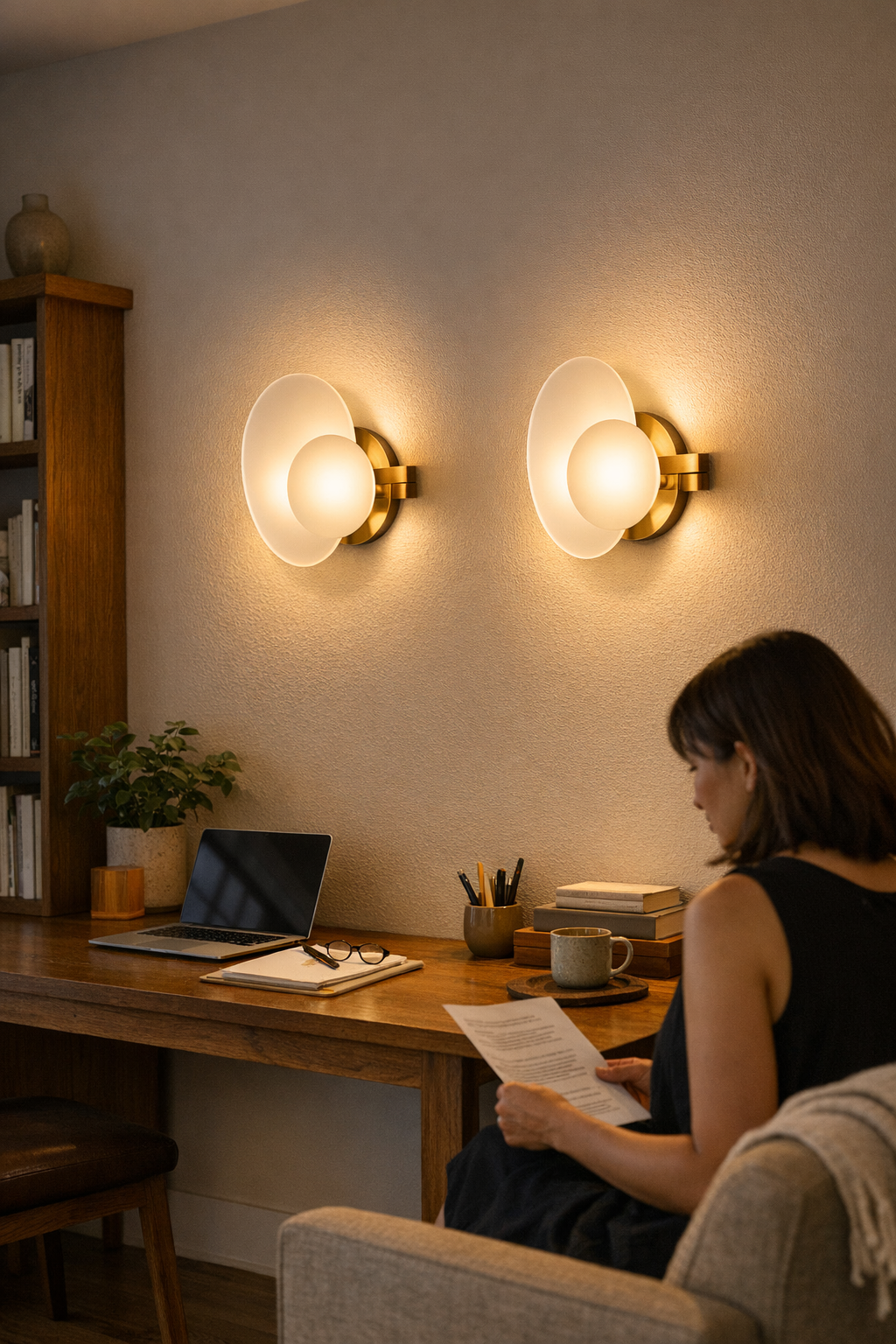
The desk looks organized—until the lights switch on and evening routines actually begin. Standard overhead fixtures create glare across the center, plug-in lamps leave uneven pools, and the “clean” look falls apart after regular use: harsh shadows slim the usable edge, reading becomes a squint, and the only way to fix it seems to be shifting lights and untangling cords. What looked like a resolved setup in the morning quickly turns into a game of avoid-the-glare and chase-the-dim-corner by night. The more you adjust, the more exposed cables, unstable lamp bases, and areas of weak lighting break the illusion of a truly functional work zone.
Why “Brighter” Isn’t Always Better
The default response to a dim workspace is usually a stronger bulb or another lamp—yet this almost always just rearranges the problem. Instead of clarity, you get new glare points, darkened shelves, or tired eyes darting between bright slabs of light and fading peripheries. The work itself—editing, sketching, sorting—gets harder as the day ends and you’re left compensating for failed coverage, not just weak light.
Plug-in lamps seem flexible at first. But every attempt to position them for better coverage leads to another cord exposed, another angle that doesn’t quite fit, another pattern of moving lamps just to make a surface usable. By nightfall, that “hidden” cable network becomes the most visible feature of the space. Lamps promising adjustability end up fighting with your layout, needing a nudge or a slide every time your focus shifts.
Seeing the Gaps After a Week of Use
No setup flaw is as obvious on day one as it is after a routine week. The shadow creeping across the desk after sunset remains, no matter how many times you reposition the lamp. Corners fade into uselessness, and that perfect surface turns into a patchwork—one side overlit, the other frustratingly dim. Every fresh task means rearranging, not working. The new lamp solves little: it just trades a dark spot for a new staple of background glare and cable mess that rebuilds itself daily.
“Adding brightness” rarely solves where the coverage breaks down. Instead, the friction moves: now your working area is well-lit, but the zone right beside it turns into a problem. The urge to buy another lamp creeps in—but you know the limits just repeat with every cord and base added.
The Subtle Payoff of Layered, Directed Light
This is where wall sconces start to break the pattern. Not just as decorative objects, but as layered support for surfaces missed by overheads and table lamps. A correctly placed sconce can fill the pocket of gloom under a shelf run, give clarity to a desk’s far corner, or even neutralize the sharp contrast that ceiling fixtures throw onto walls and workspaces. The change isn’t instant drama; it’s cumulative relief—not needing to adjust lamps for every shift in activity, not having the edge of your table dissolve into shadow every night, and not chasing cords that keep defeating the attempt at tidiness.
Sconces work because they let you target problem spots. They reduce the harsh divide between lit and unlit, offer real coverage at the working edge, and keep the background from becoming a source of reflection. The difference only appears after days of use—surfaces remain actually visible, not just apparently clean, and you notice less interruption in whatever your routine demands. But a sconce fixed purely for symmetry or “decorative balance” can end up as useless as a lamp in the wrong place—making new shadows, missing real work areas, or simply swapping chaos for patchy, indirect glare.
Why the “Clean and Calm” Setup Falls Short
It’s easy to get pulled into the peace of a central fixture and scattered table lamps. The space appears open and organized; cords are tucked away by morning. But repeated real use pulls those weaknesses straight out:
- As daylight fades, one edge always lags—forcing awkward reach or messy repositioning.
- Room corners drop into shadow, even if you added extra lamps before.
- A new task means moving a lamp (or unclipping another) before you even begin.
- Cord management unravels during actual use; what looked concealed at first now trails across the work surface or catches on a chair.
Sconces, placed along these weak zones, close the gap. Frame the shelf line, aim along the desk edge, spot the dim reading nook. The change is not showy: details remain visible after dark, you stop dodging cables, and the rhythm of walking, reaching, or shifting a setup finds actual stability. Indirect light from a sconce also calms the hard reflections overhead lights aggravate, making under-shelf or display areas workable past sunset instead of just tolerable.
Scenes From Daily Use: Where Sconces Change Everything
Picture a mixed-use room—work, reading, resting. Ceiling light floods the middle, table lamps attempt to fill gaps, but by evening it’s the same struggle: a wall-length shelf stays in shadow; screen glare bounces into your eyes; reading zones fade, and the “good enough” desk starts requiring constant lamp choreography. Only when slim wall sconces got mounted just above the shelf—hugging that stubborn 90cm line—did the routine break. Suddenly, the far side was visible. The need to shuttle lamps between zones was gone. Cables that once crisscrossed paths were out of the way. The room didn’t just look neater; it actually supported the way you wanted to use it, hour by hour.
True improvement shows in what you stop noticing: fewer breaks to reposition lighting, no irritation from maze-like cable layouts, fewer moments of deciding which shadow to live with.
Smart Layering Beats Adding More Lamps
Sconces don’t just “add” light. They build a zone, make space readable, and clear working surfaces without the mess of competing pools or the hassle of visible cables. What’s changed isn’t just style—it’s the fact you stop improvising every time you need clarity at a different edge or corner.
The best results come by pairing sconces with under-shelf strips or discreet wall panels for full, even background light. Success depends on how you place them: angle to dissolve a shadowed corner, space close enough to overlap but not create hotspots. Sometimes it takes a week of moving a chair, testing surface visibility, or nudging the sconce a few centimeters—but when placement clicks, the setup works in the background, not against you.
Tips for Placing Sconces Where They Matter
- Target persistent problem spots—the reading corner, desk edge, or awkward shelf run that fades after sunset.
- Protect your eyes from glare—mount just above line of sight, but not high enough to wash the ceiling or kick glare into the sofa zone.
- Make the light land where it counts—a minor shift in placement, even 10cm, can mean clear coverage or a leftover dim edge.
- Check overlaps—when combining sconces with panels or strips, make sure you’re solving darkness, not stacking glare and missed zones together.
The Quiet Comfort Gains That Build Over Time
Well-placed wall sconces won’t always impress in a quick photo, but their value shows up day after day: less shuffling of lamps, fewer cord quick fixes, visible coverage at the edges that once demanded compromise. Lighting adapts with your routine—which means as you rearrange, move, or rethink your setup, the real clarity and steadiness don’t dissolve.
Not every challenge is solved by an extra fixture. But introduce a support layer to neglected wall runs and shadowy edges, and “enough light” gives way to a space that keeps working all evening. The desk, the shelf, the reading chair: each zone actually usable, not just staged. What matters most isn’t the look—it’s the almost invisible ease that builds with every repeated use. LightSupport