
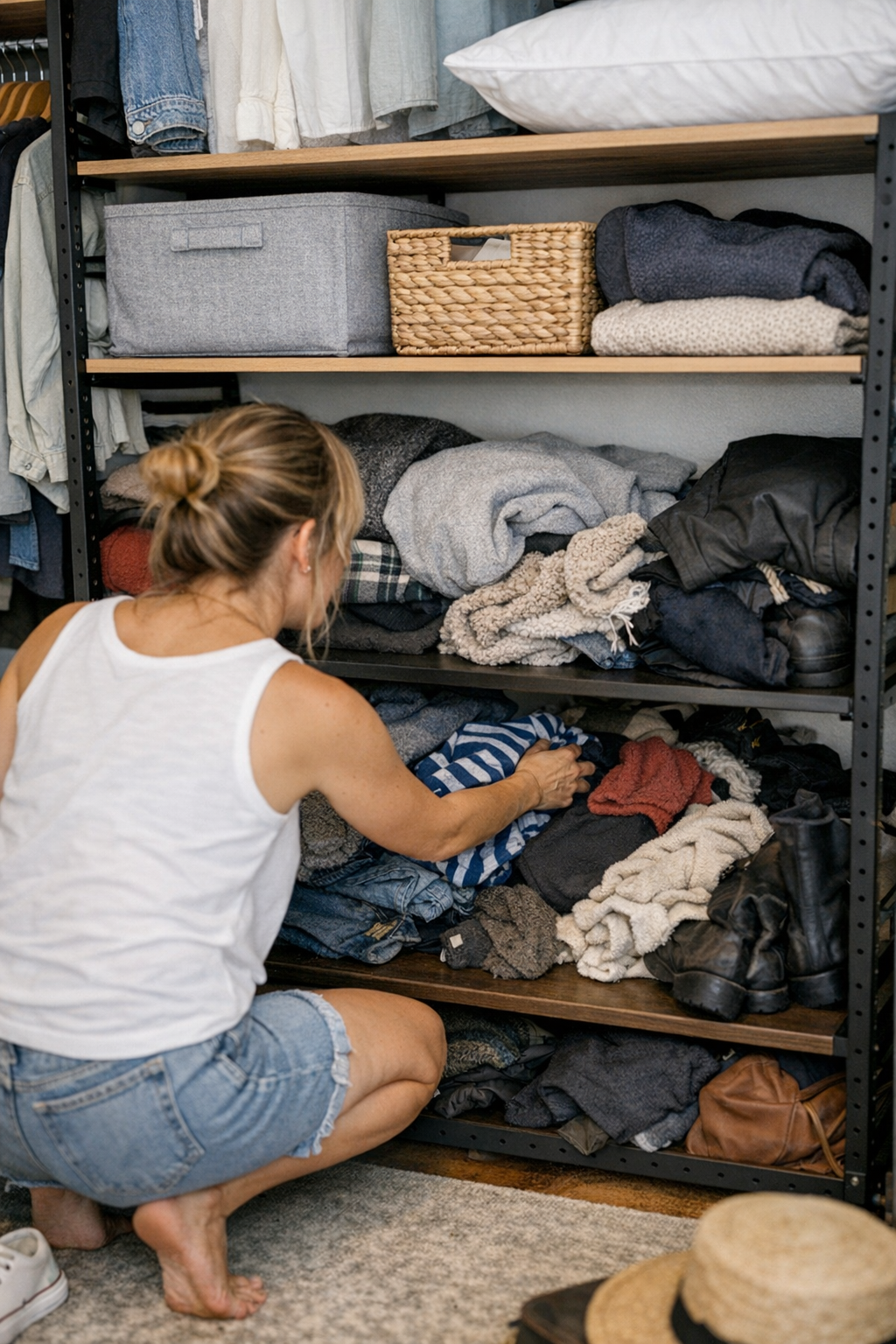
Shelf depth is the silent architect of your closet routine. Open nearly any closet—bedroom, entryway, hallway—and you’ll sense it instantly. Deep, seemingly generous shelves tempt you to load up, but what starts as “roomy” almost always ends with something lost or wedged behind a jumble. That favorite pair of socks? Gone, buried under sweaters. A stack of tees topples just to reach a hoodie. Closet depth doesn’t just shape what fits—it decides how fast your morning unfolds, how quickly you can reset, and whether “organized” ever lasts past the first chaotic week.
Deep Shelves: Roomy at First, But Quick to Hide the Mess
Deep closet shelves sell the fantasy: you stack comforters, layer bins, and squeeze in that duffel you never use. For a moment, the expanse feels transformative. Until real life crowds in. Soon you’re reaching over balled-up leggings and scooping blindly for that single t-shirt that vanished behind a second row. Bins that started sorted slowly fill with stray gloves, last-minute drop-offs, and odd shoes. The order you saw in week one gets replaced by routine frustration: to grab one thing, you upend three others. The deeper the shelf, the more categories start to blend, and the more invisible clutter drifts out of reach—including essentials you actually need.
This isn’t limited to closets. Hallways fill with misplaced hats behind handbags, laundry shelves swallow that single cleaner bottle behind a wall of towels, garage bins quietly morph from “seasonal” to “mystery storage.” Deep shelving invites you to tuck more away—but every hidden inch is a hiding place for clutter and confusion.
Shallow Shelves: Visible, Usable, Reliable—Every Day
Shallow shelves force clarity. Instead of double or triple stacking towels, everything gets one layer. The jeans sit beside the tees, socks in their own basket, nothing tucked out of sight. There’s no clearing a path to get what you need. You reach, you grab, you’re done. There’s less shifting, less collapse—the stacks hold, and the arrangement never becomes a guessing game. The biggest change isn’t in how much you store, but how you use and access it: no second row means no hidden mess, and that “quick reset” you dream of actually happens, even after a busy week. When one shelf gets messy, it shows—so you spend 10 seconds fixing it instead of dreading a half-hour overhaul.
Scene Shift: Hidden Depths vs. a Clean Layer
Visualize your lower closet shelf—nearly two feet deep on move-in day, swallowing piles of comforters, a tangle of gym bags, boots lining the back. It “works”—until day seven, when you spot your go-to sweatshirt under a mountain of jumbled fleece. You’re left peeling back layers, shifting bags, and praying nothing topples. The shelf, once proud and neat, now sags beneath the weight of a system that stopped making sense.
Now contrast a set of 10-inch shelves, each with a single job: socks here, towels there, nothing lurking behind. You spot what’s missing immediately. Taking one shirt doesn’t trigger an avalanche. Categories actually stay put. You reset between loads with barely a thought.
How Depth Controls Closet Chaos (or Prevents It)
Storage only wins if it keeps working when real pressure hits. Deep shelves create “layers”—shirts folded behind more shirts, baskets behind baskets, a catch-all bin just for overflow. It sounds efficient, but every layer guarantees extra juggling. Forgotten hats hibernate at the back. Next season, you’ll rediscover “lost” essentials dumped into the wrong bin. Resetting means pulling out half the shelf just to reach the bottom, while quick drop-offs blur the lines between categories. Disorder creeps in until you’re living around the clutter you meant to organize.
Shallow shelves break the cycle. Their one-layer rule means there’s no invisible “back”—what you see is what you get, and restocking or cleaning up barely interrupts your routine. Maybe you store a little less per shelf. But everything stored stays visible, usable, and much less likely to tangle with unrelated items. Less time spent reorganizing, more time with a closet that actually performs.
Make Space Work: Swap Deep for Shallow
The most effective shift for many? Trading a single deep shelf for two shallow ones. Towels get their own space; linens land on a lower, reachable level. Suddenly, you’re not heaving heavy bedding to access pillowcases. Small upgrades pay off big: add a divider to block piles from “drifting,” or slip baskets side-by-side to give categories clear homes. Even if you can’t rebuild, one or two thoughtful tweaks can cut down on the constant shuffle and daily frustration.
When Deep Shelves Make Sense—and When They Fail Fast
There are situations where deep shelving wins: storing winter blankets, rarely-used guest bedding, or a few large bins you open twice a year. Here, maintenance is low and categories rarely cross. But once you use a deep shelf for multiple types of daily items—or skip internal separation—the cracks show immediately. Socks end up under scarves, cleaning sprays lost behind rags, and every reset means sorting the accidental mix. If you’re moving multiple items just to reach one, you feel the cost of lost time and growing clutter every day.
The Sweet Spot: Shelf Depth That Fits Real Life
Shelves under eight inches can leave essentials teetering or half-off the edge. But shelves over 15 inches—without some way to divide them—almost guarantee poor visibility and sluggish resets. For most everyday closets, nine to twelve inches deep is the magic range. It’s enough for a tidy stack of shirts or a handled bin, but shallow enough that no category gets buried. Maintenance feels light, because each row stays clear. Go wider only when you can insert dividers that “pause” the sprawl.
Quick Fix: Divide Before You Stack
Already have deep shelves? Simple fixes help: add upright dividers or designate a bin for each category. Label “zones,” pick a “home row”—make it obvious what belongs where. A few dollars spent now prevents a full-scale clean-out later. That’s the small difference between a closet you silently avoid and one that stays ready every single day.
How Your Closet Feels in Use—Not Just How It Looks
Organized for the first few days isn’t enough. The real test: Can you grab what you need and put things back instantly, or does every trip to the closet slow you down? Shallow shelves keep everything above board—no buried surprises, no forgotten piles of last season’s stuff. The systems you build (and the categories you set) actually last, making resets fast and daily use friction-free. In the end, the right shelf depth doesn’t just create space—it gives you a closet that works with you, not against you, week after week.