
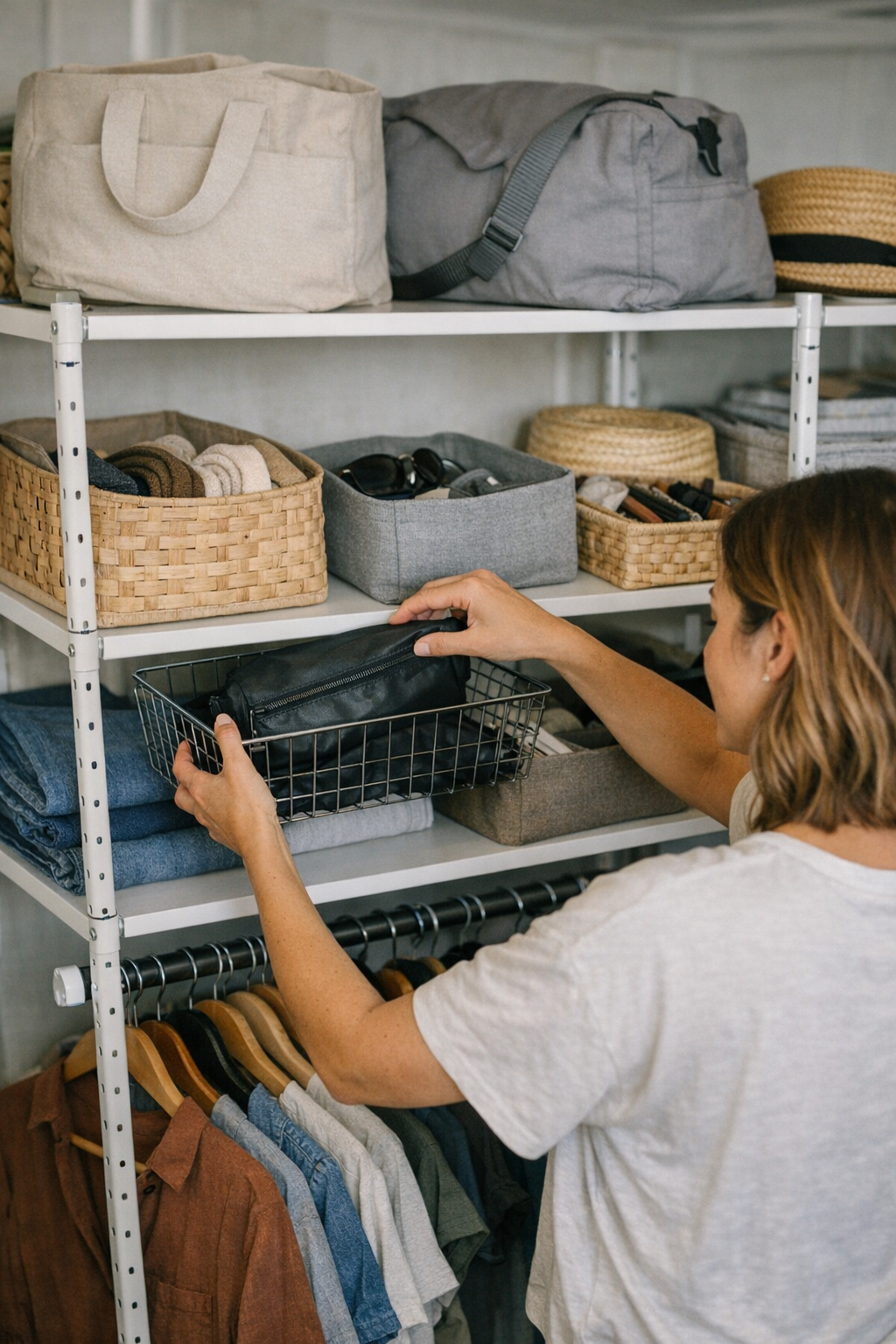
The first day of any closet overhaul feels triumphant—rows of matching bins, crisp stacks of shirts, categories clearly divided. But open the same door seven days later and reality blurs that picture. Bins have drifted. A once-separated sock pile now flirts with the belts. The scarf tucked away on Sunday is buried under bags by Friday. The frustration isn’t the mess itself; it’s realizing how quickly “order” loses its grip when daily life pulls, nudges, and reworks your careful setup.
Where “Organized” Unravels: The Real-World Tangle
Disorganization doesn’t crash in with a bang—it creeps up through a stream of petty interruptions:
- The bin you reach for every morning has slid halfway down the shelf, needing another reposition before you can open it.
- Stacks of jeans tip toward chaos as you tug out your favorite pair, sending the rest slumping forward.
- Socks and belts, meant to stay in their own zones, end up mingling after one rushed search for the right accessory.
At first, these slips are just background noise. But as the week wears on, you find yourself spending precious minutes nudging bins back, refolding shirts, and restacking what yesterday’s routine left askew. The satisfaction of organizing drains away each time you have to “fix” things just to make them usable again.
Containers That Create More Work
It’s easy to believe uniform bins and labeled baskets will solve every storage problem. The visual calm is real—until daily use presses them edge-to-edge and the cracks widen:
- Pulled too often, bins start shifting the whole row, turning your shelf into a sliding puzzle.
- Dividers may look official, but if they don’t pin items in place, the boundaries blur with every rummage.
- Vertical stacks optimized for space make grabbing a T-shirt feel like pulling a block from the bottom of a Jenga tower.
Photo-ready order fades the moment you grab in a hurry. In real life, busy entryways betray their system quickly—shoes spill beyond their intended line, bags and hats drift onto every flat surface, and returning anything means a two-step shuffle before the closet can close again.
Reset Resistance: The Slowing Down of Every Day
Daily friction becomes obvious when putting things back takes as much effort as finding them. If you have to lift two bins just to return a sweater, or rearrange a stack to squeeze in one more towel, the system is quietly sabotaging itself.
The hesitation test: You’re left holding an item, scanning for a spot that won’t cause another collapse. Is it faster to just pile it anywhere and promise yourself a “proper fix” later? That promise adds up—and so does the clutter.
In entryways, that means tripping over shoe piles and rerouting keys buried under unopened mail. In linen closets, folded towels shuffle forward until the neat stack spills into every spare inch. In bedroom wardrobes, the clothes you wear most hover on the edge—one step away from being permanently “out,” simply because returning them is too much work.
The Stack-and-Slide Headache
Stacking bins may look space-smart but breeds slow chaos. Tug one out, and the whole column shifts off balance. Suddenly, containers meant to keep “shirts” and “socks” separate start sharing contents—one ambitious grab or quick toss is all it takes.
Pay attention: How often do you interrupt your routine to straighten bins or rearrange piles? If you’re spending time resetting your system every couple of days, your storage is demanding too much—and that’s the real thief of clarity.
Why Shelf Height and Placement Matter
Sturdy function starts with shelves and bins you can reach and reset in a single motion. Items you grab most should sit at elbow-height, with nothing stacked on top to create a barrier. When a shelf is stuffed up to the ceiling, every return becomes a balancing act—one wrong move and shirts, bins, or towels slide off, merging categories and sapping order.
Make a simple shift: Remove a tightly packed upper bin. Leave a few inches of open space above your busiest shelves. Suddenly, daily grabs don’t topple piles. Each category keeps its lane, and tossing laundry on the shelf or grabbing shoes for a run becomes effortless, not a mini-reorg.
Scenes from the Storage Frontlines
Picture the folded shirt shelf after two laundry days: once-neat stacks now slouch and lean. Dig for what you want, and the next layer crumples, turning “organized” into a scramble. Or the hallway nook—Monday’s empty hooks fill with gym bags, umbrellas start slipping sideways, today’s groceries encroach on tomorrow’s coats. Spaces intended for one role quietly host everything at once.
Small Tactic: Add Breathing Room
Where it matters most, create intentional wiggle room. Resist the urge to maximize every inch. Give bins and baskets at least an inch of empty space on all sides—even if that means leaving a container out. This softens the daily jostle, preserves invisible boundaries, and lets your storage system absorb the shock of real-life routines.
Lasting Ease, Not Illusion
The best setups aren’t the ones that look newest—they’re the ones that still function at the end of a hectic week. You should be able to grab, return, and move on—no multi-step resets required. Systems that last have categories that hold, containers that don’t drift, and shelves that cooperate rather than block. The benefit shows up quietly: less reshuffling, clearer spaces, easier mornings.
Storage doesn’t have to be perfect, just practical. With bins that slide but anchor, a little breathing room, and honest shelf placement, you can spend less energy on cleanup—and more on the things that actually matter in your day.
See more ideas and storage solutions at ClosetWorks.