
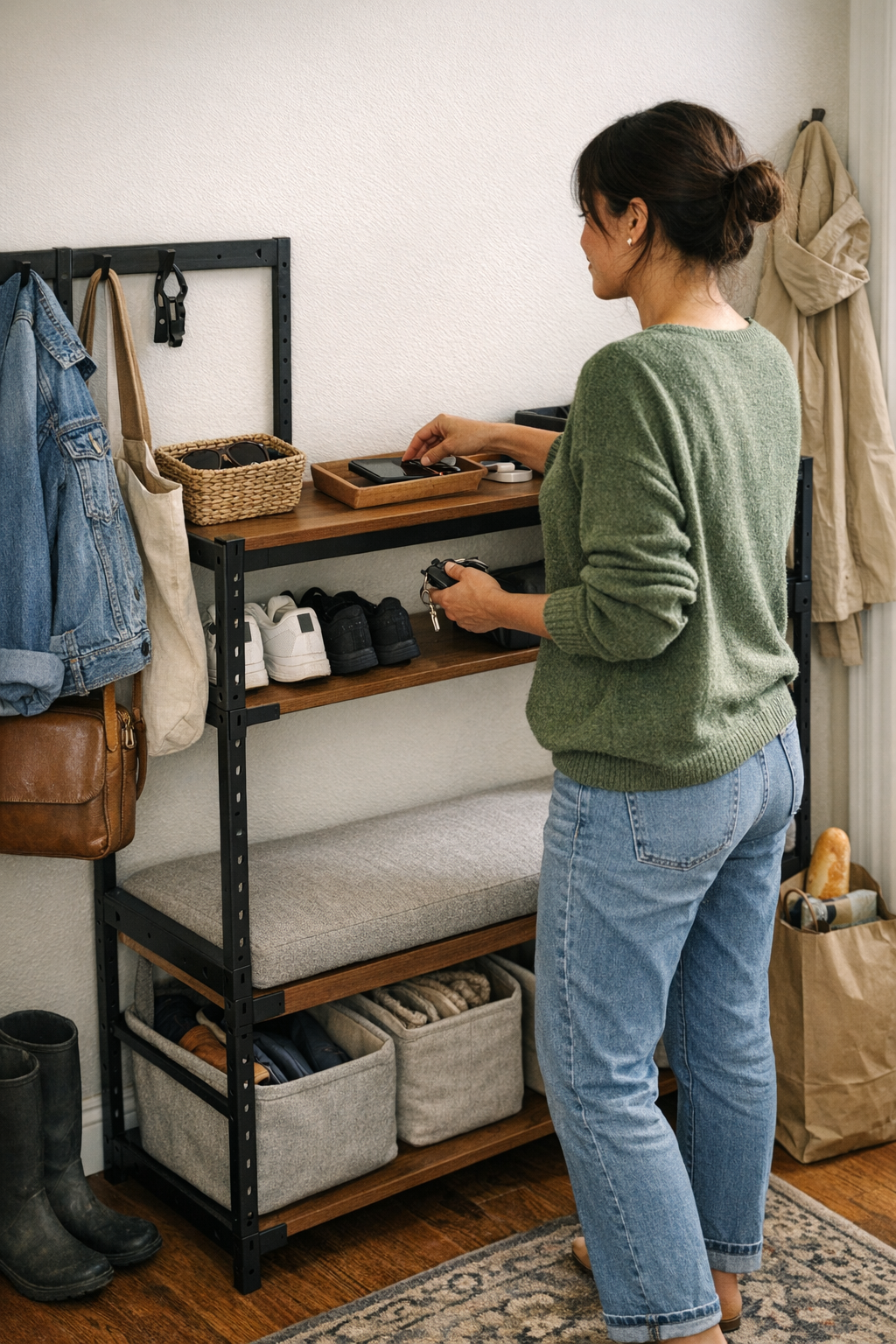
Entryways rarely fall apart because of generic clutter—they fail when storage fights against movement, slowing down every routine. Floor bins crowd the walking path, high shelves go untouched, bags land on the only bench left to sit. After “organizing,” the reset never lasts: shoes march back into the middle of the hallway, mail reappears where you meant to place groceries, and within days, you’re sidestepping, rebalancing, and stalling out at the door—especially with your hands full or in a rush. If storage isn’t exactly where your arms already move during the daily exit and return, the entire system unravels—bins ignored, hooks left empty, overflow edging further into whatever space you had left.
When Storage Misses the Mark, Routines Grind to a Halt
Every threshold, from cramped apartment halls to wide, open foyers, faces the same problem: the instant items cross the door, they drop wherever is least inconvenient at that second—not where you “meant” to store them. If storage zones sit below your knees or above eye level, every transition jams up: one extra squat, one awkward reach, and you’re adding friction to a process already under time pressure. In reality, by midweek the pattern is obvious: shoes half-tucked under benches but spilling out, backpacks flopped where feet are supposed to go, keys missing from trays and stuck between mail pieces. What looked “organized” for a day quietly mutates into blocked doorways and longer resets, as every pass-through reroutes around friction in the wrong places.
How Chest-Height Storage Rewires the Flow
Chest-height isn’t about aesthetics—it’s about matching storage to the actual angle and height of your hands as you enter or leave. The space from waist to armpit becomes a built-in “motion path” for bags, essentials, and jackets. Hooks at shoulder level catch coats before they hit the nearest surface; a tray above the bench claims keys and mail the second you reach for the door. Instead of bending low for every pickup or forgetting about anything above your head, you work with your own habits. The payoff: no more daily repeats of missing keys, shoes creeping into walkways, or benches collecting every stray item in arm’s reach.
Been fighting a shoe cubby that sits just above ankle height? Four days out, neatness collapses: pairs fan out into the main hall, and resets stall as extra steps pile up. Meanwhile, high-up mail organizers gather stacks nobody wants to reach for, letting stuff trickle back down into the active zone. If storage fights the movement pattern, even the best plan fails under normal use—resetting just slows down the next unraveling.
Real Entryway Bottlenecks: Where Storage Fails Routine
The Bench That Loses Its Job
Designed for sitting, the bench turns into overflow ground zero: one grocery bag, then a week of mail, then everything else. Sitting down means clearing a whole pile—not grabbing your shoes. When storage sits too low or isn’t immediately visible, the bench turns from utility to permanent drop zone. Resetting means rescuing the seat from its own backlog every single time.
Bags That Block the Path
Every new arrival—kids, pets, groceries—pushes bags wherever there’s open floor. If racks or hooks are out of reach, backpacks and totes hit the ground. By morning, you’re fishing for today’s essentials from under yesterday’s pile, while the doorway narrows with every shortcut taken. Far from streamlining entry, the wrong storage pattern punishes every deviation and encourages more workarounds than solutions.
Accumulated Reset Fatigue
Organizing gives you a clean slate—once. A few days, a few rushed exits, and bins are buried, tray tops vanish under unrelated items, and shoes spill out in all directions. The space “looks” set up from certain angles, but the walking path shrinks and every pass demands extra sorting. This is where most systems fail—not at the clean-up, but in the slow daily breakdown that costs time, focus, and movement right at the moment when you need the entry behaving on autopilot.
The Quiet Shift: What Happens When You Raise the Zone
Across hundreds of entry resets, one physical adjustment outperforms every organizational trend: raise core storage into the zone where your hands already move on entry and exit. Install a wall rack at chest height for active bags. Add a tray above the bench for phones or loose essentials. Shape a hook row to catch jackets in transit rather than after-the-fact cleanup. When the highest-traffic items land in the “active reach” zone, friction drops instantly. Here’s what actually changes:
- Bags lift off the path without thought—no more targets on the floor, no more obstacle course at the threshold.
- Shoes hold their lane, anchored by visible, easy-to-access storage—row spread halts and reset requires less effort.
- Essentials like keys land in plain view, always where your hand already expects them, stopping the last-minute hunt.
- Overflow stands out as soon as it starts, making backlog visible and motivating resets before things spiral.
After bumping a household’s main drop tray by just over a foot, the transformation wasn’t subtle. Headphones that used to disappear for days stayed in place. Sunglasses landed in the tray and stopped hiding under mail. Even serial bag-droppers got the pattern: hooks at the natural hand height make it easier to hang up than drop down. Backlog dropped from a full week’s worth to a couple daily resets, and the bench finally acted like a seat instead of a catch-all.
Fitting Raised Storage into Tight, Busy Entryways
The busier and narrower your entry, the more you need active-height storage. Wall-mounted units, slim vertical racks, and modular hooks at hand-level carve out order without eating up the path. Even in the smallest zone, a single well-placed hook beats a trip hazard of bins or an unreachable shelf. Return home, drop items at natural reach—now the floor stays clear, walkways open, and everyone can come and go without battling through piles that “fit” the layout but never really flow with daily use.
When space is tight, low storage may seem like the only answer—but it’s usually a long-term hassle. Floor bins fill up and block movement, while high cabinets hide away what you need most. By lifting core storage, setups finally keep pace with real routines—the difference isn’t just in cleanliness, but in never having to double-back or trip just to get through your own door.
Two High-Impact Ways to Test and Shift
- Audit Your Actual Landing Zones. For a couple days, step back and watch where everything lands—without correcting. Is your main drop above waist level or always collecting on the floor or seat? The mismatch is the first sign the current setup is fighting, not helping, your routine.
- Shift Up in Small Steps. Don’t overhaul in one go. Move key hooks, trays, or racks 12–18 inches higher—trial one spot for high-frequency items and watch what happens. Let the natural reach change what’s used; then adjust further based on real traffic, not theory.
Your entryway doesn’t need to meet a perfection standard—it needs to work on repeat, under daily pressure. Raising storage into the line of daily movement keeps resets small, walking paths open, and the ongoing burden of re-organizing far lighter. What looks “organized” once is less important than what keeps your threshold moving, clear, and actually livable week after week.
Explore Betweenry’s collection for real-world transition storage that works under daily pressure.