
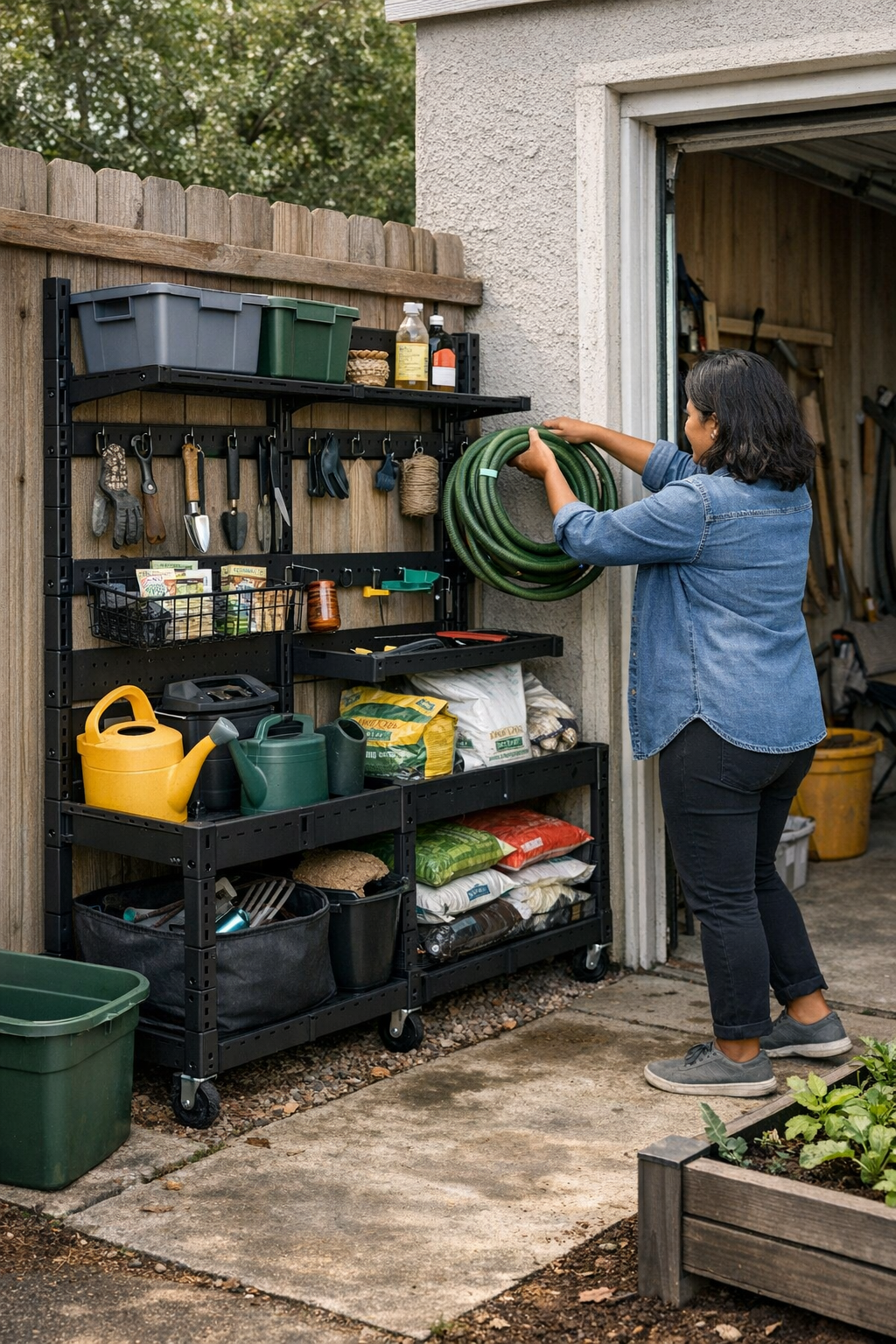
The frustration starts quietly— a tidy row of bins along the gate, a rack wedged next to the side-yard fence, or plastic containers stacked by the back door. The setup looks “done,” at least for a day or two. But by Sunday night, the path narrows as gear seeps back into walkways. A stray deflated ball takes up a gap “just for now.” That handy tote from the hardware store ends up blocking half the steps. Every quick outside trip turns into a shuffle—sidestepping bins, shifting lids, finding there’s always one thing in your way. What looked organized becomes a new kind of clutter, hiding beneath the surface of the routine and making every reset harder.
Why Floor Storage Quietly Takes Over
Most side-yard, patio edge, and backyard setups begin with floor-based storage—a big bin, a low container, a basket of tools. It seems efficient until you’re actually using the space day to day:
- You toss in one extra toy for now; later, you’re digging through a pile just to find the garden shears buried at the bottom.
- Overflow isn’t contained—shoes, hoses, and kicked-off gear land in the open zone beside the bin, slowly blocking the main walkway.
- The “keep it handy” logic backfires as essentials collect at the edges, forcing you to move something nearly every time you pass.
What started as a clear route devolves into a hopscotch of blockages and messy pause points. Every item you put back seems to push something else into the path. The reset after use—meant to be one quick sweep—turns into a series of small disruptions that add up.
Wall Racks Fix More Than They Promise
Mounting storage on the wall doesn’t look flashy in a cramped patio corner—but the daily difference is obvious. As soon as the gear is off the floor:
- Walking lanes reappear, making even a skinny side passage or garage edge usable again.
- Zones stay clear, separating sharp tools from chalk and balls, rain boots from rakes—a visual structure for what goes where.
- The “drop it anywhere” habit breaks, replaced by a direct path back to the right hook or slot every time the gear returns.
The early resets feel easier: instead of digging or rearranging, you return an item and move on. The rack’s slots cut down on double work—fewer “Who left this out?” moments, fewer things stranded in the wrong corner. Suddenly, even kids and guests know where things go. Overflow has fewer places to hide.
Setup Reality: One Shared Yard, Two Kinds of Chaos
Picture a yard split between kid chaos and garden chores. On Monday, a bulk floor bin means picking your way past loose tools, tangled hoses, or a soccer ball blocking the gate. The main storage doesn’t stop the mess—it just pushes the pile closer to the busiest route. That so-called “solution” creates a new reset tax after every use.
Switch to a divided wall rack and the week feels different. Chalk and balls get hooked up and out of the trample zone. Gloves and spades aren’t stranded near the steps. Saturday’s clean-up takes ten calm minutes instead of a thirty-minute hunt. The equipment flows back where it belongs, not where it’s easiest to drop. The workload shifts from panic-clearing to minor upkeep. The point was never more storage. It’s less block-and-reshuffle, fewer sighs, and less wasted time staring down another reset spiral.
Open Racks Won’t Save You Without Real Boundaries
Open racks and stacking towers advertise easy access. In practice? They turn into a category-jumble. Pool noodles wedge into a pruning tools slot. The sports shelf gets taken over by last season’s garden stakes. Stack too high, and every time you grab something, gear slides off and the “organized” look collapses. The wall fills up, but so does the floor beneath. One shelf is always overflowing, and the “convenient” rack becomes just another landing pad for new overflow cycles.
The Difference Is Zoning, Not Just Storage
Clear zones stop the spread. Without real separation, mixed-use corners devolve into everything-piles—no matter the bin, shelf, or rack. When each group (kids, tools, seasonal items) has its own slot or section, things actually get returned, and scatter drops off. Mobile bins are only an upgrade if the inside’s divided. If not, you’re just pushing yesterday’s clutter around on wheels.
How Every Reset Reveals the Setup’s Weakest Link
A setup’s real value appears three weeks in, not day one. Look for:
- A walkway shrinking as the weeks pass, squeezed by gear that never quite makes it back.
- “Rest stops” like the fence corner or the patch behind the recycling bin, where things pause because returning them is too much work.
- A reset that still drains you—or just gets postponed until guests visit.
No amount of clever design matters if the system doesn’t keep up with actual routines. Lasting setups cut out the need to constantly reshuffle and let you keep moving, not sidestepping every loose bin or rogue “temporary” pile.
Outdoor Storage Questions That Don’t Go Away
Does wall-mounted storage really help in shared spaces?
Yes—especially where toys and tools cross paths. Wall slots keep floor lanes open and signal where gear should go. The only catch is keeping an eye on the zone below for those classic “out of sight, out of mind” piles that try to return.
How do I avoid constant spillover with kids in the mix?
Give every user group a defined, visible spot. Forget catch-all bins; the key is no fuzzy borders. If it’s obvious where every item goes, you spend less time tracking down lost gear and more time just walking through clean, clear space.
Will moving bins around really help with changing setups?
Mobile or rolling storage only works if what’s inside stays sorted. Otherwise, bins-on-wheels just roll the mess from path to path. Choose models with clear dividers, or plan to chase migrating piles until you finally replace the whole setup.
One Small Change That Actually Unlocks the Space
Take out a big floor bin, add a segmented wall rack, and something practical shifts: Reset time drops. The entry path stays open. Instead of tossing sports gear “for now,” you put it away in seconds. The new routine is lighter: fewer blockers, no buried tools, and a space that actually feels ready the next time you want to use it. None of this feels impressive until you realize you’re no longer treating every weekend tidy as a rescue mission.
- No clearing a path just to start a project.
- No rediscovering last week’s pile buried under unrelated gear.
- No settling for a layout that only looks neat when unused.
The floor under the rack is finally just… floor again, not overflow storage in disguise.
Keep Your Outdoor Setup Working, Not Just Looking Organized
- Audit every “drop zone” after a busy week: If one area keeps collecting random gear, the current system is inviting clutter—not preventing it.
- Divide the space by real use: Separate shelves or racks for garden tools, kids’ gear, and seasonal oddballs. Fewer mix-ups, fewer excuses to leave something out.
- Get things off the ground—even partway: Lifting essentials at least a foot up clears the path and makes every return more likely to stick.
The best outdoor setups aren’t the ones that impress for a day—they’re the ones that still work when a regular week leaves mud on the boots, chalk in the cracks, and three people running in and out. When your storage fits the way you really use the space, resets get easier, not longer—and the yard or patio finally works the way you wish it would.
Visit TidyYard to explore practical setups for outdoor organization.