
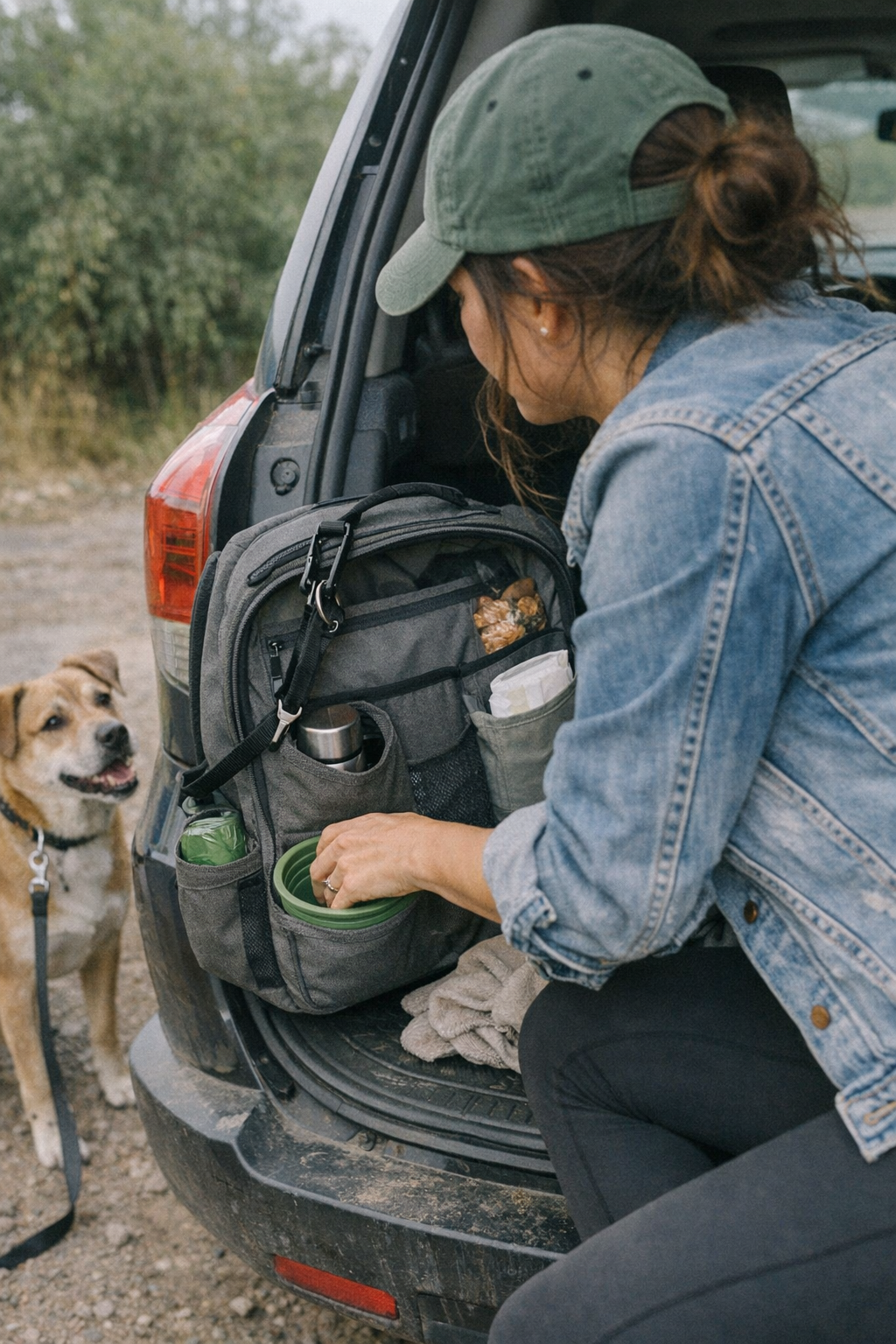
The travel bag that looked “just right” on your living room floor rarely feels that way at the first pit stop. You load up, zip everything neatly, and head out—then, at the moment you need to grab the leash or wipes fast, you find yourself rifling past a blanket or a crumpled water bottle instead. Organized packing quickly fails the actual test: how quickly you can reach essentials, how cleanly you can shift from pause to movement, and whether your “ready” kit actually stays ready when pet and owner needs collide again and again mid-journey. Pet travel isn’t about squeezing down gear or making the bag look minimal. The real difference shows when travel routines repeat—and gaps in structure start slowing you down.
When a Neat Bag Becomes a Travel Speed Bump
You know the script: every item has its pocket, everything zips shut perfectly, the carrier stands upright on the passenger seat. At the first break, you reach for the leash—but your fingers come up with a bag of snacks. Fast grab-and-go for wipes or bowls turns into a digging session. The “minimal kit” exposes its blind spot: at every seat-side stop, items have shifted or hidden themselves under something else. What looked sorted at home now means a shuffle each time you pause—wasting seconds as your dog gets fidgety, or you wonder why you’re unpacking half the setup just for one item.
Every repeated reach reveals fresh friction: A quick stop becomes a juggling act—side pockets blocked, compartments tangled, nothing where your muscle memory expects it. Each micro-delay adds up. The more your trip reminds you something is “almost” easy to find, the more your organization feels like an obstacle.
Compact Doesn’t Always Equal Easy Access
Packing lighter sounds smart until your essentials bottleneck in your own bag. Trimming gear is only useful if high-use items don’t wind up at the bottom. When the leash gets lost under treats or wipes disappear between layers, every pause demands reshuffling. Shrink the kit all you want—if the structure forces you to keep moving things around, you’re still stuck at every stop, not streamlined.
Typical Travel Tension Points
- Leash or bowl on demand: Your dog’s ready, you’re still hunting through three types of gear.
- Post-walk cleanup: You can almost see the wipes, but another item blocks every reach.
- Back-to-back use: That one item you need gets buried deeper each round, unless your setup keeps it on top—always.
Short errand runs and long road trips both expose the same flaw: overlapping items, tangled access, and a sneaky repack cycle that catches you every single time. The intent to “travel light” quietly backfires when every return to movement requires a reset.
Recognizing the Hidden Repack Cycle
The friction isn’t always loud, but it’s always there. Grab the leash, come up with the wrong thing, and suddenly you’re thinking about your bag instead of the next step. Wipes migrate under spare toys, bottle pockets sag with unused items, and what looked “ready” now demands mental notes and re-sorting. You start doing mini-unpacks at every pause—unlayering, searching, cramming, and feeling the structure drag instead of supporting your pace.
This slow-down creeps in: what started as “a quick break” becomes a scramble at every seat-side stop, especially as the day wears on. The setup that promised order starts leaking time and patience with every interrupt—dog waiting, owner shuffling, travel flow breaking down.
Where Practical Structure Outperforms Minimalism
No packing system is flawless, but real-world travel always exposes which layouts cut the friction—and which just look tidy for photos. Prioritize setups that put high-turnover gear where you can grab them without thought, even after repeated stops. Neatness is nothing if every return means searching for the basics all over again. Examples that work in the wild:
- Leash clipped on an outer loop: Instantly accessible, never buried, never mixed with other items.
- Wipes in a hard-to-miss side pouch: Grab with one hand, return without fuss—no competing contents.
- Collapsible bowl by the seat edge: Unblocked by treats or accessories; you don’t have to tip out the bag to hydrate your pet.
Refining anchor spots for these core items quickly shifts your experience from “where did I put that?” to smooth, repeatable action—even if the rest of the bag isn’t perfectly packed. Each routine grab-and-return gets tighter. You’re no longer handling the bag; you’re handling the trip.
One Small Change, One Big Difference
Picture the usual pause: highway shoulder, hot weather, your dog pacing in the back. Instead of tipping the bag sideways or wrestling the zipper mid-tension, you pluck the bowl from the outer pocket, and the leash is clipped in reach of your seat. Hydration and control, handled in one motion. No digging, dumping, or “hold still, almost there” frustration. Multiply those seconds saved by every stop, and the difference isn’t just convenience—it’s the entire rhythm and mood of your trip shifting toward calm and prepared.
Spotting Which Items Need to Be Front and Center
The true test is repetition. After even a handful of trips, weak points surface fast—which item are you always moving out of the way, which keeps getting misplaced, and which drives your pet to impatience just before you solve the basics? Anything you use on every stop—leash, bowl, wipes, waste bags—deserves its anchored, direct-to-hand position. If you’re still wondering where something went, or moving the same object twice per stop, your setup isn’t supporting you—it’s forcing constant adjustment.
Avoid overlap zones where pet and owner gear collide. Separate out the “grab this first” group from everything else—no matter how unfussy it looks. Clean, single-purpose sections trump Instagram order when real travel pressure hits. If only one thing triggers repeated interruptions, that’s your signal to reassign its home, not just repack more tightly.
“It Looks Ready”—But Does It Feel Ready?
This difference stares you in the face on every restart: either your hand lands on the leash and the wipes, or you trip up—one more delay, one more scramble. The best carrier, bag, or pouch only earns its keep if it matches the way you actually move. Consistent return spots, zero need to empty a compartment for one small thing, and never letting cleanup gear migrate to the bottom—all add up to less friction every single time you get moving again. That payoff gets bigger with each trip, not just the first outing.
Realistic Improvement, Not Perfection
You can’t fix every inconvenience, and some trips will expose surprises no kit can fully control. But every smoother routine, every grab that happens where you expect it, and every restart that requires less thought, proves the structure is finally helping—not just looking organized. Preparation gets you started, but the way your travel layout handles real-world repetition is the only test that counts.
If your pet-travel setup keeps making you pause, shuffle, or question your packing order, it’s time to look at structure before adding new gear. In repeated use, the setup that lets you move fastest—without rethinking, reshuffling, or doubling back—always beats the one that simply packs the smallest or looks the most composed at rest.
For practical, repeat-ready pet travel gear, visit PawGoTravel.