
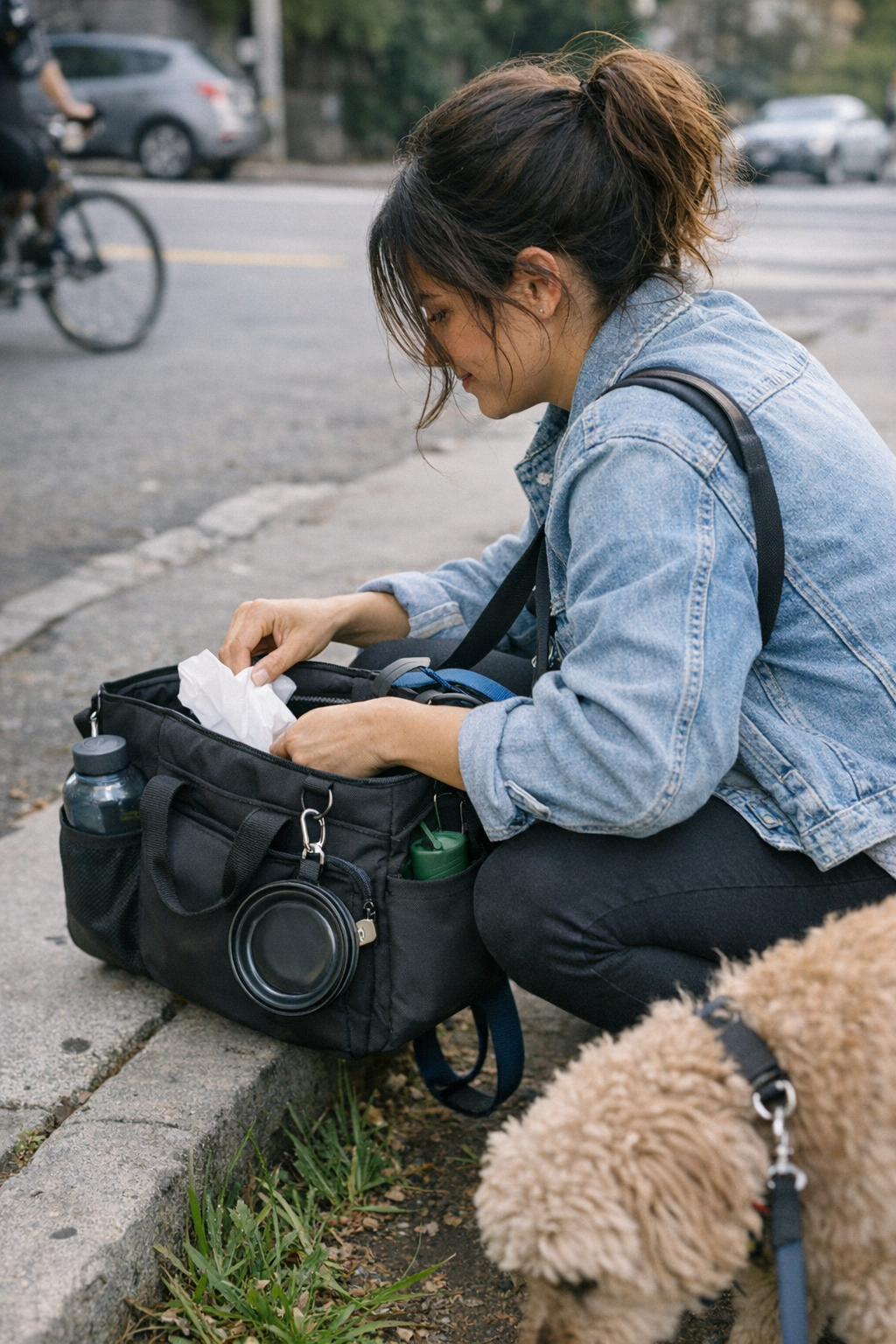
This is where pet travel gets real: You step out for a quick morning walk, shoulder your organized bag, and—within minutes—start juggling. One leash hand, one sliding bag, and suddenly standing still means hunting for wipes that have disappeared under comfort gear or twisting for that water bottle that’s not where you thought. The setup, meticulously prepped at home, breaks down in motion: quick stops turn into scavenger hunts, pockets block each other, and the bag you trusted for “readiness” becomes a drag the moment you need something fast. The frustration is rarely dramatic, but it’s relentless—the kind you only notice when every pause turns into a mini-reset. That’s the core tension of pet travel: looking prepared versus functioning under real, repeated use. This is the world PawGoTravel exists to change.
The Quiet Fails of a “Visually Organized” Pet-Travel Bag
A tidy bag feels like security before you leave. Everything zipped away, compartments neat, the promise of an easy outing. But as soon as your trip stops being static—any quick park detour, every sit-pause, or even a curbside moment—you run into the bag’s hidden weak points. The wipes you need first are never truly at hand. The water bowl that seemed accessible at home now slides beneath towels or is blocked by a rolled-up blanket. The leash’s clip tangles or yanks awkwardly as you dig past pet and personal items. Small friction points multiply until what looked calm at rest becomes an obstacle during real movement—especially when your phone, keys, and pet supplies all jostle for space.
Few notice a bag’s slow unravel the first time out. It’s the third or fourth stop when you sense it: owner items tangled with pet gear, hands switching between leash and bag, the cumulative drag of pockets designed for calm, not chaos. Each micro-delay exposes the gap between organization you see indoors and what actually survives contact with a real walk.
When Quick-Grab and Comfort Gear Collide
That misplaced pouch or blocked pocket isn’t just bad luck—it’s a direct result of a setup tuned for stowage, not fast access. Blankets and plush gear help your pet settle but often end up hiding wipes or obstructing treats. Grab for something mid-walk and your dog pulls unexpectedly, forcing another awkward reach around layers that weren’t in the way at home. Those “comfort” sections, so useful for calm travel or a cold seat, quickly become blockades for items that matter most at a busy pause.
Your system only starts to show its limits when real-world use forces a choice: easy pet comfort or fast, unblocked cleanup and hydration. It’s a decision you make repeatedly—and every time you reshuffle for faster access, another pocket gets used badly, and the cycle repeats.
Comfort Gear Isn’t Always on Your Side
Piling in blankets or any comfort item is great, until you find the seat-side section totally packed, your wipes sliding further out of reach, and hydration gear shrouded under “calm.” In winter, you might forgive it. On any normal day, it’s just an interruption—slowing down what should be a quick fix and pulling your focus off your pet when you least want it.
The True Test: After the Fifth or Sixth Stop
No bag design feels “bad” on stop one. It’s repeated use—fifth, sixth, seventh reset—when unchanged flaws start to dictate the flow. By then, the absence of a real quick-access pocket becomes more than a subtle nuisance. Key pouches force an awkward re-grab, and patterns emerge: wipes always lost, bowl always wedged, leash always fighting your reach. The structure that looked clever at rest increasingly slows every decision once real travel rhythm exposes how poorly it adapts.
This is where differences become obvious: Can you actually grab wipes without upending the bag? Does the water bowl slip free when both hands are half-occupied? Or does every transition ask you to dig, shift, or even drop your own stuff just to reach a basic item? The “prepared” look fades, and what matters is whether your repeated movements—start, pause, restart—run smoother, or if each becomes another small frustration. PawGoTravel’s design focus starts exactly here.
How Dedicated Sections and Exterior Access Change the Game
Move your most-used items—wipes, waste bags, water—from the general jumble to a quick-grab section or exterior pocket, and the experience transforms almost instantly. No more digging behind plush gear. No more blocked seat-edge. Now, on every stop, you reach for the same spot, grab what’s needed, and reset with less drama. Fast transition from car to curb, curb to park, and back again. The bag no longer slows you down or interrupts the routine you and your pet have established.
Repeated Use Makes Structure Matter
Many owners assume they’ll “get used to” a bag’s quirks, but repeated friction doesn’t fade. Every overlap between pet and personal gear makes quick access less reliable. Each time wipes are pushed deeper by shifting treats or a phone, the weakness compounds. After a few outings, those minor setup mistakes turn restarts into slowdowns. Instead of adapting, you end up fighting your bag’s structure itself—one blocked grab, one shuffle at a time.
Practical Tweaks That Actually Work
Here’s where seasoned pet travelers separate hype from real payoff:
- High-frequency items must have true external pockets. Not just labeled; truly easy to reach with one hand, even when moving or handling your pet.
- Keep comfort gear from overlapping main access routes. Every item that slips between pet gear and owner stuff is a future delay—even on an ordinary walk.
- Test your bag by actually running two or three true pauses or curbside resets in a row. Wherever you stall, wherever an item always gets buried or feels slow, that’s where structure (not just neatness) needs changing.
It isn’t about adding endless pouches or aiming for the most organized look at home. Small, structural tweaks—true quick-access sections, externalized high-use gear, and separation of comfort from action—deliver payback you feel within one week’s worth of real, repeated stops. The travel rhythm improves. Stress drops. Your setup gets out of the way and lets the day flow again—even when your pet’s routine changes mid-walk or at a crowded curb.
See setups designed for real, repeated pet travel at PawGoTravel.