
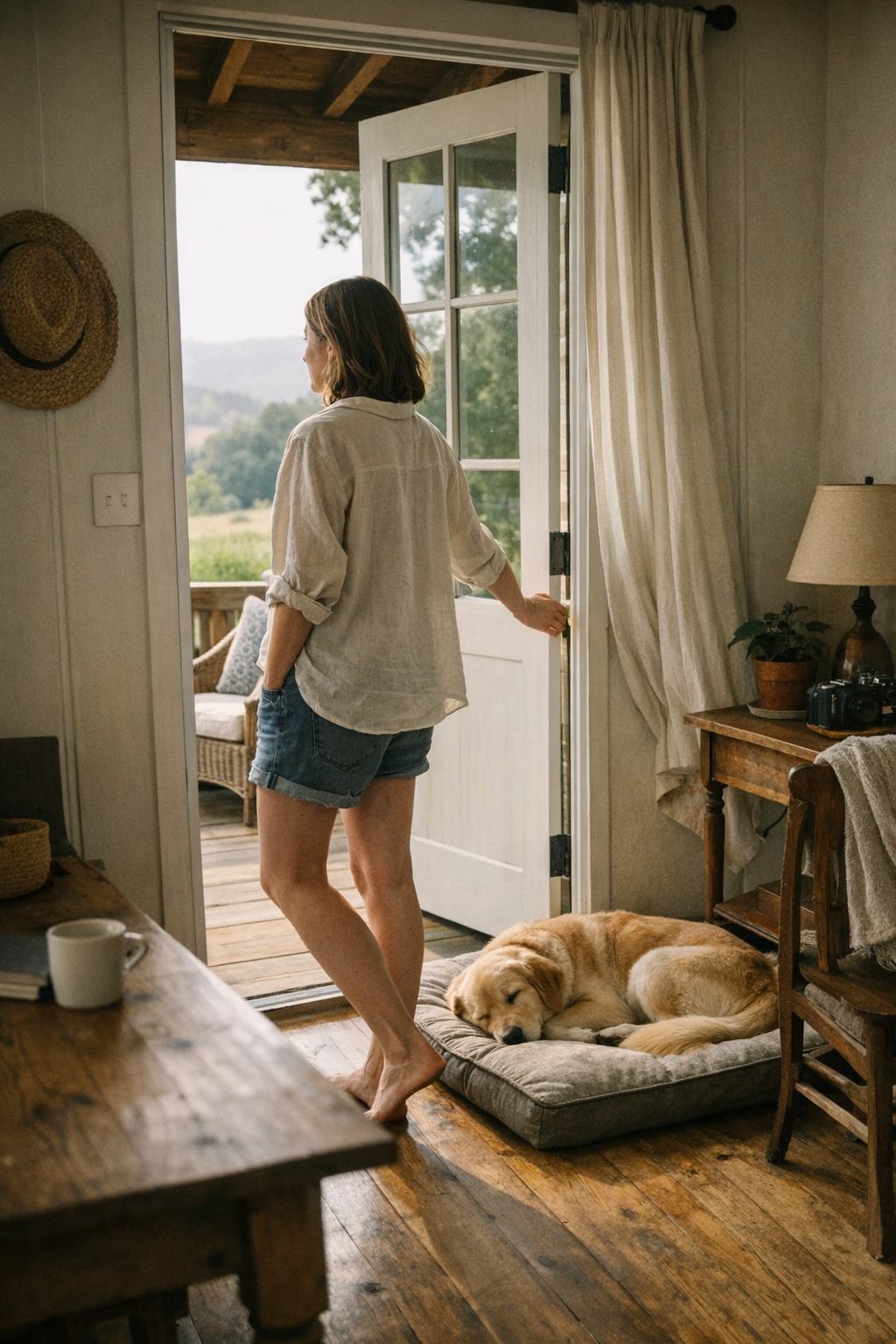
Afternoon pacing isn’t just restlessness—it’s a daily friction point most dog owners keep tripping over. Late in the day, as kitchens fill, shoes pile by the door, and voices bounce between rooms, a familiar pattern repeats: your dog cuts the same path between bed, bowl, hallway, and threshold, never settling. It’s not boredom or a simple bathroom request. It’s a breakdown in routine reliability. When a dog abandons their bed for the fourth time in under an hour or sidesteps bowls because a shoe rack or laundry basket blocks the way again, you’re living with the daily gap between a “neat” setup and one that actually holds up to repeated use. That’s the DogPile world—routines nudged off course by tiny, continual misses.
What Afternoon Pacing Really Signals
Many owners dismiss pacing as pent-up energy or impatience for a walk. But true afternoon pacing isn’t sharp or playful—it’s a low, steady shuffle through spaces just as household noise crests. You see it in the hesitation before settling, the way your dog stands half-on the bed, eyes locked on the next doorway, ears twitching each time a family member passes or a chair scrapes in the kitchen. These aren’t random laps; they’re the signs of downtime routinely interrupted by the flow of daily life.
What starts as subtle drifting—moving from water bowl to door to hallway—adds up. When your dog glances at the bed, then at you, then at the pack of feet crossing the entryway, it means even rest is now a calculation. Comfort becomes contingent on the next interruption: a noisy appliance, a misplaced bag, the traffic in a supposedly “quiet” zone.
When Routine Friction Adds Up
Let this repeat a few afternoons in a row and the cost becomes obvious. Meals are rarely finished in one go, the dog’s bed is a stopover, not a haven, and downtime never fully resets for either of you. Owners often write it off as “midday jitters,” but the cycle grinds down routines until every homecoming or meal time feels like starting from scratch.
Picture a Tuesday: laundry machine clattering, a dropped pot in the kitchen, footsteps echoing down the hall. Your dog circles from den to kitchen, pauses at the water dish, then shifts closer to the door, waiting. You find paw marks scuffed into the floor by the bowl, toys pushed aside, and when dinner prep begins, the dog hovers at the edge, ready to slide away from the next incoming noise. These aren’t quirks—they’re the visible cost of relaxation lost to ordinary commotion.
The Real Cost: Fragmented Days and Rising Tension
It isn’t a single dash or bark that wears down your routine, but the steady circuit of laps that never settle. Play becomes scattered. Feeding routines splinter. Instead of relaxed transitions, both you and your dog mark time until the next pause collapses under the daily rush. Every “break” is temporary, and everything needs resetting again before it sticks.
Behind the Quiet Erosion: How Setup Shapes Routine
It’s a hard fact: tidy setups don’t always translate to practical, usable routines. The bed lined up just so? Worthless when it sits right in the hallway traffic, and your dog stands mere seconds before darting out of the way. Bowls optimally positioned in the kitchen? All it takes is a jostle from passing bags, and water splashes or food gets nudged off course. The toy basket, “in its place” in the walkway, becomes a stumbling block every time your dog grabs something, only to find feet in the way.
- Bed on the edge of a busy hallway—your dog drops his head, only to snap up as someone charges past.
- Nap broken by rolling laundry baskets or an oven timer’s blast.
- Toys “stored” in neat baskets, instantly scattered by little nudges and redirected steps.
- Water bowls never truly out of reach—until a hasty cleanup or grocery drop shifts them mid-meal.
This is where setups that pass the “looks organized” test fail the lived-in one. Slow access, repeated interruptions, and pathways that keep sliding into each other—the practical friction wins out every single time if the arrangement can’t withstand repeated, real-life movements.
Changing the Placement, Changing the Routine
The wins almost never come from buying more gear—but from watching where your dog repeatedly tries to land when the commotion hits. Most dogs aren’t angling for the prettiest corner; they’re angling for any spot buffered from the parade of feet and commotion.
In one real-world pivot, sliding the bed away from a busy threshold and into a window nook—half-hidden behind a stationary chair—immediately dropped the ambient noise, and fewer footsteps grazed the resting zone. Moving water and food bowls closer to this corner meant meals could happen with less restart and fewer sidesteps. The result? Longer stretches of true rest. Less persistent standing by the door. Play that lasted, rather than fragmenting after each footstep.
Fine-Tuning Matters: Small Adjustments, Big Results
It rarely means an overhaul. Pivoting a bed so it’s shielded by a wall, placing bowls just out of the corridor’s line of fire, or buffering the rest zone with a soft runner or side table can mean the difference between a dog who paces and one who actually settles. Instead of endless re-circling, you get completion: meals eaten, paws dry before tracks appear, a rest area that isn’t another “chore spot.”
Typical Scenes Where Friction Returns
This friction isn’t theoretical—it’s visible in routines every owner endures:
- Post-walk return: You reach for a towel but realize it’s been pushed behind the door again. Your dog dances in place, dripping or muddy, as you scramble, prints multiplying with every second of delay.
- Crossing toy territory for the third time: You step over the same plush squirrel or chew rope blockading the path to your keys. Morning order dissolves as daily use scatters everything underfoot.
- Mealtime fumble: You bump the water bowl with a stray bag on your way to unload groceries; suddenly, the floor’s slick and feeding stops and restarts in short, anxious bursts.
- Evening reset stalls: You want to set a calmer tone, but the bed sits right in the main thoroughfare. Instead of downtime, you’re negotiating where everyone—dog included—can actually land.
Each time, the problem isn’t “stuff everywhere”—it’s access blocked at exactly the moment it matters most. Picking up and resetting only helps until the next rush. Friction will always cycle back unless the arrangement survives the day’s pattern, not just the morning’s tidy sweep.
The Difference Between Looking Tidy and Living Easy
Morning can fool you: a corner free of clutter, a bed plumped, bowls aligned. But as the day intensifies, the weak points show up. The dog bed loses its calm shield. The bowl’s at risk of a spill or shuffle every single meal. Toys that seemed contained creep farther into walking space. A setup that photographs well collapses under repeated movement.
Progress comes not from another organizer or stricter tidying, but from tracking which pain points survive after three, four, or five resets. If your leash still tangles around an entry bench, or your dog’s nap gets clipped by kitchen chaos every day, you’ve found the honest spot that needs changing. That’s the gap between routine that holds and routine that just “looks better.”
Reliable Progress: Living With, Not Against, Your Home’s Patterns
No setup is perfectly frictionless. Even the right corner picks up noise or the occasional misstep. But setups tuned to the dog’s actual movement—where towels are within hand’s reach after a walk, rest zones aren’t instant shortcuts, and bowls aren’t reset after every meal—cut down on the slow build of owner annoyance and dog frustration. Results show in:
- Faster post-walk resets—towel where you actually grab it, mud tracks held closer to the entry
- Rest spots that don’t need constant policing to stay usable, even when the house surges
- Bowls that survive the rush and don’t become just another thing to move around again and again
- Routines that don’t unravel at the first sign of noise, bag drop, or movement clash
The solution isn’t perfection—it’s real setups that absorb daily traffic, not just disappear at the first challenge. With each small change, the afternoon gets less scattered, the return flow less tense, and the difference between living “around” your gear or moving through your day finally becomes visible.