
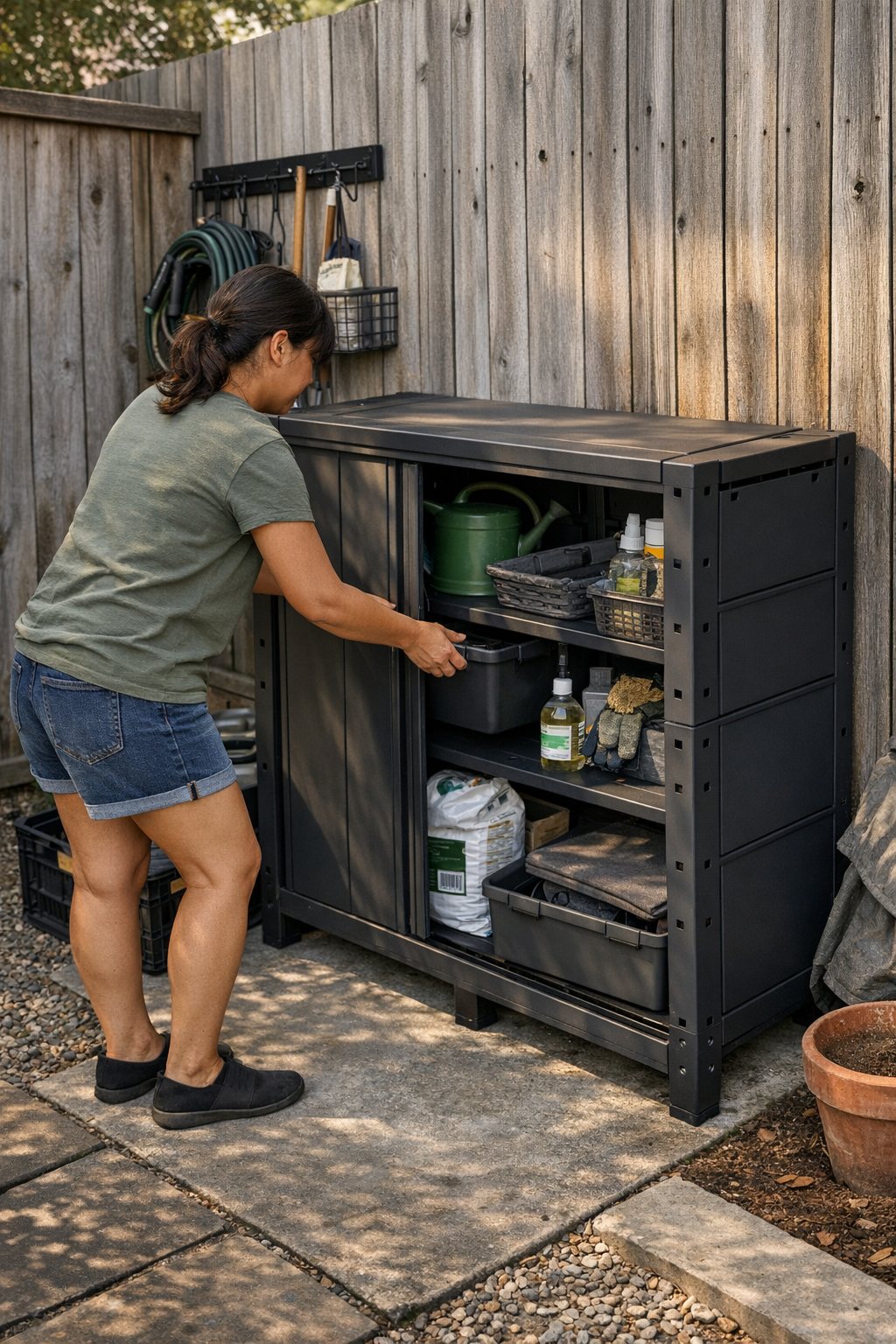
In a narrow corridor or hallway, the wrong storage cabinet shows its flaws in days—not weeks. Even a few centimeters of extra depth or an awkwardly opening door can turn an ordinary routine into an obstacle course: bumping a corner when your arms are full, catching a bag handle on a knob, or sidestepping shoes that spill out just to keep the pathway clear. A “slim” cabinet that forces you to pause, pivot, or reset every time you pass isn’t saving you space—it’s quietly eating up time and building annoyance with every repeat trip.
When a Cabinet Looks Slim but Acts Big
Slick catalog photos and “compact” labels can mask how a cabinet really performs in a lived-in corridor. Spend just a week with the wrong unit, and the cracks show through: a door that swings into your path, a drawer that jams, shoes piled along the edge because the entry is tight, or bags left dangling from handles simply to avoid dealing with the cabinet’s clumsy access. The problem isn’t storage capacity—it’s the small misalignments that add daily friction.
Routines Expose the Weak Spots
These weak points show up exactly when you want everything to flow: heading out with groceries, stumbling in late at night, or rushing to toss a scarf inside before bed. If you have to hold a door open with your knee or try to wedge shoes inside sideways, the design’s flaw is exposed every time. Those messes at the corridor’s edge aren’t just untidiness; they signal storage that feels more demanding than helpful. The longer the minor hassle, the quicker resets get skipped—leaving the area looking organized only when it’s untouched, never in real use.
The True Test: Nighttime and Rushed Mornings
What looks efficient under showroom lighting often turns into a nightly pain point under real conditions. Low light, tired minds, and the need to move quickly reveal friction: a swing door that halts you mid-stride, a cabinet that juts too far into the walkway, or a handle that snags clothing. Most people don’t notice the true test until circuits repeat: midnight rummaging for slippers, sleepy armloads, or rushed exits where a cabinet slows you down or becomes a tripping hazard nobody admits to expecting.
The Accumulation Effect
That mismatch between what was promised and how you actually move becomes visible: shoes building up where the cabinet slightly blocks the path, random items stranded outside because putting them away takes too much effort in a half-awake state. What started as a solution is now a stutter in daily flow. After several cycles, the cabinet itself feels less like a value add and more like a silent barrier collecting evidence against it.
Sliding Doors and Shallow Depth: Small Adjustments, Big Impact
Sliding doors fix what swinging doors sabotage. By eliminating the need for extra clearance, you remove the physical halt and sidestep baked into every access. In a corridor, a cabinet depth matched to what you realistically use—often between 18 and 25cm—means enough storage for shoes and essentials, without slicing into vital passage space. Suddenly you can open the cabinet even when the hall is crowded, and putting things away doesn’t mean disturbing the whole setup.
Real Example: One Change, Noticeably Fewer Piles
Picture a cabinet near your bedroom door—25cm deep, settles shoes and daily bags. At first, everything fits. Quickly, handles knock against passing knees, doors block the walk, and shoes cluster at the threshold because entry’s awkward. Swap in a sliding-door version, and immediately, the bottleneck vanishes: you can return shoes almost blindly, bags drop in even when your hands are full, and the floor stays clear through the week. Missing clutter isn’t just neater—it’s proof the friction is gone from routine return flow.
Staying Usable Beyond the First Week
The real measure isn’t how much a unit stores or how the finish looks after unpacking. It’s whether the corridor remains passable and the reset doesn’t become its own chore. A cabinet with tuned depth and sliding doors meets repeated, hurried, tired use without complaint—no ankles bruised, no drawers stuck, no shoes stranding in limbo. When the storage matches how the space is truly used, clutter stops accumulating and the routine runs without a hitch in the walkway.
Why Some Setups Keep Clogging Up
Cabinets chosen for looks or storage volume—wide-swinging doors, deep bodies—often break down under daily routine. Overflow creeps onto the floor, resets get skipped, and you find yourself dodging around stuck drawers or planning routes around the cabinet instead of through the hall. What looks “decluttered” at first pass is simply staged; with real use, the system keeps losing ground until it’s easier to pile things nearby than return them to where they belong.
Tips for a Corridor Storage Setup That Actually Stays Clear
- Check every overhang and handle: Just a couple centimeters can mean an awkward pivot or unexpected bruise.
- Simulate your path before committing: Open doors and drawers while actually walking through—feel for any snags or forced contortions.
- Test “return flow” when tired or distracted: If putting something back isn’t effortless in a real hurry, it won’t get done, and overflow will build up in days.
- Prioritize sliding or partial-opening designs for tight corridors: They forgive crowding and prevent traffic jams, even when multiple people share the space.
- Forget “maximum capacity” in passageways: Comfort in daily motion beats squeezing in every item the first day. Crowded interiors only postpone the problem.
What to Watch as Routines Evolve
No corridor solution wins forever. More people join the routine, bags size up, or the hall shifts roles with the seasons. The best slim cabinet is the one that asks the least from you to stay clear and organized—even with barely any focus left at night or in the morning rush. Check in after a few months: is the floor genuinely clear, or does the cabinet now feel like just another thing to skirt around? If resets slow or fresh piles reappear, it’s time to adjust—maybe swap in sliding doors, reassign the zone, or rethink depth before slipups become the new normal.
That’s the mark of corridor storage that actually works: it doesn’t demand your attention, yet its absence would immediately slow you down.
Find practical corridor and slim-storage options designed for real living at Gridry.