
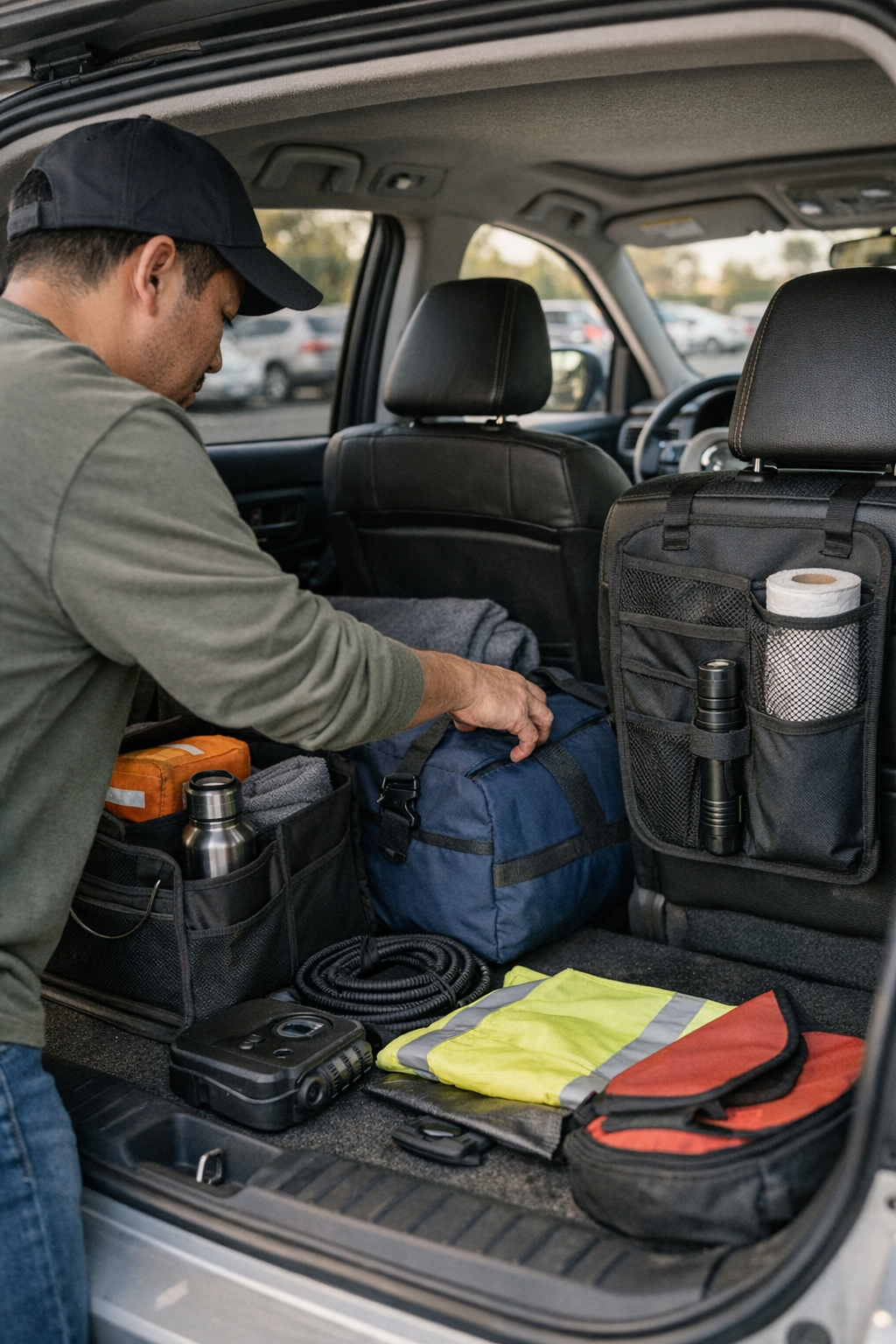
Most car setups fail exactly when you need them most: You’re standing outside your vehicle after a night shift, arms full of groceries, clicking for your keys—only to watch them vanish into the crack between your seats. It’s late, the parking lot is dark, and your flashlight—supposedly “conveniently” stored in your center console—is now unreachable beneath a nest of chargers, tangled cables, and expired hand wipes. This isn’t rare: consoles that look organized in daylight can turn maddening the instant you need fast access. “Clutter” isn’t just a cosmetic problem; it slows you down, raises stress, and leaves you stuck fishing for essentials under pressure. DriveWellSupply knows that real car organization isn’t about looking tidy—it’s about keeping your most important tools ready in the chaos of actual use.
Why “Organized” Isn’t Always Usable
Most drivers pack their console, glove box, or door pockets until every inch is filled with “must-haves.” But the difference between visible order and practical access only shows up when something slips out of reach—a wallet, a phone, or especially a flashlight at night. The very systems that look controlled tend to crumble during active use: coins slip over cables, sanitizer bottles roll around, and your flashlight sinks deeper with every errand. Organization that only calms your glance isn’t set up for real retrieval—especially after the first week of new receipts or another charging cable thrown into the mix.
What the Dark Reveals About Your Setup
Need a flashlight late at night? That’s when a flawed setup exposes itself. You flick on your dome light and get more shadow than help. Your hand snakes into the console, but wrappers catch, cords slide into the gap, and whatever order you had dissolves as you dig. Every second counts, but each grab triggers another mini avalanche of small gear. The problem repeats in daylight, too: hunting for a lost receipt, reaching for a charger on a crowded school pickup run, or retrieving a dropped toy from under the seat—all spotlight how easy access can vanish behind “order.” If your essentials are buried, you’ve built storage that fails at the moment of need.
Finding the Hidden Roadblocks
The signs are there if you look: a sigh before reaching for your flashlight, wrappers hitching a ride, or cords looping around your fingers before you even find what you need. Maybe you break a fingernail digging, or end up dumping half your contents onto the passenger seat. A setup that slows you down—even by a second or two—signals that cosmetic neatness doesn’t translate to actual readiness. If each use brings friction or dread, that’s your cue that your storage system is quietly sabotaging your routine.
From Neatness to Real Readiness
True car readiness means direct, unobstructed access to what actually matters under pressure. Instead of adding bins or forcing everything into a single catchall, create dedicated paths: mount your flashlight on a seat-back hook, stash it in a side mesh sleeve, or position it within arm’s reach along the driver’s door. That small change flips the real-world test: the next time night falls or your hands are full, your fingers close right around the tool you need—no cable wrestling, no accidental clutter spill, no delay. The purpose of organizing wasn’t to win Instagram; it’s to win those fast, distraction-prone moments when fumbling isn’t an option.
Streamlining Everyday Reach and Recovery
Dividing daily tools from random overflow makes every trip—long or short—less of a scavenger hunt. Imagine grabbing your flashlight, charger, or multitool during a last-minute loading dash, and never having to shift three things to reach it. The more your setup insulates essentials from the churn of commuter junk and loose errands, the less effort it takes to reset after a messy day. What starts as easier “emergency access” quietly becomes smoother daily operation: fewer delayed departures, fewer afterthought cleanups, and less temptation to shove everything back in a pile when you’re already tired.
Where Most Setups Fail—And How to Patch the Gap
The real cost isn’t just annoyance. If you’re always reorganizing the same bins and trays—stacking paperwork over tools, stuffing loose gear into covered spots—you’re patching symptoms, not structure. The most common mistakes:
- Storing essentials under layers of “quick access” junk or hiding them in overloaded containers.
- Letting charging cords, coins, and paper creep over your emergency kit or flashlight, blocking direct reach.
- Focusing on visual tidiness at the expense of physical pathways, so nighttime (or just rainy-day) retrieval becomes a struggle.
Instead, reroute the flow: mount your light or vital gear where you can grab without crossing clutter. Choose spaces that are both day-visible and night-reachable—even if that means one less perfectly blank spot. The goal is for access to beat neatness every time.
Organizing for Actual Driving—Not Just Appearances
The measure of a solid car setup isn’t in showroom looks, it’s in whether you can act instantly—no rearranging, no fuss—when reality interrupts: a dark lot, sudden spill, roadside issue, or simple case of dropped keys. Can you reach your essentials without making things worse? A system where you never need “recovery time” after using it—that’s the test. If your organization adds steps or leaves you cleaning up after each access, it isn’t designed for real-world pressure. Your car shouldn’t just look calm; it should work with you when the routine fails, not against you.
Visit DriveWellSupply for practical car storage and real-world driving solutions.