
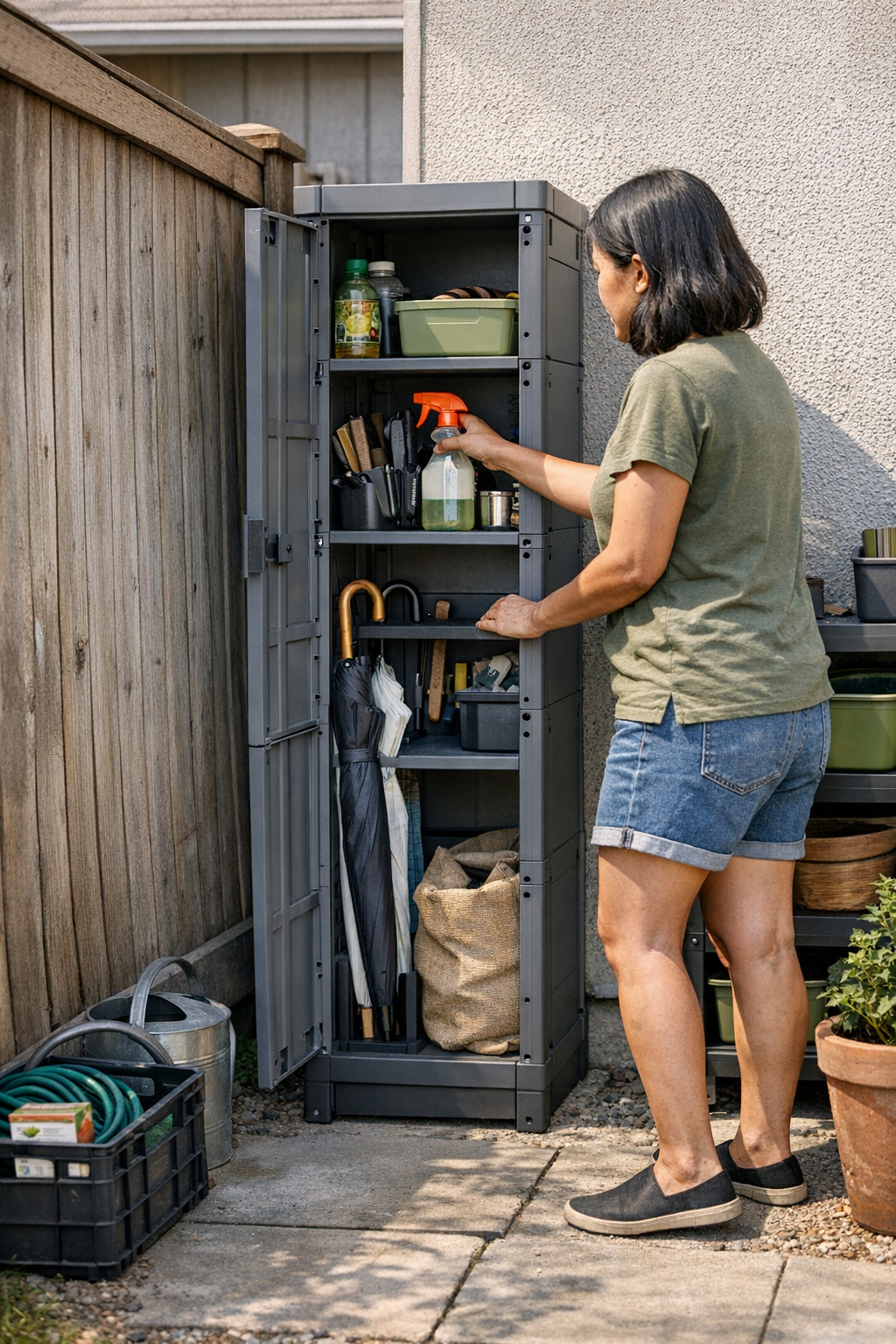
Most narrow storage lockers look like a quick fix: umbrellas vanish, grocery bags disappear, tools stay off the walkway, and the entry zone finally looks open. But looks alone don’t hold up. Within a week—or after the first scramble for a missing glove—any locker with just one tall, empty compartment reveals its flaw: chaos hiding behind a closed door. Handles get jammed under spray bottles. Bags collapse and wedge against corners. The next time you try to grab an umbrella in a hurry, you’re not picking it up, you’re unearthing it. That fast, the setup that looked organized becomes exactly what clutters your day.
When Hidden Storage Turns Into a Daily Tangle
The trouble isn’t obvious at first. A single big compartment gives that quick “clean” feeling, but it can’t control the slide. The week piles on—groceries, wet gear, whatever just got dropped during cleanup—and you open the locker only to find umbrellas tangling with rolled-up totes, bottles jammed behind whatever was crammed in last. Retrieval turns into a careful game of extraction. Pull out a bag, disturb three other things. Slide in a tool at night, then dig for it again on Saturday because it’s slipped behind everything else. That clear locker floor turns into a dumping ground—a zone that was built for order but absorbs overflow instead.
After just a few days, these snags repeat. Need the garden trowel? You’re bending over, shuffling around full bags and umbrella handles blocked by last night’s deliveries. Routine stuff now causes new micro-hassles—each retrieval is slower, each return less likely to fit cleanly back. Eventually, the locker doesn’t encourage use; it quietly punishes it.
The Hidden Cost of Collapsed Categories
The problem isn’t dramatic—it’s friction you feel thirty seconds at a time. Those small delays before you reach in or the moments when reshuffling becomes the norm: after three or four rounds, return flow breaks down. That “easy storage” now interrupts your pace. You start to skip the locker. Umbrellas pile by the door instead. Hand tools drift to an exposed shelf because they’re quicker to grab, but they look like permanent clutter. What started as a storage win lines the wall with overflow you can’t put away in one move.
That’s a sign the locker has shifted from a daily helper to a passive collector. The more you force unrelated items to share one space, the less the “system” works. Real use exposes how little one open compartment can handle before it fails your routine.
Why Divided Zones Are Essential in Narrow Lockers
The answer isn’t more space—it’s better zones inside the space you have. Just one real divider or a sturdy shelf transforms the experience. A shelf at knee height splits groceries from tools. A vertical channel keeps umbrellas upright, not collapsed sideways. Even a single bin at the bottom holds loose odds and ends so they stop drifting. Each separation keeps categories visible and reduces the fight for access. That’s the difference between a locker you can reset in seconds and one where you’re constantly reorganizing or just ignoring the mess accumulating inside.
In use, separated zones mean you reach for an umbrella and actually grab just an umbrella. Tools stay where you set them, not buried and lost. Bags remain stackable, not crushed into odd corners. Visual calm in the entryway stops being just an illusion; it’s lived reality. Resetting is one movement, not five. The more your setup matches true category separation, the more it actually supports the tempo of daily life—even when that life gets hectic or messy.
Entryway Reality Check: Where Weak Layouts Show Fastest
Entry lockers expose design flaws fast. After a wet commute, dropping an umbrella into a crowded locker base isn’t practical; it either doesn’t fit, or it topples and jams the next thing you need. The immediate temptation? Lean it by the wall. Skip the step. Repeat. Un-separated internal zones turn “hidden storage” into slow storage, and the locker becomes another source of background mess and silent frustration—especially in spaces meant to stay clean and open for movement.
Fixes That Actually Work in Narrow Lockers
What solves these headaches?
- Half-Height Shelves: Install one at knee level to elevate tools and smaller items, freeing the base for bags or boots.
- Vertical Dividers or Channels: Drop a narrow umbrella channel in the corner; handles stay upright, and the next grab is fast, not fumbled.
- Individual Bins: Use small crates or bins, so each type of item has a visible slot. When overflow happens, you see it immediately instead of discovering it after a spill.
You don’t need a custom solution—just clear, repeatable zones that survive real use. Every good divider or shelf is one less reshuffle per week, one less pause in your routine, and one less pile of overflow at the edge of your entryway.
Does Every Locker Need Zones?
If you only store seasonal items—skis, camping gear, bins for winter or summer—a single cavity might work for months without hassle. But lockers in daily traffic areas, or those taking the mix of groceries, garden tools, bags, and rain gear, break down fast if you don’t separate inside. The visual order you achieved on day one quietly collapses—overflow isn’t a maybe, it’s what happens by default.
Stay Ahead: Diagnose by Real Retrieval
Test the setup by its weakest move. If you hesitate to open the locker, if putting something away throws off something else, you already have category drift—your internal zones aren’t strong enough. One check: after a normal week, open the door. If you can’t retrieve the key category you use most without shuffling anything else, it’s time to change the layout.
One low-tech correction: fix an umbrella stand or channel to the locker base. When it rains, handles are ready; they don’t sprawl across the floor or snag everything nearby. That simple tweak is the difference between using storage and working around it—especially during crowded, weather-driven weeks.
Lasting Calm Means Storage That Matches Real Habits
A narrow locker fitted to your actual routine is felt within days. The difference isn’t cosmetic; it’s practical—retrieval in one move, resets that don’t drain your energy, and storage that’s ready when the pace picks up. Most systems hide mess, but a few small separations keep order visible and the chaos from returning just when you need movement most. The right structure lets narrow storage stay useful and reliable—open for the next umbrella, and never just another bottleneck behind a closed door.
Discover Gridry storage solutions built for lasting order and daily access.