
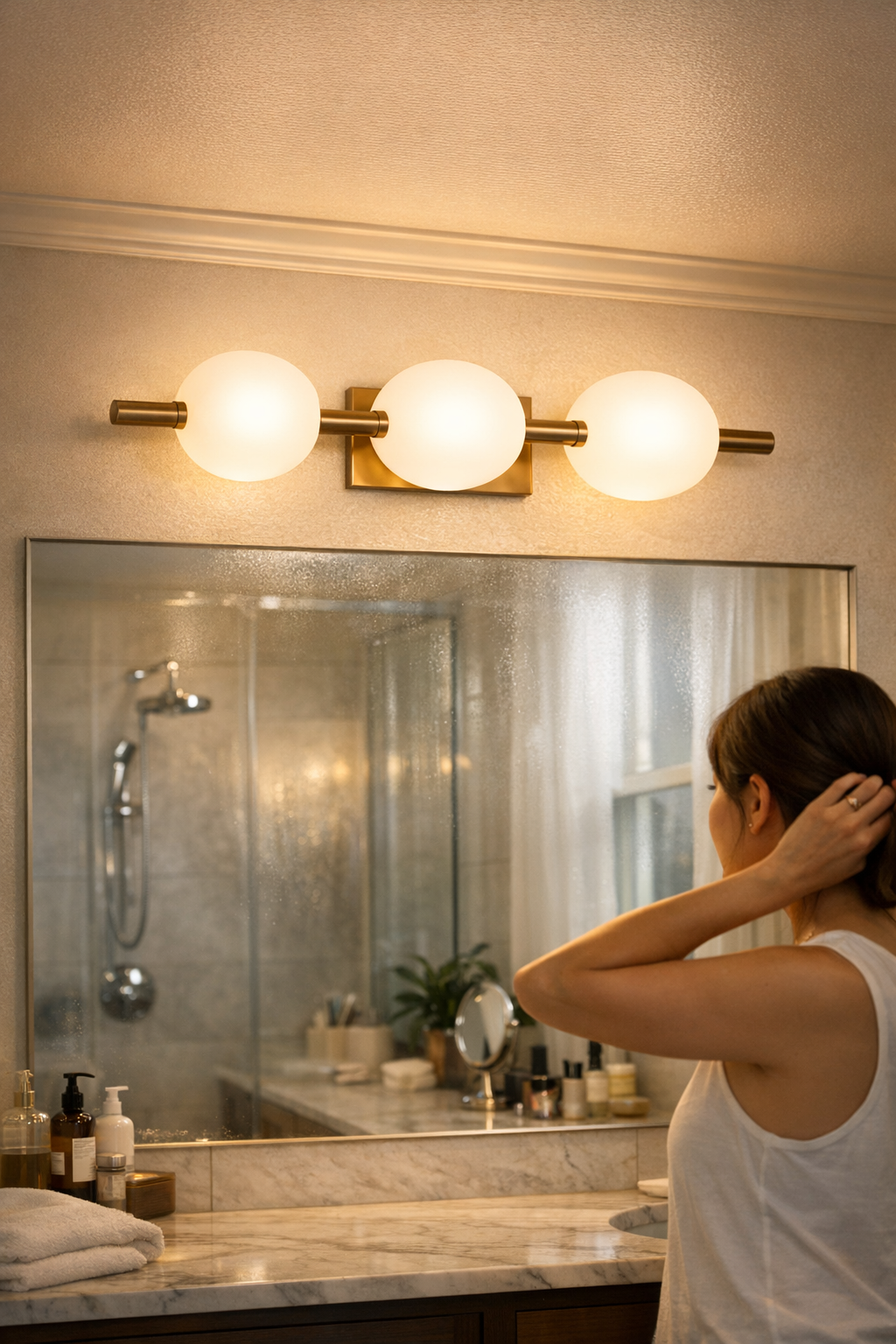
Most bathroom lighting fails in quiet, everyday ways—and it starts sooner than anyone expects. What looks clear on move-in day turns unreliable after a few cycles of real use. Back-to-back showers? The “bright” ceiling light fogs up by noon; dim corners grow on the mirror edge. Spots form around screw caps, and a haze settles on the lens—no matter how often you wipe. These aren’t just eyesores; they chip away at basic bathroom routines. Brush, shave, or clean, and you’re always angling for better light or fighting fresh streaks that refuse to wipe away. Let humidity rule the room, and even rated fixtures that promise clarity start to reveal their limits, while standard ones become a headache fast.
Why Standard Fixtures Fade Fast in Steamy Bathrooms
Conventional ceiling and wall fixtures are barely designed for dusty offices, let alone steamy bathrooms loaded with repeated use. Seams, trims, and any exposed join are magnets for moisture; just one crowded morning pushes steam behind the lens and into every screw socket. Two weeks in, what once looked unremarkably bright is now patchy: the lens grows permanently overcast, rusty halos bleed around mounting points, and the beam above the sink starts to fray at the edges—all before you realize you’re squinting after every shower. Brightness drops just where you need clear, even light—at the mirror, by the shared counter, under the wall cabinet—and the fixture edges never feel completely dry, especially in the corners you reach for most during routine cleanups.
It never fails spectacularly. Instead, discomfort grows: you find yourself re-wiping spots every few days, angling your face to dodge uneven glare, and by week’s end, the routine feels slower, less certain, more awkward. Little chores drag out. That sense of an always-ready bathroom quietly collapses.
Where Moisture Really Collects: Edges, Mirrors, and Overlooked Spots
Steam always settles in the worst places—behind glass trims, inside shallow ceiling fixtures, along the cold metal frame above the mirror where visibility matters most. Family bathrooms with double sinks or shelf runs get the worst of it; every rushed shower blasts more condensation into seams and trims that were never meant to seal tightly. It’s the low joints, underside edges, and just-above-eye-level surfaces that always go overlooked and start darkening first.
The first signal: After install, all lights look clean. But wait even a month. Lens haze creeps in, mineral edges spread, and watermarks etch themselves above the vanity. These aren’t just ugly—they physically disrupt the light beam, scattering and dulling output so you’re left fighting darkness in the room’s most essential zones.
Invisible on Day One, Obvious After Repeated Use
Early on, it’s easy to miss the difference. Switch on the sconce or ceiling panel and the whole room seems evenly lit. But as weeks stack up, every shower leaves more film, and every cleaning wears down hardware finish. One morning, you’re forced to lean in closer for shaving or makeup, finding that familiar fog holding tight to the lens. Screws and bracket covers pick up corrosion—their heads turning the same dull color that won’t ever quite wipe away. Even if the ceiling looks fine while sitting down, the “useful” sections—tight vanity corners, shelf edges, the spot near the towel hook—always seem stuck in semi-shade.
Bathroom-rated, fully-sealed fixtures don’t just promise better specs—they behave differently under attack: even after the worst steamy Monday, their lenses remain clear, the light spans evenly across the functional counter, and the worst corners stay lit. The difference isn’t in catalogs, it’s in the routine of never having to adjust your stance just to see what you’re doing.
The Real Test: Mornings in a Shared Bathroom
Picture the recurring friction: a two-shower morning, ceiling already sweating, and the fixture above the sink holding a fresh line of fog. With a non-rated light, cleanup becomes part of the routine. You wipe moisture from the trim—yet the edges of the room stubbornly stay blunted. The glass around the mirror keeps dimming, and you catch yourself moving your head or twisting to find a useable angle, especially when time is tight. Eventually, those blurred areas become accepted obstacles; every streak resists, every cleaning takes longer, and the fixture stops supporting you and becomes another thing you have to manage.
Over time, annoyance deepens. Anyone who’s tried to touch up makeup or trim a beard with compromised lighting knows: the light is no longer a silent help, but a point of daily negotiation.
What Changes With Bathroom-Rated Lighting?
The real improvement comes after installation—when a fully sealed, bathroom-rated fixture shrugs off what used to be relentless buildup. Back-to-back showers? The lens remains clear; condensation slides off rather than collecting. The vanity, once sliced by shadow, stays reliably lit edge-to-edge. Corners near the mirror, which once disappeared for hours behind haze, become useable again—even right after the hottest morning rush.
It’s the small difference that counts: that one strip beneath a shelf stays bone-dry, the area in front of the main sink never needs emergency cleaning, and the fixture itself—gasketed, with every joint protected—asks for almost no maintenance. Clarity stays routine, not another chore.
Key Features: What to Look For in a Rated Fixture
The only serious bathroom fixtures are labeled for “damp” or “wet location” use. Anything short of that is a compromise. Search for gasketed trims, sealed lenses, fully enclosed wiring, and tight seams, especially above the mirror, over shared sinks, or where steam lingers longest. Even on a wall that rarely takes direct spray, ordinary fixtures start to fail at their weakest visible points—the exposed screw, loose trim, or low-profile joint that collects just enough fog to ruin the finish within a few busy weeks.
The old method—scrubbing streaks off a standard lens week after week—never stops the problem; it only chases symptoms. Properly rated lighting prevents most buildup, so you’re not stuck in an endless cleanup loop.
When Repairs Become Replacements
Here’s the most expensive lesson: the moment rust or haze takes hold, it’s usually permanent. Swap bulbs all you want; the beam keeps fading, the ceiling line yellows by degrees, and mounting points develop pits that don’t clean up. By the time the hardware grows loose or the lens stays cloudy for good, full replacement is the only real fix—costly, disruptive, and avoidable if the original install had been sealed from the start. The right fixture stops humidity at the source, skipping years of slow breakdown and forced cleanup.
Everyday Upgrades Make the Difference
The benefit of matching bathroom lighting to real, repeated use isn’t “better atmosphere.” It’s escaping daily annoyance—no more squinting, shifting, or wiping after every busy morning. Improvements become visible where you use them: fewer shadowed nooks, persistent clarity along countertop edges, and a fixture that quietly resists rot and routine mess. The change isn’t just from extra brightness, but from light that actually stays reliable, month after month, in the most punishing space in the house. Even one switch-out can transform a bathroom from obstacle course to dependable support.
For lighting and support fixtures that stand up to real, repeated use in every space from steamy bathrooms to hard-working work surfaces, see what’s available at LightSupport.