
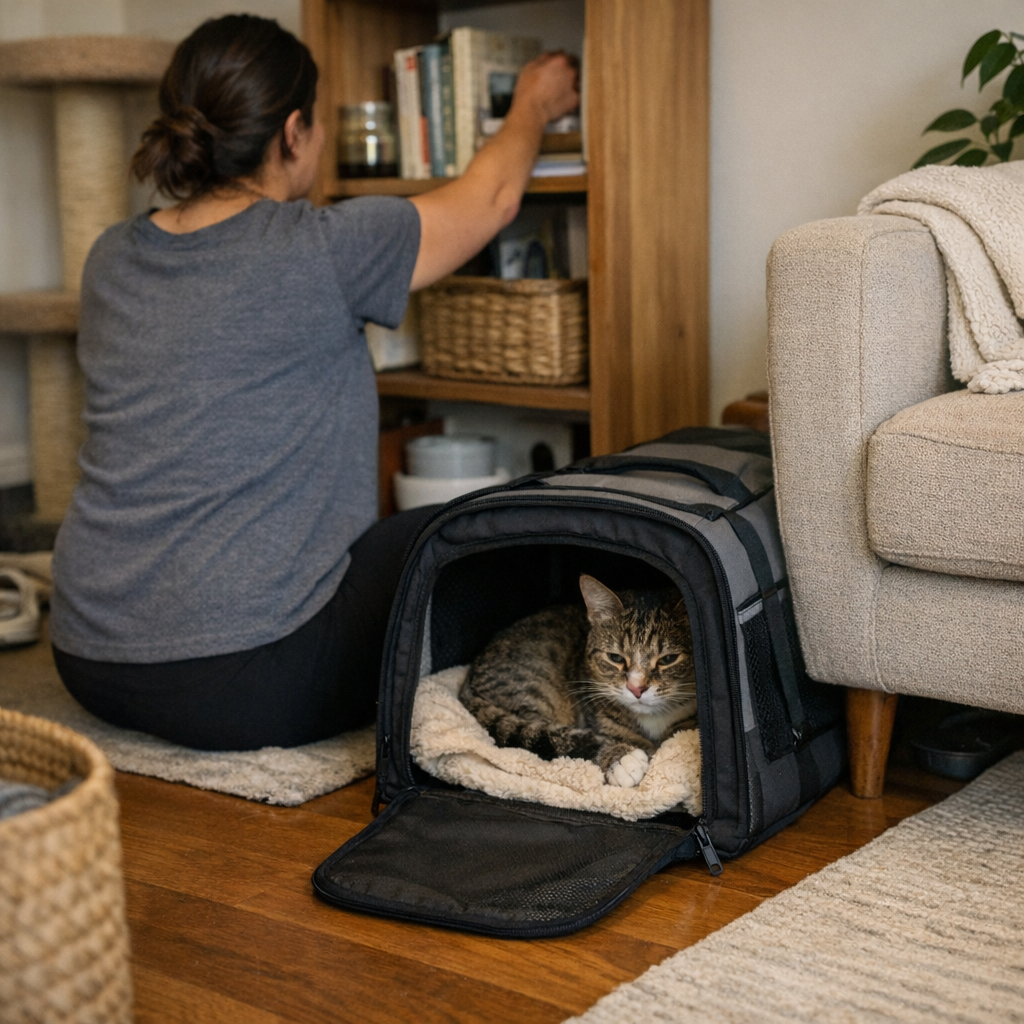
An open cat carrier seems like an easy win—leave it out, skip the closet shuffle, help your cat chill before the next vet trip. But as the days tick by, the logic starts missing its mark. Instead of a seamless routine, you keep hitting the same hidden snags: brushing bedding away from the water bowl, nudging the food mat back into position, picking kibble or toys jammed under the carrier’s half-open door. The setup that looked so practical starts to slow you down exactly where you need speed—during the daily circuit of feeding, refilling, wiping, and resetting the room. The StillWhisker world is about setups that work, not just look tidy, and this is where the cracks first show up.
How an Open Carrier Quietly Reshapes Everyday Routines
The first day, an open carrier tucked into a corner looks harmless. Your cat investigates, maybe curls up inside, and nothing feels out of order. But home routines are built on repetition. With every reset—feeding, water top-offs, litter sweeps—small soft frictions surface. The carrier, meant to ease cat anxiety and owner stress, now quietly creates micro-complications you feel in your hands, feet, and patience.
Comfort in One Zone, Complications in Another
Those tiny obstacles barely register at first. Maybe the carrier door nudges the edge of the food mat, or a paw-marked blanket flops into the refill zone, or toys find shelter under a barely-open door. One day you flick bedding aside without thinking. But after a week, all those half-second fixes add up—until your so-called “low-profile” carrier is the most persistent obstacle in your daily reset loop.
Yesterday’s minimal setup now means every task is slightly out of sync:
- Water refills paused by bedding that creeps toward the bowl edge, always one swipe away from a spill.
- Extra fur build-up hugging the carrier, making broom work a bend-and-reach exercise.
- Toys willfully trapped under or behind the carrier, never where they’re supposed to be.
The Difference Between Looking Under Control and Feeling Under Control
Rooms with every item in its “place” do look calm on the surface. An open carrier in the corner feels like a tidy solution, saves closet trips, and gives your cat a steady den. But as routine blends into routine, visible order splits away from functional order. What looked set now keeps you circling back, fixing what the carrier placement keeps undoing.
Clutter Creep: When Small Moves Add Up
Picture a morning where you just want to top off the water and sweep tracked litter. Now the food mat catches bedding, and the water bowl presses against the open carrier door. Avoid soaking the carrier fabric is now an extra dance step—and when something does spill, it’s spot cleaning, not just a quick towel. Litter and fur ride out of the box into your path, drawn by the edges and lips of the open carrier, always in the line you just cleaned. If your routine feels slower each cycle, this is the reason, not bad luck or messy pets.
The Reset That Never Quite Resets
Quick resets are the lifeblood of indoor cat life. Scoop, wipe, refill, and move on—that’s the plan. But when the carrier lives too close to feeding or traffic lanes, every “quick” task has a hidden extra: move the blanket off the corner, wrestle a toy out from under the door, swipe fur from a spot your slippers land every morning. The setup resets, but you never really get ahead. It’s a game of catch-up with the same frustrating piece.
Why Placement Makes the Real Difference
Open-access isn’t enough. Where the carrier lands in your room—relative to food, water, and cleaning lines—determines if your setup lessens or multiplies repeat work. A carrier just inches too far into the path of daily routines doesn’t look like a problem, but it’s where everyday friction keeps coming from.
When Comfort Becomes a Tradeoff
You imagine less stress for your cat, maybe more naps in the carrier. What you get: food mat edges squeezed, dishes jostled by every pass, toys funneling under the open door. Your cat’s comfort pulls nightly; your flow fragments with each minor rescue or reset. Grooming and bedding bring it home—cats always shed and settle where they rest, so the new favorite den now means more shed fur and more bedding bunched up right where you need quick, clean access.
Scenes From a Typical Week: Real-World Carrier Friction
Reaching for the Bowl, Finding an Obstacle
You’re hungry, your cat’s hungry, you try to refill the bowl. The carrier door catches your sleeve. Tomorrow, it’s a stray toy between mat and carrier. By day three, you’re awkwardly shifting the whole setup just to do what used to be automatic.
Cleanup That’s Never Quite Done
Nightly sweep: fur sticking wherever broom bristles can’t reach cleanly, litter making a new lineup next to the carrier—not where you intended your “line” of clean to land. Even water bowl wipes multiply if a scrap of bedding soaks up a drip and starts a new load of laundry. You don’t “see” bigger messes—but the effort adds up all week.
Shared Space Becomes Shared Frustration
Cross the room with coffee? Now it’s a sideways step, every pass. Your partner heads in with groceries—a quick detour around the carrier cluster. Nobody complains, but both of you clock that this easy-looking setup demands attention at the worst moments. The inconvenience isn’t dramatic, but it saps the sense that your space is really yours.
The Surprisingly Simple Fix: Redefining Carrier Zone
Among all these small, sticky disruptions, placement is the one variable you can always shift—no special gear, just better zones. It’s not about banishing the carrier, but recognizing when its footprint leaks into the routes you use most. Moving the carrier a couple of feet away from water, food, or major walkways often erases half the repeated pain points instantly.
- The food mat clears, allowing honest refills without bedding edge drama.
- Bedding stays inside the carrier—no more fishing out blankets or toys stuck in the under-door gap.
- Litter drift slows or reroutes, making sweeping once land where it counts instead of creating a secondary mess zone.
- Your sequence—refill, scoop, wipe, reset—returns to the unthinking flow you had before.
Tips for Long-Term Flow
- Keep one bowl’s width between the carrier and feeding or water setups.
- Turn the carrier door away from traffic and reload routes so it can’t drift into cleanup work zones.
- Swap thick, floppy bedding for snug padding that won’t crawl out with your cat—or use carriers with higher bedding lips to keep loose ends in check.
- Test carrier placement during your most active daily resets—don’t trust “out of the way” when the room is quiet.
Comfort for Your Cat, Calm for Your Routines
Most cats trust the carrier more when it’s always there, but owner-side comfort matters too. If the carrier works for your cat but means more resets, spilled water, or surprise laundry, both sides lose. StillWhisker setups focus on layouts that flex—catering to your cat’s hiding and grooming, while letting you keep the daily upkeeps quick, sharp, and clean. If relocation doesn’t help, or the same blockage keeps cropping up, weigh swapping the carrier for a softer hideaway or tucked-in rest spot that doesn’t crowd your high-traffic areas.
What Lasts: Setup That Reduces Repeated Work
The clean look on day one fades fast if it steals time by week three. The setup worth keeping is always the one that shrinks invisible extra work—less nudging, less bedding cleanup, fewer side detours, and more uninterrupted time. Indoor cat routines are sharpest when nothing quietly drags them out—not even “solutions” that seemed like wins at first glance. Small shifts in carrier location or bedding control repair the flow of daily resets, and the difference you’ll notice is in the reduced friction, not just a neater floor.
Ready for a carrier setup that saves seconds—and patience—every day? See what StillWhisker setups look like in real-world use.