
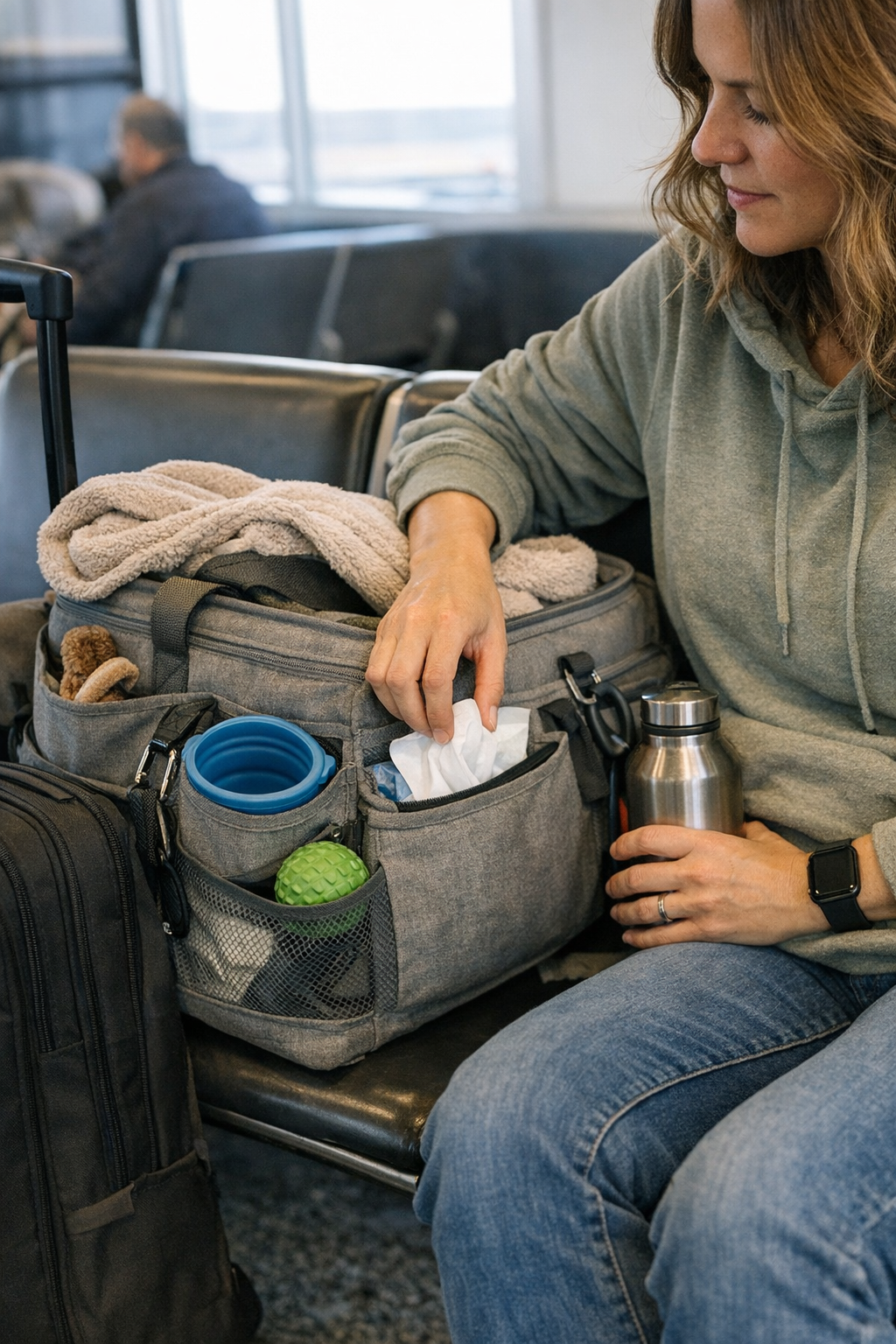
Most pet travel bags never fail at first glance—it’s after your second or third stop that the frustration starts showing: wipes buried beneath the leash, bowls sliding under blankets, toys fusing into one clump at the bottom. At the curb, everything looks “ready”; but the moment you need access in hurry—reaching from your seat at the gate or during a quick pause—it’s a forced shuffle. You aren’t tripping over drama, just a repeated loop of blockages, hidden essentials, and one more repack because the item you need is never in hand when you need it. A pet carrier or travel bag that stays neat during the first ten minutes almost always unravels after a few seat cycles. The weakness isn’t mess—it’s how small delays stack into distraction right when timing matters most. The PawGoTravel world starts where the real friction begins.
From Neat Start to Real-World Friction
The smooth, organized setup at home doesn’t survive the first layover. Bowls migrate beneath the blanket after one jostle. Wipes wedge under a spare leash. You reach for the leash, but it drags half the setup with it—a toy in tow, bowl off-balance, wipes lost. Every trip back to your bag feels less like travel flow and more like damage control. It’s not about dramatic errors, just an ongoing bleed of seconds and energy that repeats at every pause. Each shuffle under a seat, each dig through intersecting items, is time stripped away from the confidence your carrier or bag promised at the start.
Every Reach Adds Up
It’s rarely your first reach that slows you—it’s every reach after. Once, twice, then the routine bites: wrong pocket, wipes out of easy line-of-sight, bowl under layers, a comfort toy blocking the quickest grab. These tiny slowdowns crowd the routine until searching, re-folding, and deep digging become normal. Suddenly, the travel bag’s tidy looks give way to the real test: how many seconds you lose the fourth time through. If you notice your focus drifting from your actual trip to fighting with structure, shutdowns aren’t far behind—especially with a moving boarding line or a pet that senses your frustration.
The Anatomy of Seat-Side Slowdown
Gate waits and seat-side sprints rarely break down all at once—they erode through repeat friction. A bag with “enough” pockets doesn’t mean what you need is where your hand expects. Common diagnostic signals appear within minutes:
- Bullseye: reaching for a treat or chew, but first untangling it from wipes and leashes
- Going for the water bowl, only to uncover it from under calming toys or a spare blanket
- Creating a spill by over-digging for wipes at the bottom layer
- Rush cleanup—only to be slowed by pocket order when boarding is called
The stress is cumulative: every restart, every shuffle, every forced search exposes which parts of the bag’s design make your travel slower and less predictable as time goes on.
Visual Order vs. Functional Access
A travel bag that “looks” ready on departure betrays you when the cycle turns: hiding essentials deep behind zipped dividers or nesting high-use items in show-off pockets makes every repeated grab heavier. The flaw is sneaky—the separation you set up at home collapses when you actually move. After three or four cycles, all the clean edges vanish and the routine defaults to digging, re-packing, and re-aligning. The visible test comes not from first impressions but from the fifth actual reach. If the structure can’t keep wipes, bowls, or treats accessible under pressure, the display order is worthless, and the cost hits your pace every single time you stop, start, and try again.
The Gate Wait: Real Noise, Real Repetition
Typical scenario: you’re at your gate, pet anxious, bag beside you. First break? No sweat—everything’s primed. Second and third? The wipes and leash tangle, the blanket swallows the bowl, and every attempt to correct makes things less streamlined. When boarding ramps up, the “just-in-case” order you built falls apart mid-motion. Real movement—pet squirming, your hand searching—forces items to overlap, slip, or jam together. Attempting a fast cleanup or grabbing a chew means negotiating a crowd of your own supplies instead of a clean handoff. Every attempt to restore control is another tiny reset—and after a few rounds, you’re battling your setup more than the travel itself.
Simple Interruptions Multiply
The true cost of a flat-structured or generic organizer isn’t mess, but repeated drag: leash blocks wipes, snacks block leash, and comfort items migrate to the furthest corner every time you fumble. There’s rarely a crisis—but a genuine cycle of annoyance, especially once you need both hands or quick decision speed, and your gear throws up a new block each time you try to catch back up to the routine. If the setup can’t deliver fast access under basic seat-side pressure, even calm moments can turn tense and distract from the travel experience itself.
Choices That Reveal Their Value—After the Fifth Reach
Some pet travel bags look perfect at rest, but their real value—or failure—shows only after repeated, live use. What sets apart the setups that survive multiple cycles from those that break down?
Why Lateral Pockets Change the Routine
Flatter, exterior side pockets won’t win a display contest, but grabbing a bowl or wipes shouldn’t require a wrestling match with the entire bag. After real movement, you want items that can be pulled in a single motion. Side-access for wipes means you’ll actually clean up right when you need to; bowls that slide in and out externally don’t end up trapped under everything else. The advantage: you get to act, not pause, even as the rest of the kit keeps shifting with movement.
External Loops and Real-World Flow
Leashes run wild when left inside the main bag, tangling around toys and blankets. Moving the leash to an outer loop or clip pares down the repeated drama; the bag looks less zipped-up, but with tension gone, resetting becomes a simple, single movement—not another tangle to undo. These small, external features do more than organize—they disrupt the cycle that usually grinds down your routine.
How Small Changes Defuse Repeated Stress
Upgrading from a generic bag to one with actual outside access for wipes and waste bags flips the cleanup routine: no more full unzips, just a quick hand pull. A bowl pocket right at your seat means water is always a second away, no awkward extraction required. Tie-on toys or clipped comfort items finally keep your pet calm without requiring a teardown of your whole setup. Each structural fix isn’t a one-off—they reduce the repeated, stacking stresses that strip minutes from every delay, gate wait, or boarding reset.
It’s About Handling, Not Just Holding
A week of travel quickly proves: you don’t need more pockets, you need pockets that survive repeated demands. The right structural detail keeps high-use items ready after four reach-reset cycles, not just at the start of the trip. The result: your seat-side spot remains operational rather than ornamental, with less reshuffling and more immediate action. The difference is visible—a setup built for handling, not displaying, will outlast every minor crisis and keep you and your pet on pace no matter how often routines restart before boarding actually begins.
What Keeps a Seat-Side Spot Usable?
The real standard for a functional pet-travel setup isn’t how much it can pack, but whether you can reliably grab your essentials—wipes, bowl, calming chews—after a half-dozen interruptions. Look for organizers with multiple, truly external access points for in-and-out items. Keep high-churn supplies clipped or pocketed outside, saving deep storage for things rarely needed. A dedicated wipe or waste-bag sleeve right at hand is the single most effective way to avoid stop-down chaos. With these changes, restarts shrink from events to non-issues, and the stress of every wait or seat-shift drops noticeably.
The difference between a seat that stays yours and a setup that keeps betraying you is structure built for real cycles—not just a tidy loadout. A few well-placed access points and a layout designed for live handling—not pretty order—change every airport wait, seat shift, and on-the-go repack into something that works. When your most-used items remain easy to reach through four, five, even six cycles, your travel routine keeps moving, the pressure eases, and travel with your pet stops feeling like a slow leak of seconds you never get back.
Shop all practical pet-travel arrangements and gear at PawGoTravel