
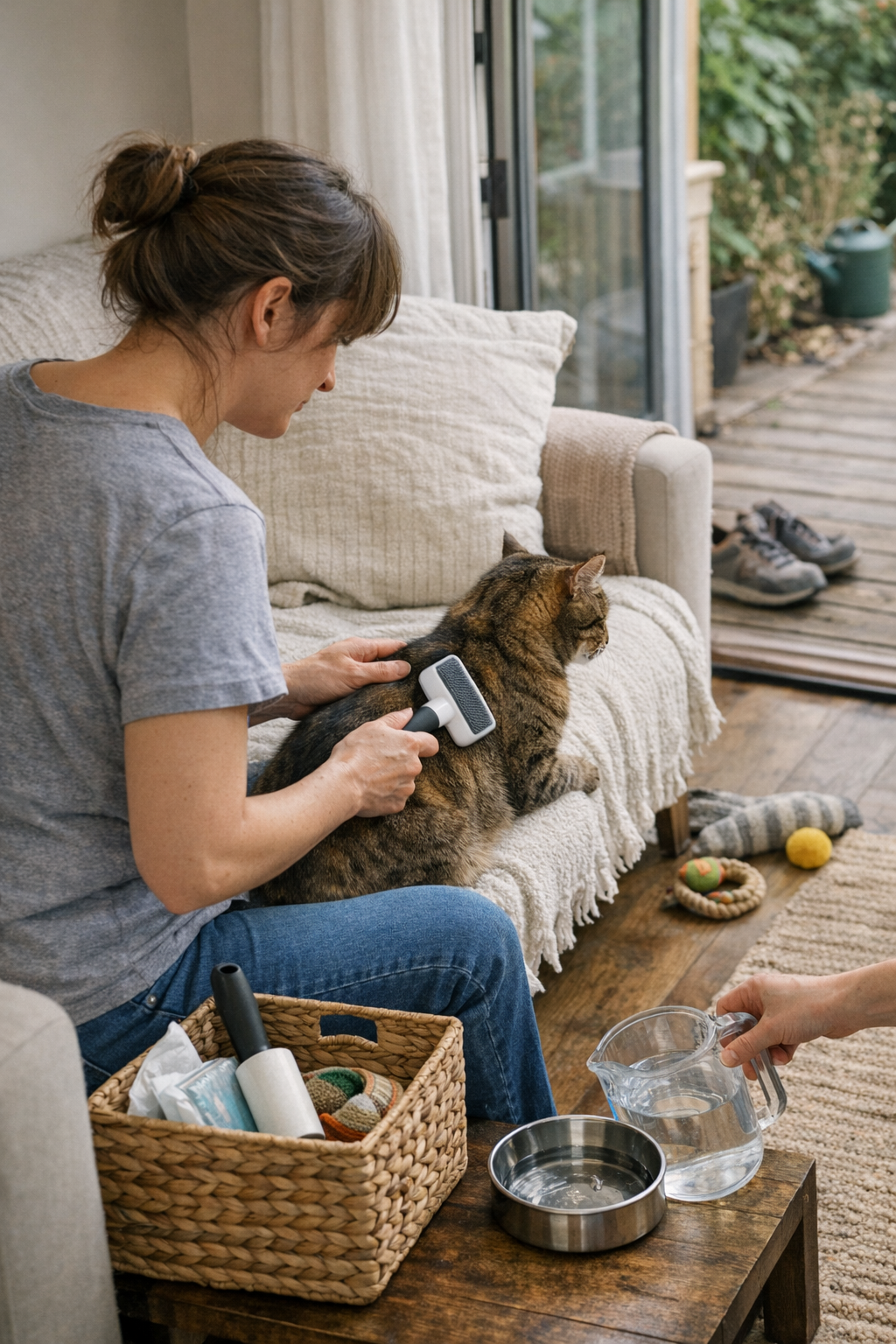
The Subtle Shift When Your Cat Moves Into Shared Space
When your indoor cat suddenly starts spending her days in the main living area—not hidden under the bed, but stretched out across the best spot on the sofa—you notice the difference almost instantly. Cat care jobs that once stayed on the edge of your vision now land in the center of your routine. You don’t just brush, wipe, or grab stray toys in passing; now, every out-of-place item or tuft of fur is in the path of your day, breaking up the room’s calm and breaking your flow every time you sit down.
The comfort of having your cat nearby is real, but her routine blends into yours—and so do the little burdens. Cat toys drift into shared footpaths. Lint rollers and brushes surface where you need a spot to rest a coffee cup. Suddenly, the invisible boundary between pet zone and living space is gone, and all the friction of inside-the-bedroom habits is now multiplied across your main space. These aren’t big messes, but repeat interruptions that turn five-second chores into repeat reshuffling.
Routine Tasks Go From Optional to Immediate
Once your cat claims a place on the sofa, you lose the old “I’ll do this later” buffer for grooming, tidying, and resets. Fur on the cushion isn’t hidden; it’s exactly where you sit, and skipping a brushing means you’ll feel it tomorrow, probably on your clothes. Leave a crinkle ball out, and you’re the one kicking it away by evening. The pace of care changes—the price for skipping a task is an immediate, visible mark against the room’s calm.
Over days, this creeps up: the brush that used to “wait for weekend cleaning” is suddenly always missing when you need it. Empty bowls, scattered toys, and hair on furniture that later shows up on your work pants—all are signs that each delayed reset stacks up, not just for your cat, but for the way you move through the shared space. Deferred chores don’t disappear—they resurface when you least have time, making the whole setup feel just behind.
Repeated Friction in Real-World Scenarios
Nighttime, quiet room: your cat stretched across the sofa, fur standing out against the cushions. You spot it—but the brush is across the apartment, last left by the back door. You weigh: get up now, or put it off again? Delay it, and soon the fur works into the fabric, no longer liftable in seconds. Cleaning goes from fast swipe to an involved project, all from one skipped step that keeps returning.
Or you reach for the water bowl now parked by the sofa for your cat’s convenience, only to find it blocked behind a tote bag or magazines. You end up shifting a stack or nudging around clutter every time you refill. A trivial task expands: more drips, more second-round wipe-ups, and the bowl needing cleaning sooner because it sits in high-traffic reach—good for your cat, but harder for you to maintain without pausing your routine each time.
Toys multiply quietly. What starts as one mouse and a ball becomes five pieces in a sprawl: a fuzzy thing at your feet, a teaser handle poking out from under the armchair, another toy lost behind the TV stand. You end up gathering for five minutes every night—or you don’t, and the drift grows. Weekend resets no longer cut it. Each skipped pickup pulls your space further from actually being usable, even if it looks “lived-in tidy” for guests.
Setup That Looks Tidy but Doesn’t Flow
The classic fix—sweep, stash toys in a basket, nest the brush on a side table—can make a room look tidy for a day. But if your lint roller is always one drawer too far, or the toy box lid is heavy or sticky, your routine starts breaking down again. “Return to storage” turns into “set it down for now.” Chores are postponed not from laziness, but from setups that force micro-interruptions—adding friction right where you want the process smoothed out.
Convenience isn’t appearance. Wipes hidden behind stacked books do little good when fur tracks across the slipcover. Cleaning that should take thirty seconds stretches to two minutes because the tools aren’t at arm’s reach. For every extra second of hunting or reshuffling, the urge to skip builds—until visible mess is back and you’re again chasing an orderly look, not a low-pressure flow.
Small Adjustments Make Lasting Difference
The least disruptive fix is often the most effective: place a basket or bin right by your main seat, stocking it with a brush, lint roller, and wipes so each is usable without leaving the area. If toy corral works best beside the spot where play ends, use an open lidded box, not a tricky container that’s easy to avoid. Resetting becomes a background move—thirty seconds as you get up, not another delayed task piling on tomorrow’s list.
A washable throw on the sofa lets you catch fur early—just shake or brush nightly. Keep the water bowl within true reach, but clear a small, dedicated patch so you’re not navigating bags and books with every refill. These aren’t magic fixes, just small anchor points that keep you handling care where it happens, not creating circuit-trips around your own living room. You won’t eliminate maintenance. But now it happens on your terms, not as a buildup waiting for a free hour.
The Everyday Difference: Working with the Real Flow
The real challenge is never a single missed step—it’s the way small skips turn into slow drag. The moment your cat lives in shared space, your care setup starts showing its true weak spots: the absent brush, the stash basket that’s hard to use, the cleaning supplies that migrate just out of reach, the toys sliding out in every direction. What worked for “occasional resets” fails in the thick of daily repetition.
Your setup needs to adapt to the real route of your living area and your cat’s patterns. Reset supplies to the places you actually pause: after grooming, after a play break, after topping up water—not at the edge of the room, not stored for “later.” When your space fits the flow, you reset on the spot—less buildup, less clutter sneaking back. Good appearance isn’t just about a tidy look; it’s about routines that don’t trip you up again tomorrow.
Over a few weeks, whether your space stays steady or slips depends on where you put the basics, how easy they are to grab, and whether resets are built into your daily path. Most gaps aren’t about missing effort—they’re about setups that quietly work against the pace of indoor cat care, turning calm rooms into zones of low-key friction. Noticing and fixing those points is what keeps the shared living space truly manageable.
See everyday setups that match real pet care at CalmPetSupply.