
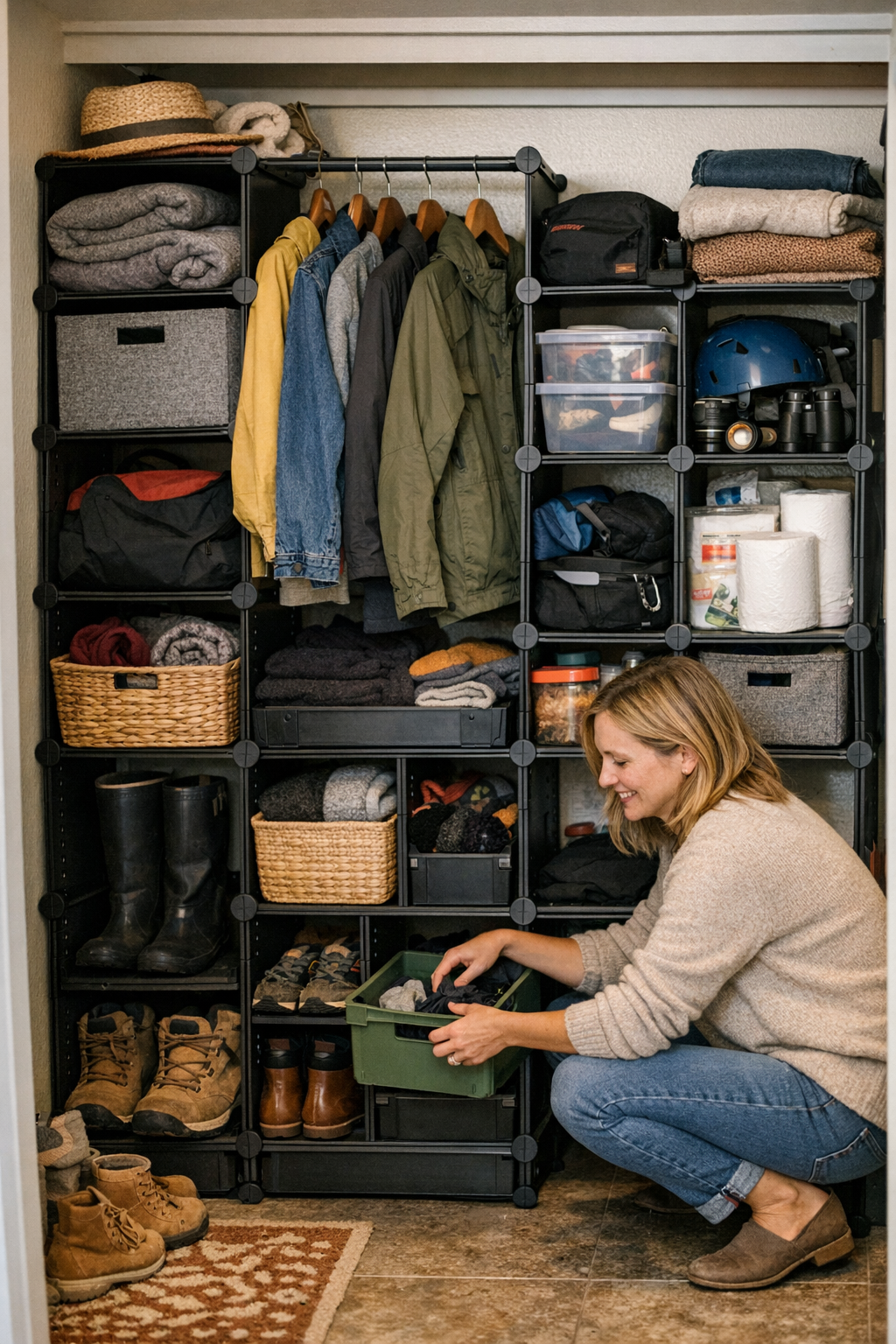
The line between a closet that stays calm and one that quietly breeds aggravation isn’t about how much you own—it’s about whether your storage can bend to the realities of everyday life. You’ve experienced it: that pile of folded clothes you stacked on Sunday sags by Tuesday, the bin meant for gloves slowly fills with tangled charging cords, scarves, and yesterday’s receipts. Every morning, you find yourself moving three things just to reach one, promising you’ll “fix it this weekend”—even though next week will bring new clutter anyway.
When Fixed Shelves Start to Fail Your Routine
Every closet starts out as a vision: shelves smooth and empty, baskets perfectly labeled, everything slotted into its “forever” spot. But after a handful of rushed mornings and a couple of extra shopping bags, the order cracks. That fixed shelf, once promising, now groans under the weight of winter boots tossed in hastily. Scarves intended for a single basket blend with hats and a missing mitten. You end up rearranging the same piles—move a backpack to reach a pair of shoes, lift coats to snag your umbrella, disrupt one shelf to get at the bag tucked all the way at the back.
Instead of a single loud disaster, the breakdown creeps in quietly. Baskets overflow, stacks slouch, categories blur. The space that looked efficient on day one becomes a game of shifting things aside and putting off real resets until they’re unavoidable.
Why Modular Storage Actually Works Day-to-Day
Modular units—cubes, adaptable bins, movable dividers—aren’t just about modern style. What matters is flexibility on demand. They step in where fixed systems fail: when your kid brings home muddy cleats, when winter coats suddenly need more room, or when a new hobby kit appears out of nowhere. With modular storage, a crowded bin can move to a lower shelf for easier grabs, or merge with another unit to make room for something bulkier. You’re not locked into your first plan—you react in real time, without a full teardown every single week.
The Real Price of Permanent Shelving
Fixed shelves lure you in with a “finished” look. But the reality: every tweak is a chore. Want to reorganize? It’s never a two-minute fix—it’s hauling out every box, dismantling a pile of towels, or accepting that half your accessories will migrate out of view. That weariness builds: why bother resetting categories if you’ll just have to shuffle everything again in a few days?
Everyday Reality: The Hallway Closet Slide
The first week after installing crisp new shelves in your hallway closet, it looks like a catalog. By Thursday, boots edge out of line, a lunch bag blocks access to gloves, and that bin for hats devolves into a mix of everything abandoned on the way in. Need boots fast? You’re juggling three bags that all ended up piled in the way. Fixed shelves force you to disrupt any order you try to enforce—so items go wherever there’s a gap, and “sections” become imaginary lines.
How Modular Units Keep Pace With Real Life
Picture the same closet with modular cubes and bins—not fixed, but built for rearrangement. Suddenly, the gloves and hats are at kid level, not hidden under last season’s shoes. Soccer season means one bin slides forward for quick cleat access, while bulky jackets simply get more space for a few chilly weeks. When things need to move, you just lift and reposition a cube. No tools. No domino effect.
After switching from a single long shelf to three-high stacks of modular cubes, everyday resets dropped to under two minutes. No pulling out an armful just to tuck boots away. No hunting for a loose hat buried under a lopsided tower. Each category holds tight to its zone, and a quick change doesn’t unravel your whole system.
Storage That Shifts When You Do
Closets are constantly in flux, whether it’s a sudden surge of off-season blankets, a family member’s new hobby, or just the normal chaos of living. The biggest storage regret? Installing a “final” system before you really know your patterns. Modular options let you keep pace with these shifts: stack higher for a growth spurt, split bins when clutter creeps in, pull a unit closer for daily use and push others back in low season. You set the rules as your routine evolves.
Quick tip: Assign one cube as a loose “inbox”—temporary, random, overflow items land here first, so you spot patterns and prevent small messes from spreading out of control.
Organized Isn’t Enough—Easy Reset is Everything
It’s possible to have a closet that looks organized and still trips you up every day. The real test isn’t neatness after a once-a-month deep clean. It’s seeing how well the system rebounds after a normal week of hurried mornings, new groceries, weather changes, and last-minute rummaging. If you’re always reaching past three piles or warning kids not to “mess up the shelf,” your system isn’t helping you—it’s holding you hostage.
Ultimately, genuine storage improvement means you spend less time fighting your closet and more time seeing what you need, grabbing it fast, and returning things without a ceremony. Look for a setup that serves your life as it is—not a closet that expects your life to fit a rigid plan.
Shop ClosetWorks for practical modular storage and customizable closet solutions.