
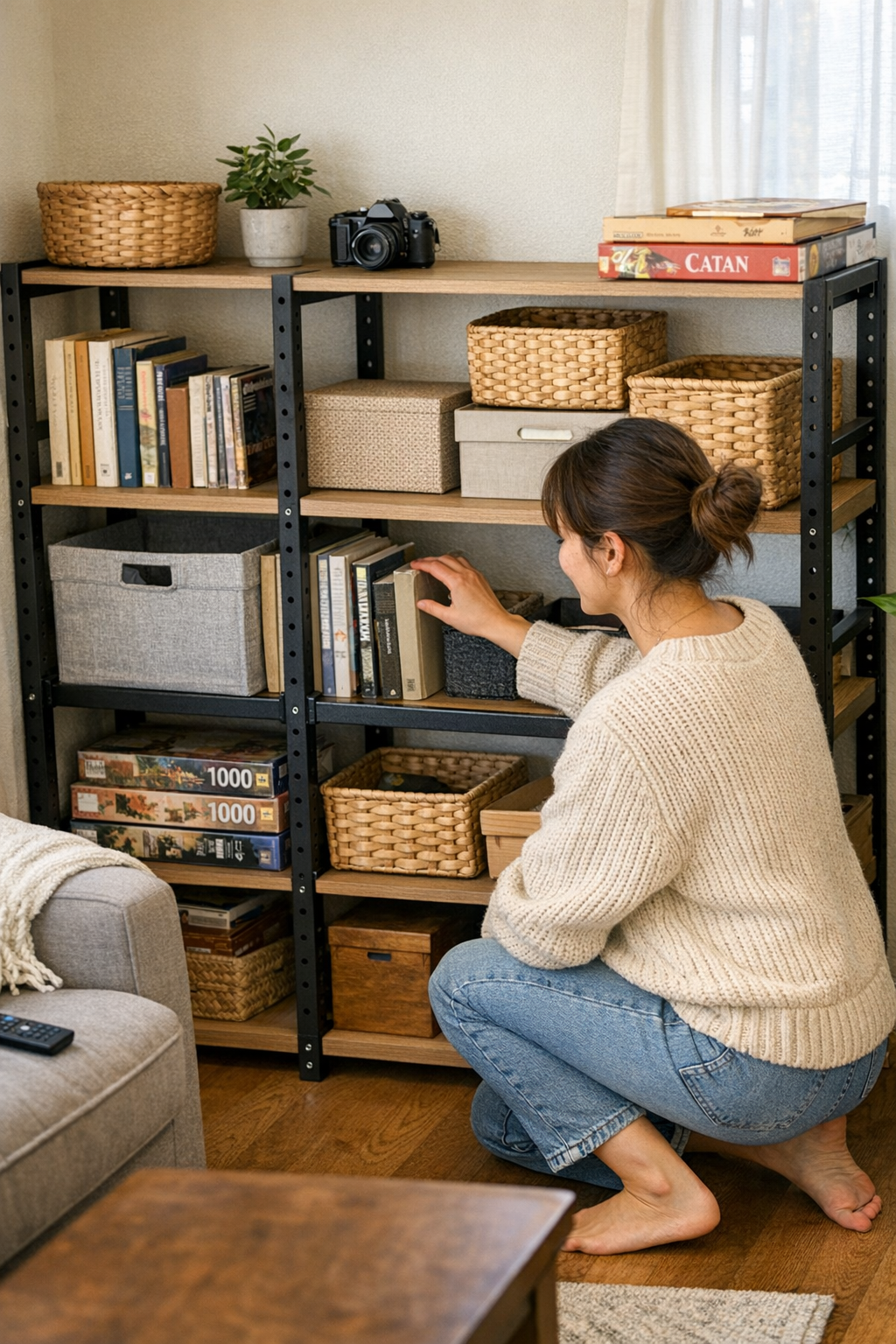
Putting together new shelving is its own brief victory—panels locked, lines clean, bins tucked in tight, and for a moment, the space feels tamed. You’ve turned an overloaded closet or messy hallway into a zone of order. But by week two, cracks show. Shoes refuse to stay corralled. Folded shirts start their familiar slide. That surface you promised yourself would finally stay clear? It’s attracting piles again. Suddenly, the “solution” is demanding more of your time than the mess ever did.
Where Quick Assembly Hides Persistent Hassles
Flat-pack shelving lures with promises: light boxes, picture-guided instructions, and the kind of options that let you rearrange whenever you get the urge. The first day feels great—you load up your bins, file everything by category, step back and breathe. But then the rhythm of daily life starts pulling it apart.
Here’s where reality intrudes: bins slide out of alignment after that quick reach for a winter scarf; stacks of jeans sag into loose towers that topple at a touch. Maybe your entryway shelf was supposed to keep shoes in neat rows—only the bins slowly migrate, so sneakers wind up sprawled half outside and gloves drop behind. It doesn’t take long for a system that looked organized to become a game of “find and shift” every time you need something simple.
“Looks Organized” vs. “Survives a Real Routine”
Most storage fails quietly. Two identical-looking units sit in your hallway; one lets you grab a bag without anything shifting, while the other trembles if you slide a bin too fast. What does breakdown actually look like?
- Hardcovers nudge paperbacks into a sideways slump, turning once-straight lines into chaotic tilts.
- Baskets creep forward, creating odd, empty space behind and mixed-up contents up front.
- That faint shelf bow isn’t just visual; it funnels every stack toward the middle, inviting overlap and mess.
This isn’t just a matter of aesthetics—living room shelves double as drop zones for keys, remotes, or this week’s mail. If the whole row wobbles when you reach behind a bin, you start hesitating to use it at all. Grab for one thing and end up nudging three. Over time, categories bleed together, and the “organized” space starts crowding out calm with small, recurring annoyances.
Friction That Doesn’t Go Away
The daily clutter grows from these micro-failures. A towel gets tossed carelessly into a bathroom bin, but without a clear divider, it flops across boundaries. Your kids’ gloves overtake the scarf section. Shoes meant for one cubby crowd another, the bins drifting after a week of hurried returns. The “simple reset”—just tossing things back—keeps getting longer as each round of mixing and stacking erases yesterday’s progress.
Sturdiness Shapes How You Actually Use the Space
What actually holds up is what gets used. Shelving with real support—a brace down the center, reinforced hardware, or just solid construction—stays steady as bins are dragged, kids dig for board games, and laundry baskets come and go. A shelf that resists the slow dip in the middle means you spend less time nudging piles back into line and more time actually finding what you need.
Picture your garage: the top shelf is for cleaners, batteries land in one basket, light bulbs in another. On a flimsy setup, bottles all huddle to one side, baskets get caught on warped boards, and targets blur—grab for a screwdriver, spend two minutes untangling cords and shuffling other tools aside. When storage fights you, every errand feels like another mini-cleanup. Sturdy pieces, in contrast, lock everything in place. The categories you worked to create stay visible, distinct, intact—no matter how often you dig through.
Everyday Routines Reveal the Weak Link
Every put-away is a test. Does your shelf greet you with the categories you created, or hit you with teetering stacks and rogue bins? When storage works, grabbing and returning is so uneventful you barely think about it—one motion, done. But when it doesn’t, the evidence piles up fast: overflow corners, flopped stacks bleeding into each other, socks and belts migrating because dividers never stay put. That’s when “I’ll organize soon” becomes a mantra, and quick resets quietly turn into another chore.
The Smallest Upgrade Makes a Noticeable Difference
It doesn’t take a major overhaul—sometimes, one stabilizer bar or a more solid shelf frame is all it takes. Suddenly, you can put a book back on the shelf without causing a cascade. Bins land in their niche and stay there, even after a week of rushed mornings. The motivation to tidy “before company arrives” disappears—not because you forced yourself to clean, but because nothing drifted out of place in the first place.
- Hardcovers slide into place and don’t tip the rest of the row out of balance.
- Bins that used to wander just stay where you left them—no more shoving them back after every use.
- Resetting the space becomes a rare, almost invisible ritual, rather than a nightly necessity.
- The whole system quietly supports you—less time hunting, repairing, or reshuffling; more time living.
The impact is less about that tidy, “after” photo and more about the fact that, day-to-day, the setup simply works—leaving you with more clear surfaces, steadier stacks, and less friction everywhere you look.
Smart Steps Toward Smoother Storage
- Test for stability where you put the real weight. If the middle of a shelf is sagging—visibly or not—it’s inviting chaos. Longer shelves need a center brace or beefed-up support.
- Use bins or dividers that actually anchor categories. A tight bin means gloves can’t invade the scarf pile, and a clear shelf divider stops stacks from turning into one mound. Don’t settle for loose baskets that crawl with use.
- Prioritize function over showroom-perfect looks. A lightweight shelf may carry the first load, but if bins are shifting by week’s end, the promise falls apart. Ask: does the separation and shape hold under real traffic?
- Evaluate by reset speed, not just the first day’s reveal. A good setup lets you restore everything in seconds—not with careful stacking, but a quick, reliable toss-back that keeps categories intact.
The True Test: Effortless Order (Most Days)
In practice, you know a storage system is working not because you see it, but because you don’t have to fight it. You’re not reshuffling the same pile after every errand, scrambling to keep bins in place, or dreading the inevitable collapse of a once-organized shelf. Instead, everything feels easy to find, quick to return—whether it’s the front hall in winter, the bedroom closet at laundry time, or that “catchall” corner by the door. Give your shelves the bones to match your daily reality, and you reclaim not just surfaces, but actual time—and a sense of calm that doesn’t slip away by Thursday.