
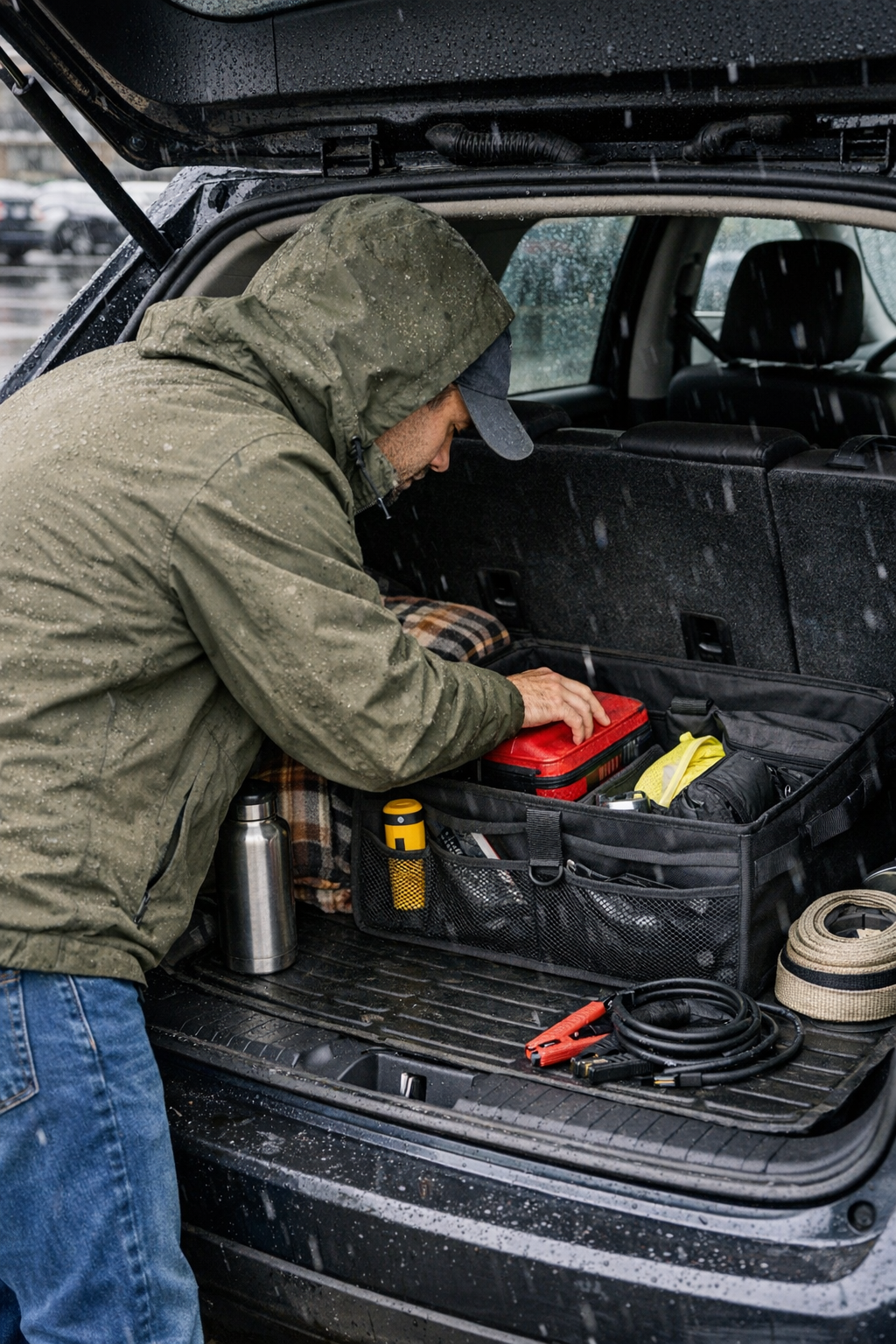
Nothing exposes weak car organization like a cold-weather return—when a “tidy” setup turns clumsy the moment you need speed, not another hassle. That trunk divider looked clever last Saturday, but now you’re hunched against freezing rain, door cracked, feeling for a buried scraper or a stubborn tangled charger. The glovebox shuts smoothly when parked, but at night, rummaging for a flashlight becomes another round of dropped papers and swearing under your breath. The real friction isn’t about mess; it’s that every so-called system either fuels easy returns or forces you back into the same slow shuffle—each time you actually use the car, especially when conditions turn rough.
When “Neat” Systems Fall Apart in Bad Weather
The “in-control” feeling of a clean console fades fast after a few stops and shakes. Monday: cords looped, scraper upright, coffee receipts stacked. By Thursday: registration buried under napkins, the cord knotted around a pen, and the scraper vanished somewhere behind a kid’s glove. The car looks settled at a glance, but touch anything and it collapses—you grab blindly, knock a bottle off the floor, or dump half the console just to find an ice scraper you thought was easy to reach. Order unravels where you expect consistency: repeated driving, quick departures, the same gear always needed fast, now missing in action.
The Real Cost of Buried Tools
It’s not until the temperature drops and time runs short that you feel the design failing. You slide into the driver’s seat after work—wipers barely holding off sleet—and try to snag the scraper. It’s either behind a bag you left last week, or worse, jammed under cargo in the trunk. You stretch, cold air knifes in, water hits the upholstery, and frustration compounds. The “clean” setup drags out every move, multiplying delay right when you want one-hand, one-motion access—and anything less is just another routine breakdown.
Glovebox and Trunk Storage: Actually Helpful or Just Out of Sight?
“Organized” often means “buried and awkward.” A glovebox swallows insurance cards and napkins until the rare tool you need—mini flashlight, spare cable, ice scraper—gets lost behind the weekly buildup. Quick stops shift stacks, and the must-haves slide out of sight without you noticing. Urgency uncovers the reality: what seemed at-hand now demands emptying the whole compartment with one cold arm in the dark—never safer in bad weather, never quicker with impatient passengers crowding the entry.
Trunk bins and cargo organizers tame appearance, but real routines rewrite their promise. One grocery restock and a gym bag later, the neat bin turns into a game of “find the handle.” Frozen lock? That emergency kit is under two sacks of groceries and a box of windshield fluid. The more packed the car, the more organized solutions become barriers: a clean layout for someone standing still, not someone bracing against wind, trying not to drop groceries on soggy mats. When a setup makes you unload to reach daily tools, it’s working against actual use—just neater while still slower.
The Truth About Charging Chaos
Even the most promising cable layout unravels under daily use. Too many chargers, or just one too long, and you’re fishing cords from under the seat, untangling loops from the handbrake, or dealing with a wire wedged into the cupholder—again. Grab your phone before a call or get ready to charge after errands, and it’s another mini-wrestle with the cord that was “put away” this morning. Every sharp turn or quick grab lets cables migrate, snag, or block the one thing you need—smooth return and easy access—proving neatness alone can’t outsmart daily motion in the car.
Organization That Survives Routine Re-Entry
So what actually works in cars that get used, storm after storm? Not the “picture ready” layout, but real systems that cut friction in the heat of daily use. True car organization keeps every essential reachable in one motion, even after your setup slips, bags slide, or time is tight. It’s not about achieving a magazine layout—it’s about not fumbling at your most rushed moments. What matters is shortcutting delay again and again, no matter how many times your gear drifts or routines change on the fly.
Where Real Friction Builds: Return After Return
After a week of rain or snow, setups that worked on day one reveal their cracks. Kids’ bags migrate, the umbrella gets pinned under a shopping tote, chargers vanish beneath yesterday’s haul—or last night’s pizza run shoves a window scraper out of reach again. Even after a full reset, real use scatters carefully arranged gear within days. This isn’t failure; it’s the reality of everyday driving. Unless your tools are stored for one-handed, seat-stable reach, cleanup and access collapse by midweek. Any system that ignores the churn of routines is built to disappoint.
Small Upgrades, Big Return: Converting Setup to Real Access
Veteran drivers fix it quietly—by shifting key tools to where their hands land during real weather. That means:
- Scraper and flashlight in the driver’s door pocket or wedged under the front seat—reachable without shifting your weight or digging through layers.
- A single, loosely-looped charging cable resting beside the center console—not buried, never more than an easy grab away. Limit to one active cord to keep interference low.
- Emergency poncho or towel stowed flat, not wadded with gear or in trunk exile. If you can’t grab it blindfolded, it’s too buried.
- Trade “hidden” for “cleanly visible”—tools present, not scattered, but never so concealed you need to unpack half the car for access.
After a week of bad weather, these simple changes show real payoff: faster re-entry, less soaked upholstery, fewer delays getting back on the road. The car starts feeling organized because it moves at your speed, not just because the surface looks tamed. The setup isn’t just neat; it behaves like it was built for quick, repeated use—even when the drive home or pick-up run is at its worst.
Access vs. Tidiness: What Actually Wins in Real Car Use
Appearance means less than performance once the car leaves perfect stillness. An “organized” trunk or console isn’t much help if it swallows what you need in your next weather test. The real reward for practical car setup: each return is less of a scramble, fewer armfuls dumped on the seat, less sifting and more moving forward—especially in the split moments when time, weather, and routines put systems to the test. Delayed access isn’t just annoying; it invites repeat stress and forces workarounds you shouldn’t have to invent every week.
If your car still leaves you searching and shoving items around whenever the forecast turns rough, it’s not just an inconvenience—it’s a sign the setup needs to change. Real readiness isn’t another organizer, but a rethink of where, and how, basics are kept for the way driving actually happens. The difference is simple: “neat but slow” can’t keep up with the demands of real use—“ready on return” does the heavy lifting, through any week the road throws at you.
Find car gear and solutions that match how you actually use your car at DriveWellSupply.