
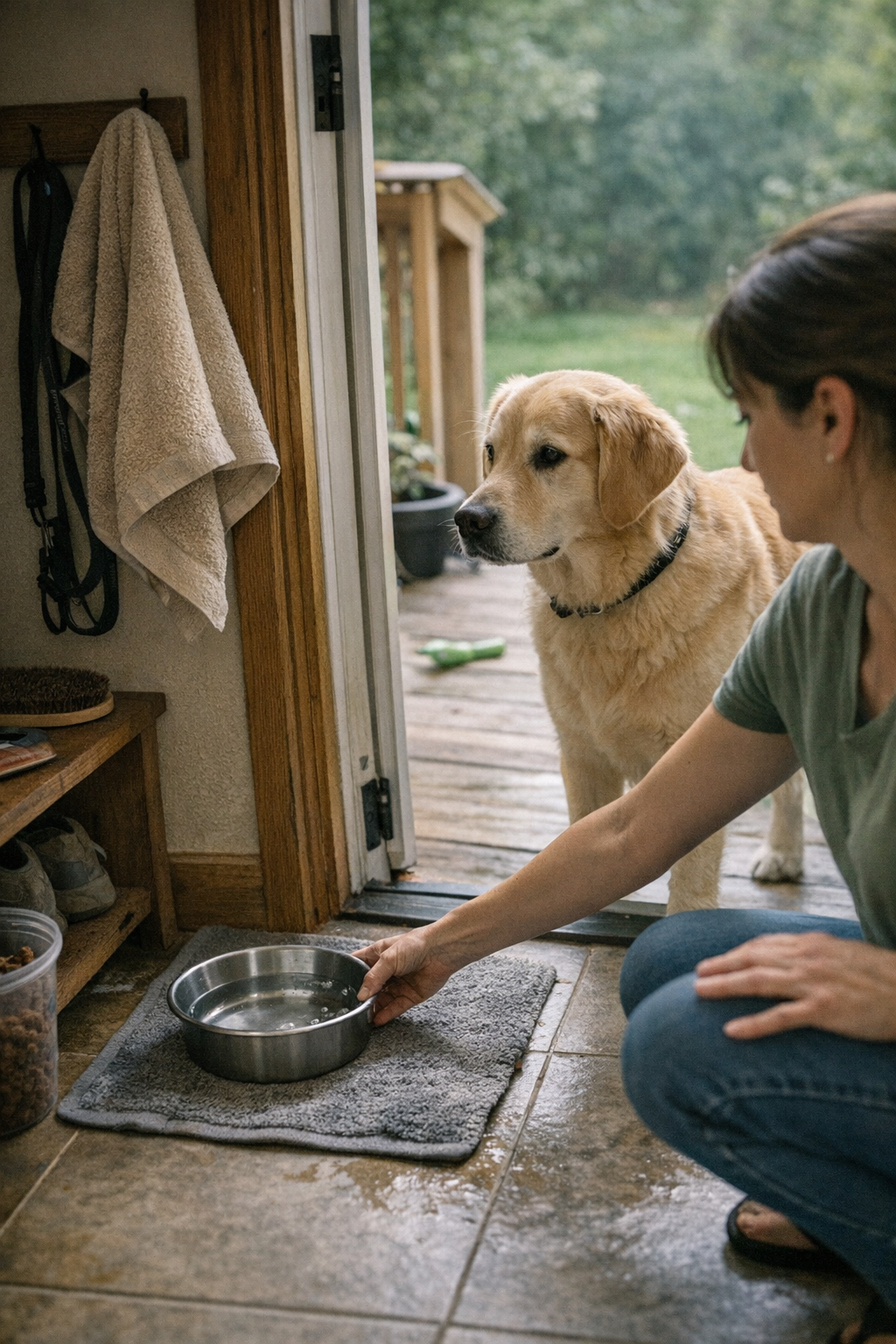
Why the Littlest Dog Pauses Slow Down Your Entire Pet Care Routine
You’re ready to dump out a used water bowl, reset your pet’s food corner, or toss a towel back on its hook—but then your small dog stops dead at the door, waiting for your okay before crossing into the room. What seems like a few seconds of hesitation turns into an entire stalled routine: your one free hand juggles leashes and mail, the wet bowl is dropped wherever fits, and now the floor’s streaked and the next cleanup tool is nowhere nearby. It’s these tiny, repeated pauses—with one item out of place or one tool just out of reach—that quietly unravel an ordinary pet care setup. If you’ve ever watched a tidy feeding corner slide into daily disarray, you’ve seen how a simple pause can trigger a chain of missteps CalmPetSupply was built to handle.
The Compounding Cost of Small Interruptions
Picture coming back from a walk, armful of leashes and a dripping bowl balanced in one hand. Your dog halts on the threshold, waiting for permission—a routine pause you already anticipate. That’s all it takes: you set the bowl down just inside the door, rarely on a mat that’s in place, often beside a bag of treats or a scattered towel left from last time. Now, water gathers where it shouldn’t, towels slip off hooks, and even a quick reset becomes a tangle. The plan for a two-minute transition turns into five: the bowl sits, half-cleaned, licking up counter space. With every repeated pause, these “small” interruptions add up, and missed wipes or delayed tool returns start piling into visible clutter.
These moments don’t stand alone. Over a week, the shortcuts compound: a scoop buried under mail, towels stranded on dining chairs, bowls that never quite get clean and ready before the next feeding rush. Areas that looked organized fall back into old patterns, especially when the right supply isn’t right there where you need it most. Even with everything appearing put away, the same awkward step returns—just when you’re least prepared.
When “Looks Tidy” Isn’t the Same as “Works Well”
A feeding setup can seem neat, at least at a glance, especially after a quick surface wipe or a bowl pushed out of the way. But real friction shows when the daily rhythm gets interrupted—a towel isn’t at the entry, a scoop is in the sink, the wipes are stashed with shoes instead of near spills. Each time your dog pauses at the door, the break in flow becomes another chance for clutter to build up or for quick cleanup to get skipped, unnoticed until the “tidy” illusion wears off.
The more you stack tasks—refilling water, greeting a guest, cleaning after a walk—the more obvious it is: the neat look covers up backup and missed resets. Working around unfinished steps is draining, and “organized” quickly slips into a repeat cycle of searching, reshuffling, and fixing after the fact. A system that only looks tidy creates a back-and-forth drag that a real-life setup can’t hide for long.
Real-life Scenes: Where the Routine Stalls
- You want to refill the water bowl, but the drying towel’s somewhere else. A napkin does the trick—barely. Streaks and drips slow you down and leave a sticky floor for later.
- The leash finally comes off after the walk, but brushes and wipes are buried under a pile of outgoing mail. Five extra seconds here, a mental note to clean up later—delay layers on delay.
- Litter check before bed turns into a hunt when the scoop is buried behind a load of laundry rather than beside the box. Bedtime stretched yet again because one item migrated out of reach.
- Feeding is thrown off because the main bowl is still at the sink, half-cleaned, leaving the backup in use while the mess stacks up for tomorrow’s you.
- On a late check, the hallway’s cluttered with abandoned toys and towels, slowing even your last sweep before sleep. The day never seems fully reset.
One Weak Link Drags Down the System
These breakdowns aren’t about training—they reveal how easy it is to miss a step in a setup that wasn’t made for real-world repeat use. A towel never on its hook, wipes always in the wrong corner, the brush behind the door—each missing piece becomes a recurring tripwire. No matter how carefully you organize, the one item that goes missing or gets buried means you’re repeating work and letting disorder slip back in, especially as the routine gets busier.
How Staging Essentials at The Pause Point Changes Everything
Everything shifts when essentials stay visible and reachable at those proven pause points. Instead of putting towels in a closet or scoops with the bulk supplies, hang them right by the main entry, or mount wipes by the feeding area—exactly where hesitation or chaos most often hits. You sidestep the need to search, grab, or “make do” every single reset. Brush by the door, towel actually on its hook, wipes not only in a drawer—these placements cut extra steps before they even start.
The payback is immediate: cleanup and resets that happen in real time, not as a backlog. Water bowls get refilled and dried on the spot. Gear doesn’t disappear under mail. Litter change is one pass, not three. Every small interruption has a direct fix—the right tool at the right place—so pausing becomes a built-in moment to reset, instead of a missed opportunity that echoes through the week.
Conclusion: The Long-Term Effect of Small Setup Changes
Dogs pause and check in at the threshold—that’s how they show trust, not trouble. But most routines break down not from bad habits, but from setups that demand too much backtracking to run smoothly. When the basics are staged at the true pinch points, even frequent interruptions stop stacking into bigger weekly messes. It’s about closing the gap between what seems organized and what makes ordinary care easier to keep up—one towel, one scoop, one shelf at a time.
The difference is durable: a setup that still looks calm a few days later, not just five minutes after cleaning. When you stage pet essentials where real-life friction happens, your routine finally stays manageable, even when the pauses keep coming.
For more ideas on practical pet care routines and solutions, visit CalmPetSupply.