
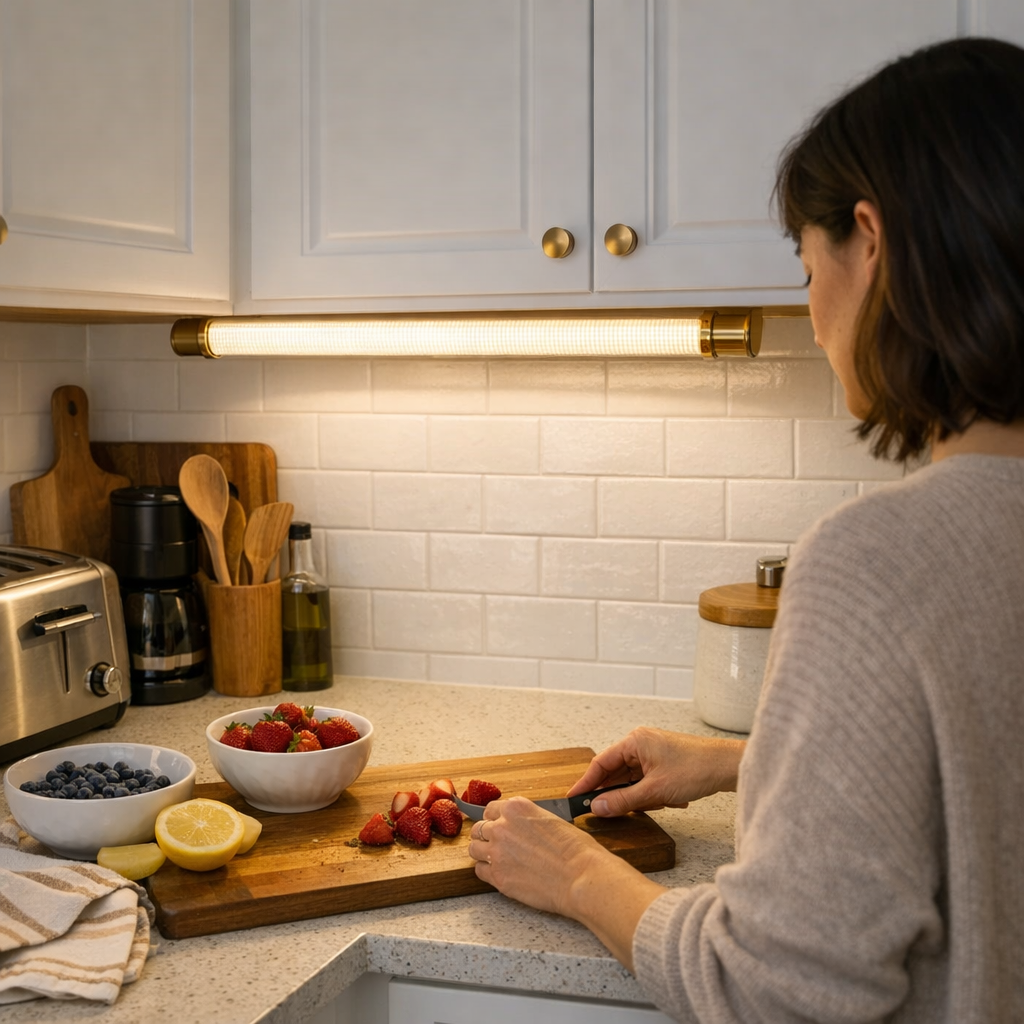
Under-cabinet lighting reveals its flaws quietly but relentlessly. Slice vegetables at dusk or wipe crumbs along the counter and the problem isn’t how bright the kitchen looks—it’s where the light fails. Shadows swallow the backsplash, glare bounces off polished counters, and entire stretches of workspace demand awkward body shifts just to check if they’re clean. The biggest friction point isn’t bulb wattage or fixture style; it’s the constant struggle with uneven light, forcing you to drag your hands, chopping boards, or bowls in search of a patch that’s reliably visible. In a kitchen used every day, the wrong lighting setup doesn’t just annoy once; it rewires your routines into workarounds.
When “Bright Enough” Isn’t Useful: The Case for Even Spread
What matters most in under-cabinet lighting isn’t how a space looks when you flip the switch—it’s how that lighting holds up after dozens of meals and late-night cleanups. Early on, you might think you’ve nailed it: LEDs seem strong, puck lights punch their circles of crisp light. But by the third or fourth week, patterns emerge: dark bands haunt the edge by the cutting board, glare rides the countertop lip, and small items seem to disappear unless you shift everything into a tiny “good” zone.
This stumbling isn’t fixed by simply adding brighter bulbs. Spotty lighting creates gaps—places where crumbs collect unseen or knife tips vanish into shadow. Instead of moving freely, you become acutely aware of where the light lets you down, and every prep task starts to feel like moving pieces into sunbeams rather than working where you want.
The Persistent Problem Zones: Corners, Edges, and Long Runs
Where do these shadows and glares actually show up? In lived-in kitchens, it’s the corners tucked behind appliances, the far edge of a coffee station, or the deep bend near a microwave. At first, they blend into the room; over time, you catch yourself nudging bowls to the brightest patch or turning plates just so the glare doesn’t blind you mid-rinse. These problem zones aren’t random—they’re a direct result of narrow lighting patterns and the way cabinets cast their own shadows onto the tasks beneath.
Long countertop runs without continuous lighting turn into a topography of low-lit valleys and bright ridges. Cabinets that aren’t matched with a wide, even wash create breaks in illumination, letting debris and missed stains build up in what looks like “clean space” from a distance. The inconvenience is subtle but constant: extra work that creeps into every cleaning and cooking routine.
Puck Lights, Spots, and Why High-Lumen Isn’t the Solution
Puck lights and spotlight-style fixtures promise intensity, but too often deliver hard-edged circles of light that exaggerate the problem. Walk into the kitchen at night—one spot is bright enough to cut through, but the rest fades away. High-lumen fixtures pull the eye, but they can’t overcome tight beams or poor diffusion; all the brilliance collapses into the middle zone, and the edges are left in gloom.
Instead of boosting clarity, these setups demand you shift your cutting board, angle your hand, or lean dangerously close to the edge. On glossy counters, glare ricochets from the brightest spot but fails to lift the shadows in the corners. The daily impact? You’re always chasing the light, not supported by it.
How Wide Diffusion Changes Your Daily Use
Switching to an integrated LED bar with a generous diffuser transforms not just the look, but the rhythm of kitchen work. Light stretches evenly from cabinet face to backsplash, flooding the whole work surface instead of spotlighting a single tile. Vegetables get chopped in place, wipedowns actually reveal spills, and your hand stops hovering, searching for illumination.
Placement is key: push a fixture up against the wall and you get half-shadows; install near the cabinet’s front edge and you light the full counter depth. Wide-angle diffusion matters most if your counters are glossy—the spread softens harsh bounce and replaces jagged glare with consistent visibility, no matter the time of day.
Real-World Fixes—And What Actually Changes
One kitchen swapped three puck lights for a single continuous six-foot LED bar, and the contrasts were immediate:
- The once-shadowy gap by the stove became useable space, so simmering pans could be watched without leaning in.
- Glare along the backsplash quieted, making it easier to spot splatters and cutting down on squinting during late cleanups.
- No more dragging ingredients into an awkward spotlight—every corner, even by the sink and wall outlets, held steady visibility.
The game-changer wasn’t higher wattage or more “power”—it was how the available light diffused and stretched. The kitchen stopped looking dramatic for photos, but started working better: fewer missed messes, less shifting, and no blind spots waiting to create tomorrow’s extra chore.
Simple Tips for More Reliable Under-Cabinet Lighting
- Use continuous light bars, not separated spots: Long LED runs with broad diffusers close every coverage gap—pucks leave dark seams almost by design.
- Pull your lighting forward: Mount fixtures toward the cabinet’s front edge to brighten the full counter, not just cast light against the wall.
- Always check for gloss and stray glare: On polished surfaces, adjust placement and diffuser width until reflected hotspots shrink or disappear.
Each of these fixes attacks the silent micro-adjustments that slow down daily kitchen tasks—getting you from cleanup to comfort with less friction, not just more lumens.
Why Wide, Even Spread Should Be Your Priority
Kitchen usability depends on clear, shadow-free light exactly where routines happen—not just the feeling of overall brightness. Once the excitement of new fixtures wears down, routines get sharper: prepping, rinsing, cleaning, all without chasing after the light. A setup with wide, even diffusion stops the silent drift toward workarounds and lets you move as if lighting barely needs thinking about.
For any space where repeated action matters, prioritize lighting that stretches evenly and covers real task zones—not just what looks good on the ceiling. The difference is visible every time you notice no more edge shadows or wasted movement. Find more real-world solutions at LightHelper.