
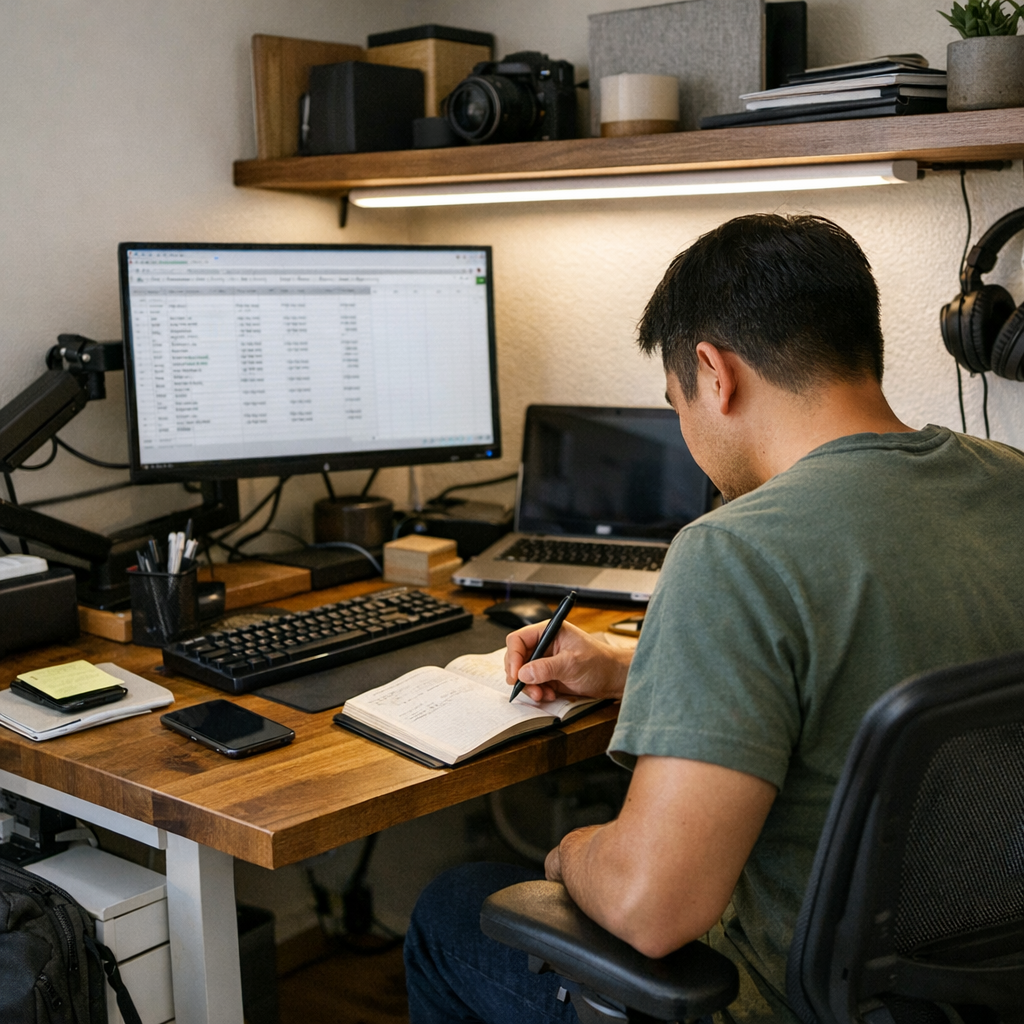
A desk can look organized but still wear you down hour by hour. Bright surface lamps leave streaks across your monitor. Shelves cast stubborn shadows just where you need clarity. And what should be a tidy, usable workspace turns into a mess of minor frustrations: glare patches, creeping eye fatigue, and a constant sense that your “clean” setup still gets in your way. The promise of under-shelf bar lights—streamlined, even light with no desktop clutter—only pays off if the physical details deliver. The real test isn’t how the setup looks after a morning tidy, but how friction creeps in when you return for late work, juggle devices, or reset for the third time in a day.
When Light Structure Quietly Shapes Your Workday
Slide a bar light under your shelf and the first session feels like an upgrade—no lamp base to work around, no obvious dead zones across the desk. But move through a week of normal routines and new distractions surface: a harsh-edged light bar sits just at your left periphery, its sharp corners catching you with sudden bright spots every time you slide a notepad closer. By Wednesday, you’re tilting your monitor, scooting the chair, or shifting your phone charger to make the space feel workable again. The hard boundary of an exposed light end tugs your attention every time you try to get comfortable.
This isn’t random discomfort: Your eyes feel scratchy by late afternoon, your elbows keep bumping cables or organizers as you adjust your seating, and your hand drifts to shade a patch of glare just to read page margins. Setup friction multiplies—quiet, sure, but always there, especially if you work long stretches at the same desk.
The Hidden Difference Between Looking Tidy and Working Smoothly
A freshly reset desk with a flush, square-cornered light looks perfect—but within ten minutes, reality returns. The notebook slides next to the keyboard, a stray charging cable tangles with your pen, and you’re hunting for a highlighter behind your mouse. That “straight edge” of the under-shelf light becomes more than a visual finish: angled flares shoot onto your hands and new shadows cut across your workspace. You end up rearranging, not working. The appearance of order comes at the cost of repeated micro-delays—subtle, but steadily wearing down your workflow.
Don’t mistake a tidy surface for a smooth process. What seemed efficient quickly turns into a routine where you’re constantly resetting positions, fighting minor distractions, and burning focus dodging light artifacts instead of getting through your actual tasks.
Where Lighting Decisions Echo in Everyday Workflow
Take any real afternoon: answering emails, thumbing through a notepad, jumping back to the spreadsheet. A hard-edged bar light amplifies desk mess. Cables or notebooks sticking out? They cast new, high-contrast flares. Reach under the shelf for a pen—glare knifes across your vision and you pause, readjust, lose your next thought. By midweek, the simple routine of swapping between digital and paper work slows down, replaced by awkward angles and a rhythm of “move, squint, nudge, continue.”
It won’t wreck one session, but across hours, it piles up: your desk stops feeling like an extension of your workflow and starts acting like a surface that pushes back—a place you have to fix again after every stretch of real productivity. A clean line in the morning grows into static in the afternoon.
A Small Fix With Noticeable Impact: The Softened-Edge Bar
The easiest mistake is living with this routine—a little chair scoot, another failed lighting reset, never fully accepting why the setup annoys you. Swap in a bar light with softened, rounded corners and the desk starts to cooperate: glare drops, the boundary between shelf and working surface softens, and those jumpy bright spots at the edges go away. This isn’t a dramatic switch, but after a few days, the difference is concrete: you stop squinting, no longer shade the desk with your hand, and your monitor doesn’t need a last-minute tilt. The background friction recedes. Workflow feels like it belongs at the desk rather than circulating around obstacles.
You’ll notice this mostly after breaks: walk away and return, and the workspace is “ready.” No extra habits, no overcorrecting for the light, no new workaround. The setup stops asking for attention, which means you regain lost seconds—and lost focus—each cycle.
Real-World Observations from Extended Use
The payoff isn’t instant; it builds through real use. At first, a soft-edge bar light just works—but the real win comes after a busy Thursday, when you realize you haven’t rubbed your eyes or shifted your chair to chase away a glare line since Monday. Repetitive desk cycles—charging, flipping between paper and screen, plugging in another device—feel less draining. The subtle edge between light and darkness blurs just enough to keep your sightline steady and your workflow smooth, no matter how often you cycle through focus, reset, and return.
This is how good desk gear stays invisible: no repeated workaround, no setup tweaks between every session. Visual noise falls away, and the desk supports the work—even through the mess and movement of a real, busy day.
FAQ: Decoding the Specifics of Under Shelf Bar Lighting
Why do softened bar light corners matter, really?
Hard corners and exposed edges throw sharp beams at awkward angles, disrupting sightlines as you reach, reset, or adjust your seat. Softer, rounded or frosted edges blend transitions—no sudden glare, just a usable, calm pool of light wherever your work drifts.
Isn’t this mostly about looks?
No. This is about the physical structure shaping your daily tasks. The fixture’s edge actually changes how your desk feels after several rounds of device shifts, note-taking, and resets. Styling is secondary when comfort and workflow are on the line.
What’s the biggest recurring mistake?
Mounting the bar too near the desk edge and picking models with raw, unfrosted ends. It’ll look clean at first—but day after day, you’ll dodge new glare hotspots and start modifying your behavior just to deal with badly directed light. Every approach or midday reset becomes slower and less natural.
What Actually Makes the Desk More Usable
Picking an under-shelf bar with softened, well-finished corners is about removing small, repeated irritations—the invisible static that slows and exhausts desk work over time. Real improvement shows up as the absence of friction: fewer interruptions, no chair shuffle just to escape a bright line, less compensating for light where it shouldn’t hit. Every session resets smoother, and you spend more time moving between tasks and less time fixing your setup. The desk just works, even when your workflow is unpredictable.
The real metric: when you stop thinking about the gear and simply use the space, it means your setup is finally pulling its weight. Every physical structure should serve the pace of your work, not the other way around.
Explore the full WorkBasic collection