
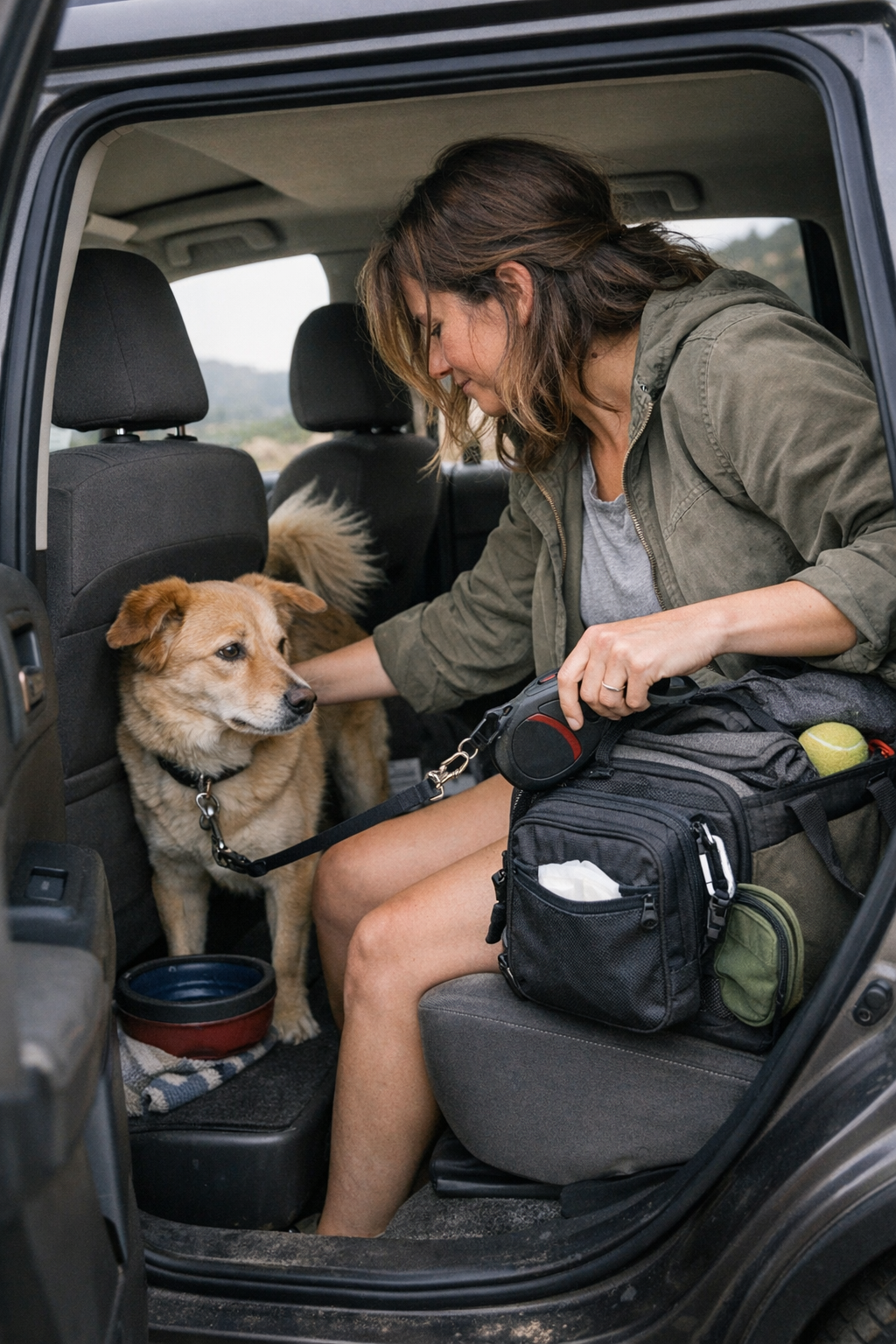
Most pet owners find out the hard way: the travel bag that looks set at home—neatly packed, every item in its place—unravels at the second or third stop. Not with disaster, but with subtle drag: wipes buried near the floor, the leash under a blanket, the bowl wedged tight just as you need a clean grab. Suddenly, “organized” isn’t the same as ready—especially when your dog is restless, the parking lot is crowded, and you can feel every lost second stacking up. PawGoTravel was built for these exact moments—when your setup is only as good as its fastest, one-handed reach under pressure.
When Ready-to-Go Doesn’t Mean Ready in Real Life
The difference between a packed bag and a usable setup only shows up in motion. You line up leashes, wipes, bowls, and comfort items at the start, but routines outside the house—curbside pickups, rest area breaks—expose the gap. The first time you aim for a quick leash-off or cleanup, friction creeps in: a leash tangled beneath a blanket, a pouch stiff or stuck at an angle you can’t manage while keeping a hand on your squirming pet. The same clean packing that felt clever at home becomes a hidden time cost as soon as you need real-world speed—or fast fallback after a messy moment.
The Cumulative Cost of Slow Access
Stop-and-go travel doesn’t punish you with one big failure; it nags you with delay after delay. You dig for wipes by touch, wedge a treat pouch out from between seats, untangle the water bowl’s handle for the third time. These aren’t emergencies, but they wear you down—every minor delay builds into a heavier, slower-feeling routine. By the fourth pit stop, you notice the friction: a zipper snags again, the wipes have slipped backwards, and your system is now making fast movement harder instead of easier.
Short Trips Reveal Weaknesses You Miss at First
A travel bag feels fine after one or two stops; it’s the repeated, everyday trips that reveal the pain points. Vet runs, city errands, quick park breaks—they show where your “system” doesn’t actually stand up to movement. Items migrate: wipes slide behind bulky blankets, bowls shift to block zippers, leash clips overlap with treat containers. You unlock the car for what should be a quick leash grab, but gear gets jammed or caught, forcing you to fumble with both hands while steadying a jumping dog. The same slowdowns come back again and again.
Where Order Clashes with Access
Travelers quickly learn: the best-looking organization can create new roadblocks. Tidy layers, “clever” fold-ins, and compact zones lead to practical overlap—one item blocks another, main tools get boxed in by accessories. Unclipping a leash just to reach wipes is a loser mid-routine. That cozy blanket or comfort toy? Helpful for your pet, until it blocks a main pocket or buries the treats. You’re left making extra movements that disrupt your pet, extend every pause, and turn setup into an obstacle course instead of a help.
What Actually Changes Travel Flow?
The most effective upgrades are sometimes unapologetically simple. For instance: moving wipes from a zippered central pouch to a clipped, exterior spot means you get them and the leash—one movement, one hand, nothing dropped. Suddenly your trips don’t stall at the seat edge. A less “Instagram-worthy” bag, maybe, but you cut out the slowest delay: wrestling with the bag instead of restarting movement. After switching to exterior access for quick-clean gear, stops ran smoother, fewer items hit the floor, and the flow kept up with the unpredictable speed of real pet travel.
Repeated Movement Exposes the Real Test
Piling on pockets isn’t a fix if the actions between stop, clean, leash, and go keep getting stuck. The true test isn’t setup at home—it’s whether you can grab, return, and restart on the fourth stop just as easily as the first. Supplies that are “there” but buried aren’t helping when it counts. Even attachable bowls or pockets aren’t solutions if they tangle or block other essentials. Reliability is measured in motion—how fast you reclaim ready-to-move after each routine interruption, and how few steps it takes before you’re moving again, not reshuffling gear.
Recognizing Patterns Makes All the Difference
After enough rounds, hesitation becomes its own pattern—you pause at the car door, run a mental checklist while handling your dog, and brace for another quick reshuffle. You reach for wipes, realize they’ve shifted (again), and mentally note the familiar snag: the system isn’t matching your actual stops. Small fixes, like relocating a high-frequency item to a spot you can hit blind, break this loop. Systems that “look” together but quietly layer on delays end up raising stress. The moment you relocate essentials to always-available positions, even a single improvement, the mood of the trip changes—more motion, less stall, less juggling, more trust in the routine.
From “Looks Organized” to “Works Every Time”
Real pet travel isn’t a packing game or a contest for neatness—it’s whether, in the most restless, seat-side moment, you can get what you need with one hand on your dog and not lose pace. The more invisibly your gear works for you, the more every stop feels manageable—less a string of tiny setbacks, more a rhythm you can repeat and rely on. Flaws show up at real edges: when you’re half out the car door or faced with that unexpected bark. The right shift—adjusting for actual grab, placement, and reset—makes the difference between a system that just looks sorted and one that actually travels well.
Find practical pet travel setups designed for real-world movement at PawGoTravel.