
Here’s how outdoor storage usually goes: You arrange bins along a garage edge, hang a few tools on the fence, maybe squeeze a shelf into the side-yard strip. The area looks set. Then the real routine starts—quick drop-offs, last-minute fetches, dumping gloves after a hot day, stacking bags mid-task. Suddenly, the “organized” zone turns awkward. Need your favorite trowel? It’s wedged under a stray planter behind bags you haven’t touched since May. The tools you use most wind up buried, blocked, or lost in a corner that’s supposed to be accessible. Outwardly everything looks tidy, but step outside with an actual task in mind, and the system falls apart. You’re winding through a maze built out of your own setup—a storage plan that’s technically full, but functionally stalling you.
When “Fits” Falls Short of “Works”
Stacking things into containers isn’t enough. A chest swallows bulk but disguises what’s active and what’s idle. Wall hooks start strong but end up crowded, and baskets labeled last spring become catchalls for anything in sight. The real trouble appears the third or fourth time you waste daylight pawing through one stack to reach another, or when you’re forced to move one thing just to return another.
That’s the fault line between storage and access—where the need for order crashes into the reality of repeated use. Your deep bin doesn’t just store gear—it incubates clutter. Daily tools float to the top, “someday” items get forgotten beneath until the season changes. Most yards aren’t short on containers; they’re short on setups that match everyday movement.
Why Categories Don’t Fix Flow
The default move? Sort by type. Gloves with gloves, trowels with hand-forks, soil and seed in their own bin. But then spring stretches category piles out of proportion, and the one tool you always need ends up wedged behind three you use twice a year. The click moment isn’t “better categories”—it’s frequency of use. The closer an item matches your weekly routine, the closer and easier it needs to sit—regardless of what it’s “supposed” to be grouped with.
A shovel for weekend projects and a hand-fork you grab every two days shouldn’t disappear into the same box. That’s how a few seconds of grabbing and putting-away turn into awkward, slow resets. Category neatness breaks down the first time your habits change—but frequency never lies.
Scenes from a Real Side-Yard
Picture a utility strip: there’s a short wall, a meter-wide path, and an ever-growing cluster of gear. Early on, you stack pots, soil bags, gloves—keeping things regimented. By week three, fast mornings and “I’ll sort it later” evenings take over. A single glove slides off the pile. Pots begin to migrate. Soon, trying to grab a hand-fork means rerouting a stack of mulch, stepping around an errant garden stake, and realizing there’s no way to fetch what you want without scattering something else. Walk in to add one thing, and you’re blocking off everything behind it—or forced to shift a pile just to regain your route out.
- Blocked returns: Quick drop-offs accumulate at the entry, choking the pathway for the next trip.
- Overflow corners: Most-used gear always bubbles to the top or front, crowding out less-used items and causing spillover that quietly eats the walkway.
- Reset drag: After a few rounds, the “clean-up” takes longer than the work that caused it.
Where Big Bins Lose the Plot
Oversized boxes and deep chests look like a fix for cramped spaces, but they covertly multiply hassle. It’s the classic outdoor trap: you buy a giant container, only to spend more time fishing past infrequently-used gear, dealing with sprawl when you pop the lid, and losing regular tools to the stuff you swore you’d use “next season.” Quickly, the footprint—once so promising—just collects layers, not clarity.
- Dredging for the hand-fork means emptying half the bin.
- Seldom-used items become semi-permanent dead weight at the bottom.
- Opening the lid risks an avalanche, and the lid corners press awkwardly into the walkway you need clear.
It isn’t a space problem. It’s a flow problem. A rack or rail may look messy on day one, but after a month, it unlocks easier access, faster returns, and rare reshuffling. If the reset is a two-second habit, not a ten-minute dig, your storage is working.
Shape the Zone for Movement, Not Just Storage
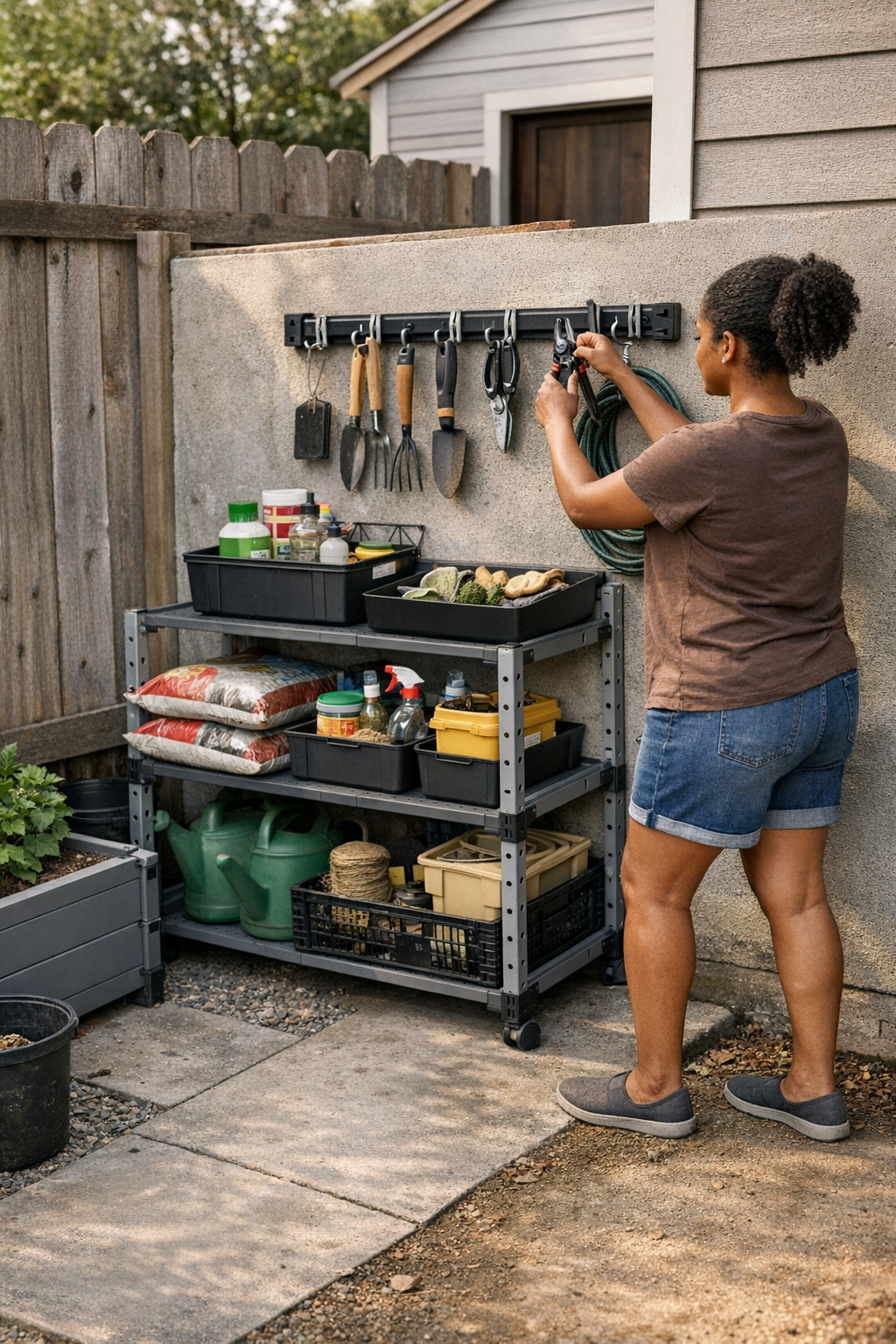
What changes everything? An adjustable rail with open hooks, a fingertip-height basket for the gloves and tap ends you reach for weekly. Instead of burying these at the bottom of a bin, make their return path instant—nothing blocking, nothing to move out of the way. Need to add a tool? Slide another hook on; the reset takes seconds. No more overhauling an entire chest to restore order after a real day outside.
After a few weeks of this:
- The work zone stays easy to move through, even on your busiest Saturday.
- Gear you actually use stays visible and in arm’s reach—no migrations, no hidden piles.
- Resetting is frictionless—just a minute to hang, drop, or set the basics back in place.
Real Strategies for Unblocked Flow
- Purge by use, not by type: Set aside five minutes per month to check what’s gathering dust. Shift it further out of the “prime zone,” raise it above eye level, or send it to deep storage. Let eye-level racks hold only what’s touched every workweek.
- Create direct paths: Set up hooks and shelves so nothing else crowds the route in or out. There should be one clear movement to grab or return daily gear—if you have to slide, unlock, or shift something else, rethink the position.
- Group by routine, not by label: If you always use the blower and hedge shears on the same days, group them, even if it breaks category logic. The point is access, not textbook sorting.
What Changes When It Really Works
Here’s the shift you notice: resetting takes less time than procrastinating. Week after week, your core gear holds its place. Overflow doesn’t sneak into walkways or corners. When seasons (and tool needs) change, you make small tweaks—instead of another full overhaul. You’re not chasing perfection, but a clear, reliable path in and out of the space—even after messy sessions.
A functional setup isn’t about matching a showroom or impressing a neighbor. It’s about cutting the mental drag every time you walk outside, making what you actually use the easiest to keep moving, and letting the rest stay out of the way. The difference is immediate: more work done, fewer resets, and a yard that feels truly ready, not just visually tidy.
Explore real-world outdoor storage solutions at TidyYard.