
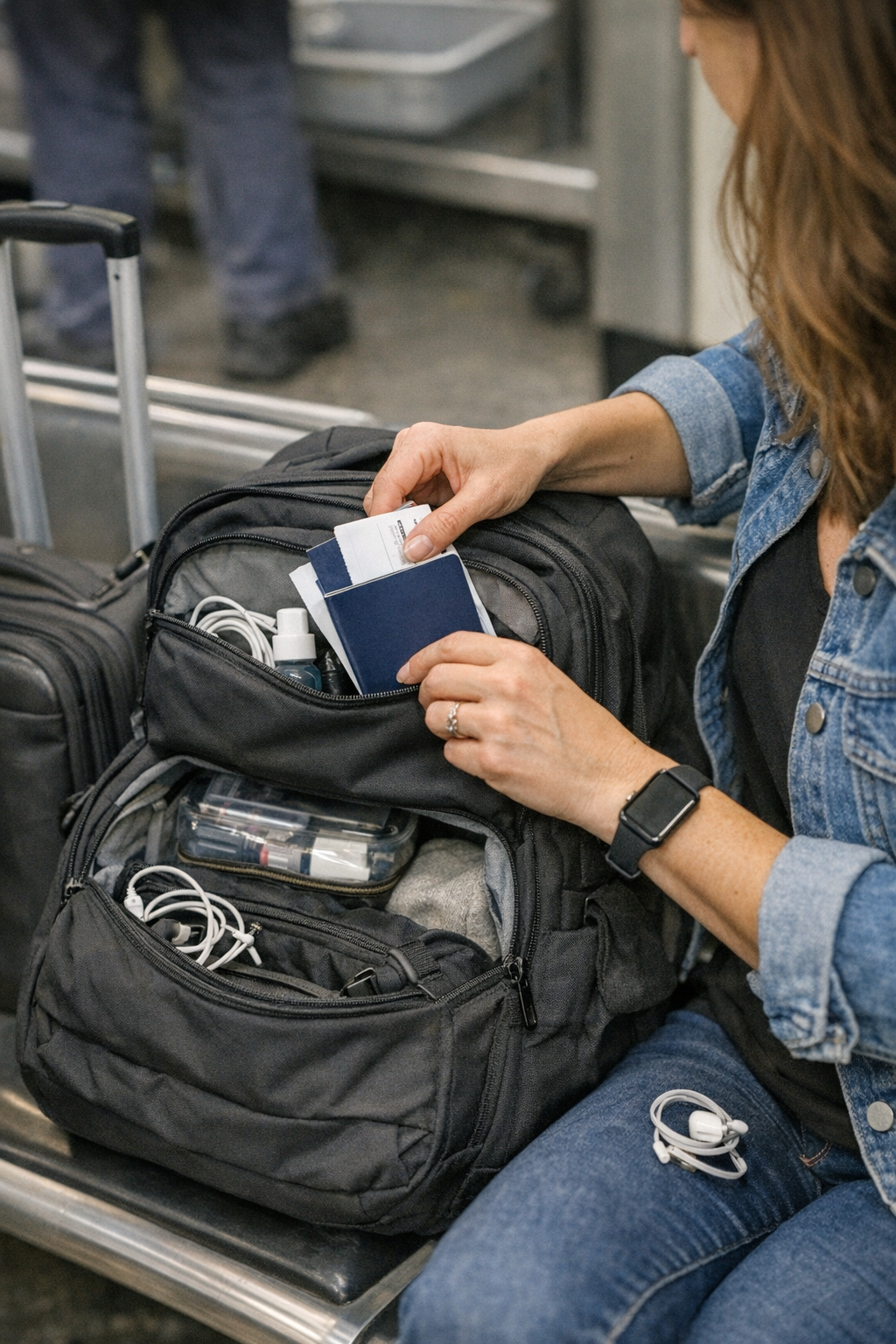
Real carry-on performance is exposed the first time you need your passport, charger, or just a pen—while blocked in a boarding line, wedged into a narrow aisle, or with one hand full at the security tray. Orderly packing doesn’t matter if your essentials vanish under three zippered compartments and a web of nested pouches just when you need speed. The more neatly you’ve layered and packed at home, the clearer the trouble once you’re moving: the so-called order turns into a search operation. What looked organized in your living room quickly slows you down in the airport. Travel stress comes not from chaos, but from supposedly “efficient” bags that stall you exactly when speed and one-handed access are essential. This is where the CarryOnSupply world begins—where the structure of your carry-on setup either helps you move or stands in your way.
Why Do Tidy Setups Break Down in Real Travel?
The difference between a bag that looks tidy on your bed and one that works at airport speed is usually buried in how items are stacked and separated. Most people pack for visual order, swapping in multi-pocket organizers, layered pouches, or double-closure compartments. That setup passes the “zip it shut” test at home. But reach the first security line and you’re already fumbling with double zippers, shifting pouches, or peeling back layers for a single document. Real pressure reveals structure flaws fast. The charger you need sits under your toiletry bag; your passport is behind a sleeve, blocked by the device pouch you added for “organization.” Each layered move stacks up friction instead of shaving it down. The first few travel pauses become repeats: unzip, dig, shift, lose focus, re-pack awkwardly—frustration increasing with every cycle.
Repeated Use: The Real Challenge in Carry-On Organization
The test isn’t how tight your packing looks, but how your bag responds to real, repetitive access. Travel isn’t a single opening, but a loop—security wants a boarding pass, the gate agent wants your ID, a mid-flight snack hides behind headphone cords, customs asks for a pen. If your essentials require you to move two other pouches every time, the order crumbles by the second hour. The so-called “organized” system demands constant resets: after each grab, items float out of place, stacking logic is lost, and your packing turns into a game of chance. Instead of a bag that keeps up, you’re distracted, holding up lines, and burning energy just to stay functional. The more you need from your bag, the more obvious it is that the old home-base order isn’t built for in-transit speed.
Real Scenes: When the Bag’s Structure Starts Breaking Your Flow
Security and Document Checks
The security tray exposes layout choices made at home. You reach for your passport, but it’s zipped inside a sleeve, beneath the charger case, near your liquid bag—suddenly you’re fishing through a stack while others wait. Cables spill out, sanitizer rolls away, and you’re left guessing where to return each item. Now, the arrangement feels random, not logical—documents are never where your hand expects, and each checkpoint piles on more disorder. Every time you re-pack in a rush, an item ends up misplaced, setting up the next scramble.
Quick Retrieval in Line or at Your Seat
Walking the thin aisle, you try to grab headphones or a boarding pass with one hand. The pouch you want is blocked by snacks, sidetracked by a book; suddenly you’re pausing, twisting the bag, or blocking the flow of passengers just to get at your essentials. The “organized” stack doesn’t hold up: after one interruption, pouches drift, cables hang out, and you’re half-repacking under pressure—neatness gone with a single use.
Mid-Flight & Unexpected Stops
Once seated, the cycle continues. Need to retrieve a pen or charger with the tray down? If your system buries those items one layer deep, now you’re forced to haul out half your setup, bracing everything on your knees, hoping not to block your neighbor. Each small search leaves you less willing to re-pack tightly, and by landing, frustration replaces order, making the next segment even slower.
Tradeoffs: When “Perfectly Packed” Makes Access Worse
The lesson hits quickly: packing for looks is easy, but trading friction for quiet order means paying with your time and nerves. The best real-world bag setups aren’t fussed over for Instagram—they’re reworked for speed, not presentation. What changes the travel flow most is claiming single-access zones: give your highest-use items (documents, chargers, pens) their own direct pocket or loose top pouch, separate from the everyday stack. That means letting go of the mental habit to layer everything for a photo finish, and instead structuring for instant, unblocked reach—the opposite of stacking “for order.” Each essential gets a path that requires no unpacking, no guessing, no second zipper to reach.
Building a Flow-First Carry-On Setup
A flow-first setup means every move—through security, down the jetbridge, or seated at row 18—should never require more than a single unzip and one quick grab. Notice what happens when the structure supports this: your passport and charger always rest at hand’s edge, not buried. Documents and tech live where your hand expects, no matter how rushed you are. Backups (extra cables, snacks) drop deeper, never blocking what you always need. Instead of perfect pouch nests, organizers float loose, reclaiming seconds during each pass. Key returns become automatic: you slide a passport into its slot without thinking, no matter how hectic. The real reward isn’t just less mess—it’s visible in how few times you pause, bend, or reshuffle between points. Minutes regained. Flow recaptured.
- Essentials (passport, boarding pass, charger, pen) always land in spots you access with one hand, one move—no stacking or overlap blocking them
- Low-frequency items (books, snacks, backup cables) rest deeper, never covering your must-grabs during transport or checks
- Abandon “perfect nests”—let organizers go where action directs, not for static tidy looks
- Returns are reflexive: in tired or tight moments, you know exactly where to stash each item with zero mental overhead
That means less anxiety at security, less hunting for lost items, and a bag that feels lighter—not only because of weight, but from the absence of unnecessary interruptions.
Recognize Where Order Succeeds—and Where It Quietly Fails
Bags that look catalog-ready often sneak in extra friction—forcing you to reach, dig, and guess when the stakes are real and your hands aren’t free. True performance is measured by action: if you click open the same pouch three times in an hour, find yourself blocked by a charger pouch in line, or hesitate before boarding because your ID isn’t where you expect, visual order is quietly sabotaging your flow. The real target isn’t perfection, but repeatable access in the wild: just enough structure that your hand lands right, every time, even if it breaks the rules of “pretty” for a moment. The best carry-on setups adapt—keeping frequent-use items visible, reachable, and never behind a second wall or hidden under rounds of layered pouches.
A Smarter Carry-On Helps the Next Trip, Not Just the Next Photo
The strongest sense of relief during travel comes from a bag that moves as quickly as you do, not one that merely looked impressive at departure. When your setup cuts friction at every checkpoint—security, gate, seat, arrival—the difference accumulates. You stop losing time and patience to organization that only works when untouched. Instead, you find the pen, charger, or document exactly when needed, and each leg of your trip starts faster. Rethink your next pack: single-move access, honest retrieval paths, visible essentials. Travelers who structure for repeat reach—rather than for static tidy order—end the trip with less drag and more bandwidth. That’s the CarryOnSupply difference: tools and setups that turn every repeated-use moment from slow-down into smooth flow.
CarryOnSupply — practical tools for less frustrating carry-on travel