
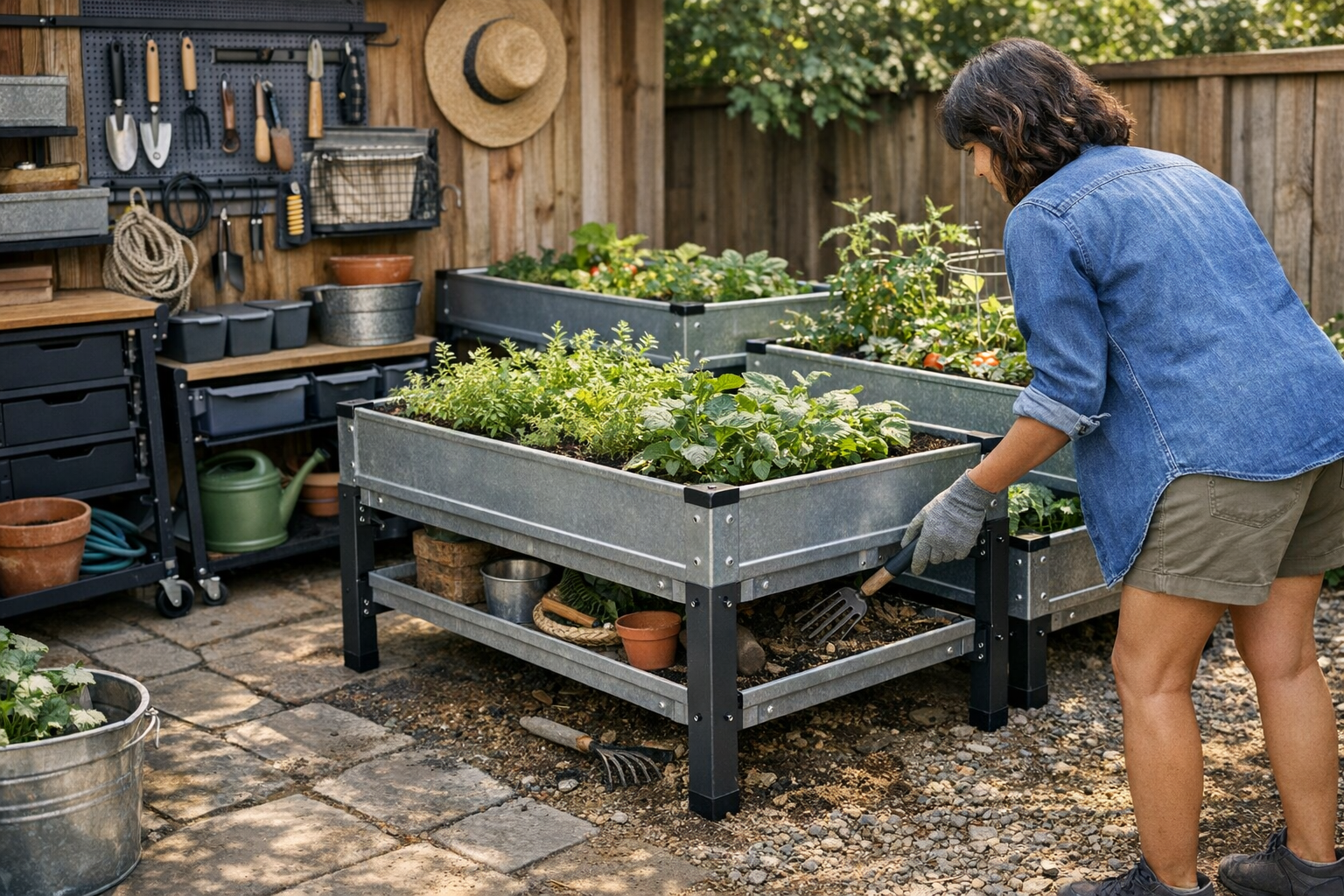
The tidy garden layout you planned never quite survives first contact with real use. On setup day, your raised beds line up crisp and clever—neatly boxed, packed edge-to-edge, filling out every corner. For a moment, it feels like you’ve finally outsmarted the mess. But as the weeks grind on, the gap between “looks organized” and “stays workable” opens up fast. Leaf litter piles in unreachable crevices. Cleaning means prodding under edges or wrestling around dead corners. Every small task—pruning, clearing spring debris—turns into a series of awkward reaches, blocked off by the very clusters that promised efficiency. It isn’t long before the garden that felt perfectly packed starts slowing you down at every turn.
Why Clustered Beds Go From Tidy to Troubled
The logic behind jamming beds together is simple: less wasted space, more surface to plant, tighter walkways. On paper, you squeeze out efficiency. For the first week or two, maybe that holds. But then soil spills at the edge where beds meet. Water collects in hidden seams, feeding mildew and pests. Weeds pop up from underneath, out of sight and frustratingly out of reach unless you want to shift an entire section. Suddenly:
- Debris piles at the places you can’t easily sweep
- Pooled water lingers where you can’t dry it out
- Roots snake under and between beds, impossible to snip cleanly
- Every simple clean-up means contorting your arms, moving planters, or leaving corners untouched
The busy garden starts to drag. The more tightly you pack, the more invisible traps you build in—where grime, rogue foliage, and frustration gather. The clean lines you loved at installation just don’t translate into effortless maintenance.
The Unavoidable Dead Corner
Most gardeners know that spot—the one that, by midseason, turns into a graveyard for mud, leaves, and lost tools. I had one: a bed wedged hard against the side wall, impossible to reach behind without uprooting a whole row. Cleaning it meant yanking awkwardly, spilling soil, and disturbing half the plot. So, like most people, I put it off. Weeks later, the familiar pattern set in—mold spreading in the dark, roots punching through cracks, every watering session deepening the mess. Resetting that buried zone stole an entire afternoon, all because the “efficient” layout left zero clearance for normal work.
That story isn’t unique. Wherever dead corners and hidden seams exist, they turn minor chores into time sinks, creating chronic friction just beneath the surface.
Spacing and Elevation: The Everyday Game Changer
Contrast this with a setup where each bed—even by just a few inches—stands apart. Space all around, a modest lift above the ground. Suddenly, every task flows smoother:
- You sweep from edge to edge without stopping—no more stuck debris
- Roots and stray soil are visible, reachable, and cleared in one motion
- Moisture dries where it should, not in hidden moldy pockets
- Pest nests and weed outbreaks get spotted early—not after they’ve taken hold
Just a 3–4 inch margin is enough. That gap means your broom slides underneath. Your tool fits those edge zones. Air moves. Overflow has nowhere to hide, so the setup is always a step ahead of the next headache. And when the week gets away from you, a quick sweep resets everything—no disassembly, no drawn-out battles with a dead corner.
How Small Elevation Yields Big Returns
Beds raised on simple frames change your routine. Four inches of clearance is enough—not to waste space, but to transform how you interact with every section. You see the weird pocket of compost before it festers. Pull one weed, not twenty. Move through the space, broom in one hand, without awkward reaches or tilting furniture. That subtle gap under each bed isn’t empty—it’s the difference between routine care and a weekend spent recovering from neglect.
Setup Decisions Shape Daily Rhythm
The true test for any layout is what happens after a month of real use. Do you reach for a tool and get blocked by a rolling cart, every single time? Is returning gear to its place a smooth flow or a series of stutters around poorly aligned edges? Do busy corners end up collecting every stray root and wrapper, or does the path stay clear and usable?
Well-designed spacing isn’t just aesthetic; it’s operational. It makes every movement predictable, fast, and repeatable. When beds or shelves are set too tight, they create new obstacles, forcing repeated reshuffling and collecting hidden clutter. When there’s just enough room to see, clean, and move, nothing lingers or blocks your routine. The work fits your actual rhythm, instead of demanding extra workarounds to keep up the illusion of order.
Small Shifts—Big Relief
You don’t need to reinvent your whole setup. Even nudging one bed out a few inches, or lifting a section on simple blocks, can transform recurring pain points. Suddenly, the usual trouble spots don’t fill with lost soil or standing water. Reset days shrink from half a Saturday to a routine sweep. The best setups don’t just store and contain—they actively stay out of your way, so you spend less energy on friction and more time enjoying the space.
For any workspace or growing zone, cramming more in rarely pays off. Instead, make sure every part is accessible, visible, and truly easy to refresh. Your back—and your workflow—will notice the difference the very next week.
For modular raised bed frames, storage setups, and workshop zones designed to move with your routines instead of blocking them, visit StackNest.