
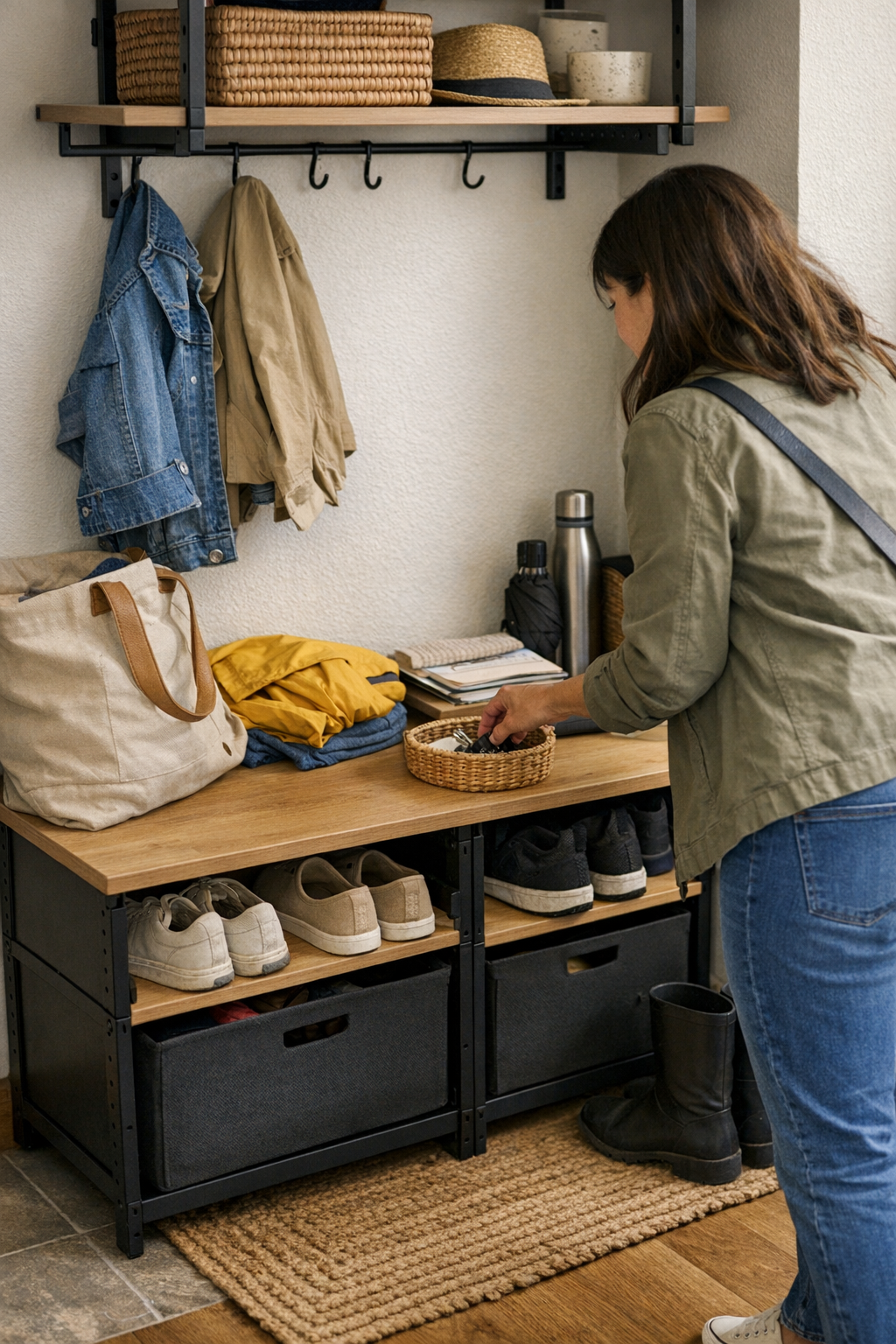
Set up an entryway bench once, and it looks controlled—until real life turns that smooth surface into a slow-motion spill. In home thresholds—entryways, mudrooms, pass-throughs—the difference between a retaining edge and a flat surface shows up not when you unpack boxes, but the first week you actually use the space. Without a lip, gear rarely stays where you put it. Shoes inch apart, bags migrate toward the walkway, keys skate just far enough to need fishing out. Your storage looks ready, but routine turns it into a daily reset trap.
Where the Edge Fails: Day One vs. Day Twenty
The bare, lipless bench or shelf seems clean at first. You set it up, admire the lines, and for one day the order holds. Then real routines hit. Shoes don’t stay in tidy pairs—they slide with every step. Keys end up skimming across the top and off the other side. Add wet umbrellas, and soon there are puddles tracking past the entry mat. The look you built unravels fast once everyone cycles through even a few times.
By week two, the gap is obvious: shoes bunch up and then start drifting into walkways, mail falls off the side and collects where you least expect it, and drop-off zones bleed into living space. An entryway that looked manageable now chews up minutes searching for what slipped out of sight, and the so-called “landing zone” is just another source of traffic jams and rerouting around stray piles.
The Real Cost of a Lipless Setup
A transition zone is a working surface, not a display table. As soon as two people overlap, or just one person rushes through twice, shoes aren’t gently lined—they’re tossed, partly on, partly off. Bags get pushed wherever there’s space. With no edge, you get inch-by-inch creep: shoes stick out, bags sag near the threshold, and gear never sits still. Over-crowding the edge doesn’t just look messier; it actively narrows the only clear path in or out.
In practice: a kid’s backpack sits halfway on the bench, blocking the bench for sitting. A heavy boot pushes another shoe into the walkway, and your next step grazes the mess. With no built-in barrier, every new item causes another small reshuffle. “Put away” becomes half done—a pile that blocks paths, jams resets, and spills further by evening. Entryways without containment aren’t ignored; they become friction points you have to fight multiple times a day.
Slim Setups and Crowded Flows
Wall-hugging benches and narrow shelves seem like space savers, but they rely on everything being gently placed and perfectly behaved—which never lasts long. One dropped soccer cleat, just off the flat end, can jam an entire morning routine. Now everyone detours, bumps the mail further, drags the bag along. Instead of a clear path, slim setups without containment actually tighten the bottleneck. You end up apologizing for the mess—then repeating the same awkward maneuver every return trip.
The Invisible Fix: What a Small Lip Really Does
Adding a low lip or retaining edge, even less than an inch high, turns a losing battle into a routine you don’t have to second-guess. Shoes can’t march forward; they stack against the edge instead of crawling into the walkway. Unstable items like umbrellas catch at the lip instead of rolling out to soak the rug. The boundary is real: not decorative, but functional enough to stop the pile-up at its source, every time someone drops something in a rush.
Cleanup changes immediately—scattered shoes stay corralled, mail piles hold, you clear the area in one pass instead of chasing after wanderers around the threshold. Instead of rounding up gear from random corners, you reset with one quick sweep. The more crowded your entry, the bigger the payoff. A simple edge invisibly enforces the line so you don’t have to.
Actual Entryway Scene: Real-World Reset
Picture rush hour at home: two people, four pairs of shoes, bags, mail, and a wet umbrella all try to claim the same zone. On a lipless bench, by the end of the day, shoes have doubled their footprint, bags block the place you need to sit, and you’re bending over to retrieve mail that’s bounced onto the floor. Order from setup day isn’t just gone; the area fights you, slowing each pass, shunting clutter closer to living space, and forcing manual cleanups after every use.
Switch to a bench or shelf with an edge—and suddenly the chaos tapers off. Shoes stack and stay boxed in. Mail piles don’t scatter. The umbrella stops leaking across the carpet. Instead of finding and resetting lost items from different corners, the threshold holds together—even after a long week. A contained edge makes routine maintenance feel more like a habit than a recovery operation.
Choosing the Right Edge: Small Details, Big Difference
What height works? For most homes, an edge between half an inch and one inch holds ordinary entryway clutter: shoes, bags, the stack of mail that always arrives, even a lumpy gym bag. You only need deeper edges in heavy-duty setups holding large, unstable items.
DIY lips, removable edges, or loose blocks sound flexible, but rarely survive real use—they drift, get knocked away, or end up mixed in with clutter. Built-in lips stay in place even when hit by a rolling suitcase or a round of muddy boots. If you’re aiming for less visual bulk, look for thin built-in ridges: just enough to corral, not enough to dominate. Even a low edge blocks the relentless creep that ruins a clear threshold—the function is in the boundary line, not the bulk.
Tips for Everyday Entryway Reality
- Corral by category: Use an edge to set zones: shoes here, bags here, mail there. Each group stays in its lane, held by the line—even when tossed in haste.
- Never overfill: No lip can compensate for overloaded zones. If the pile grows past the edge, clear out overflow regularly so containment keeps working.
- Edge placement matters: Side and front lips control overflow best on benches or low shelves. Just the back isn’t enough—spillover likes to find the shortest escape.
Boundary Lines and Smoother Routines
Well-used thresholds aren’t mere storage—they’re pressure points for the whole routine. A small, built-in lip doesn’t advertise itself, but its absence forces you to notice: more things to dodge, more resets, more lost time at the door. Storage that holds the line keeps mess contained—meaning fewer slowdowns and less frustration every time you leave or come home.
In real, daily use, a retaining edge is silent but crucial: it keeps the threshold working for you, not against you. A contained zone reclaims time, space, and sanity on both sides of the door.