
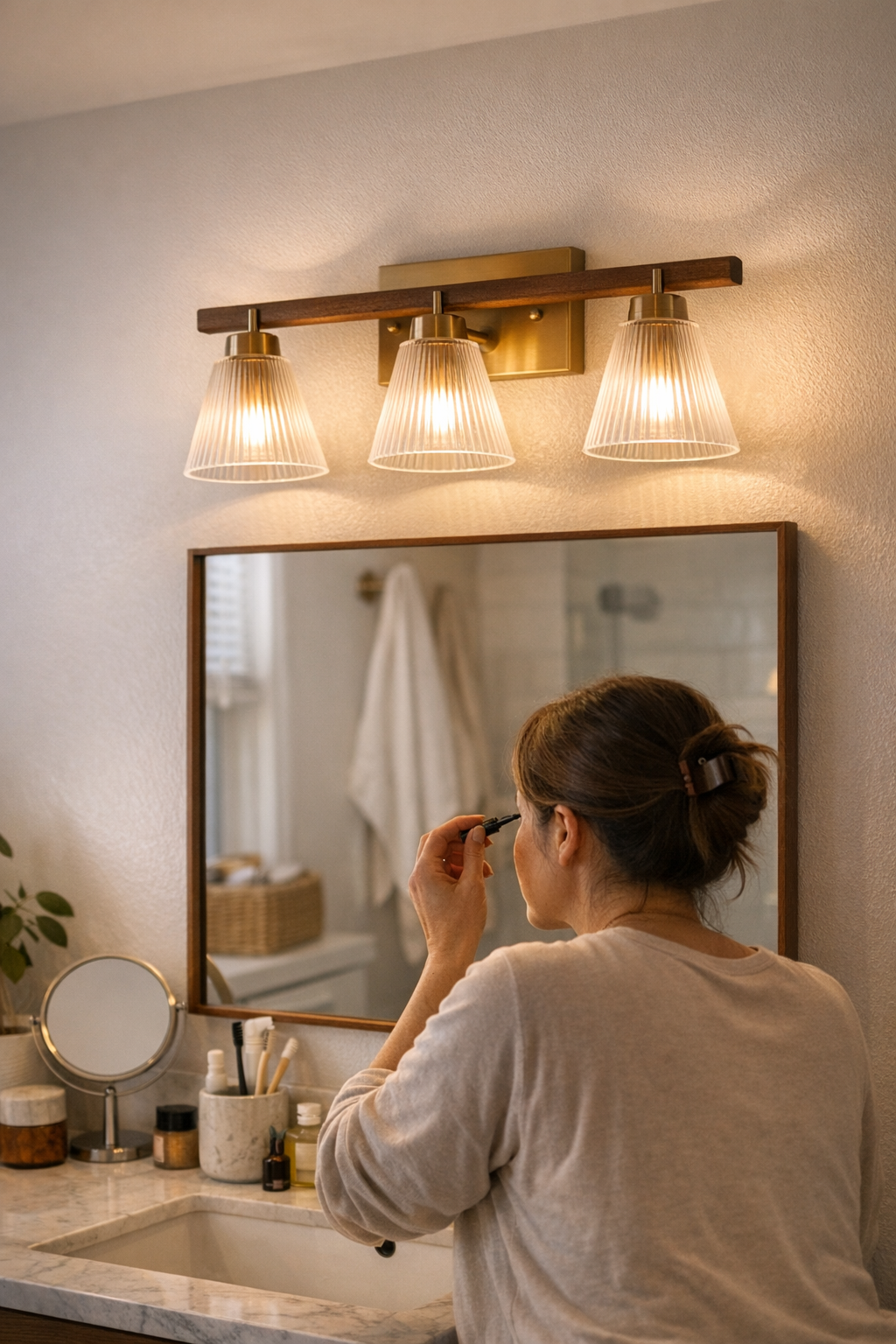
The gaps in indoor lighting aren’t revealed by outright failure—they show up again and again in moments you can’t ignore: toe-catching shadows on a stair turn, glare that bounces off the bathroom mirror, or kitchen counters that stay dim no matter how “bright” the fixture claims to be. It’s rarely a dramatic outage; it’s the small, accumulating frictions—hesitating before a dark corner, angling your face just to see clearly, feeling the hallway dissolve at night. These moments add up, turning routine movement into a series of micro-adjustments. Lighting that looks finished on day one can undermine confidence day after day, especially when every basic routine starts depending on workarounds.
When “Bright Enough” Isn’t Useful Enough
The ceiling light flicks on. At first glance, the room glows. But after a few days, another problem takes over: hallways that snare your feet in shifting shadows, stairwells that leave each second step in partial gloom, or corners that always seem just a little uncertain. “Bright” isn’t the issue—the problem is where the light actually lands. A glossy stairwell might appear safe from below, but the upper turn remains dark every night. Even the newest fixtures can flood the ceiling yet leave the first step or railing in ambiguous shadow. The distinction becomes clear fast: there’s a visible gap between a space that seems illuminated and one that truly supports confident movement.
Everyday Example: Shadow at the Stair Turn
Night after night, heading upstairs shows it: the hallway fixture bathes the top wall in light, but halfway up the stairs, the turn drops away into dimness. There’s no crisis—just a pause, a slowed step, and a mental reminder to go carefully because the light never seems to follow you where it’s most needed. Over time, this isn’t just a quirk. It’s ongoing friction, all because the fixture was chosen for coverage, not for how people actually move through the space.
Mirror Glare and Surface Shadows: Where Lighting Interrupts Routine
The bathroom mirror exposes lighting mistakes fast. An overhead fixture creates uneven, lopsided shadows you end up working around every morning—leaning closer, tilting your head, or dodging glare spots to shave or apply makeup. Each small workaround reminds you that “enough brightness” isn’t the same as usable clarity. The same issue repeats in kitchens and laundry rooms. A common ceiling light often leaves the counter edge or back shelf in near-shadow—right where you need to prepare meals or spot clean laundry stains. Narrow laundry zones hide dim baskets, shadowed racks, and overlooked items, reminding you that a fixture that simply looks bright can still leave daily tasks incomplete.
Fixing Mirror Shadows: A Simple Shift with Major Impact
Switching from a sole ceiling fixture over the mirror to two wall-mounted lights on either side does more than change appearances—it erases deep shadows, lights both sides of the face evenly, and lets you see what you’re doing without angling for the “good spot.” Suddenly, morning routines become steady. No more compensation, no more half-lit faces—a practical, visible relief that upgrades the routine far more than just swapping a bulb.
Hidden Frustrations: Recognizing the Signs of Mismatched Lighting
Most lighting failures don’t shout—they repeat, day after day, as quiet interruptions:
- Switching on the closet light but still reaching for your phone flashlight to see inside
- Crossing a hallway only to be momentarily blinded by glare, then lose track of the wall edge as shadows move
- Pausing at the same spot on the stairs each night because you don’t fully trust what you can’t see
- Routinely leaning toward the window in broad daylight just to finish a simple task that the “main” fixture ignores
These aren’t trivial glitches. They show up at the same points, every day, because the installed fixture lights the air, not the real task, path, or surface. Over time, these repeated annoyances chip away at movement confidence, making a finished space feel unfinished in use.
The Role of Fixture Type, Rating, and Placement
Lighting isn’t about filling ceiling real estate or following symmetry—it’s about how each fixture behaves under real use:
- Flush-mount and semi-flush mount fixtures: In low-ceiling areas, flush-mounts stay out of the way but may push shadows into corners, leaving edges hard to read. Semi-flush fixtures offer more spread but can highlight dust or cast glare if badly placed.
- Corridor and stair lighting: If fixtures line up with the walking path, movement feels natural. Place them poorly and every crossing means slowing down or squinting into uneven light.
- Damp-rated bathroom and laundry fixtures: Ordinary lighting succumbs to moisture—contacts corrode, flickers increase, reliability slides. Damp-rated options resist these stress points, reducing both distraction and unnecessary replacements.
- Under-cabinet and task lighting: These shift the workspace from “visually there” to “usable now.” Chopping, reading, folding, or sorting each become simpler because the light focuses on hands, tools, and work lines, not just the floor or far wall.
The practical lesson: thoughtful selection and placement eliminate blind spots and hesitation. Surface, step, and pathway all become as visible as the ceiling itself.
When Lighting Planning Ignores How Rooms Are Actually Used
It’s tempting to focus on appearances, centering a “good” fixture in a room and calling it done. But the mismatch appears fast: weeks later, you’re still side-stepping a dim corner or automatically shifting baskets to catch better light. A bright overhead in a laundry closet lights the ceiling perfectly but leaves storage shelves in partial darkness. In a hallway, a poorly placed sconce glares at eye level, while walking paths after dark stay shadowed. Even new flush-mounts can send light everywhere except where you need it most—in your hands, on your feet, along the moving path.
The space that keeps demanding workarounds is sending a warning. It doesn’t matter how modern the fixture looks. If the light doesn’t match routines, even expensive improvements start to feel like daily mismatches—unfinished work that only multiplies with use.
Practical Tips for Smoother Movement and Fewer Shadows
Audit your routines for a week: where do you slow down, shift your angle, or reach for alternative light? These moments aren’t random—they signal mismatched or misplaced fixtures. To diagnose problems before buying, stand where you’ll actually work and see how the shadows fall at the hour you really need the light. Kitchen prep? Check edge shadow. Laundry sorting? Find the shelf dead zone. And for bathroom or laundry spaces that fog up, choose damp-rated fixtures from the start—it’s the easiest way to avoid recurring malfunction and replacements that disrupt routines.
Lighting that Keeps Up With the Real Day-to-Day
Effective indoor lighting isn’t just about making a space “lit.” It’s about whether stair treads, countertop edges, mirrors, and movement paths stay practical and clear every day, not just when the room is empty. What looks like a minor annoyance—pausing at a stair, leaning at the mirror, double-checking a shelf—signals the kind of repeated mismatch that drains comfort and speed from daily life. Change the fixture, reposition the light, switch to a damp-rated or task-specific option, and see how much less you’re forced to hesitate or compensate. A genuinely usable home leaves routines uninterrupted—you simply move, see, and get on with things as if the lighting isn’t there at all. That’s the kind of ease most “good-looking” setups miss, but it’s the only test that matters in real use.
Find the right indoor-lighting solutions for every routine at LightHelper.